Introduction
Roll-mouth cake cups wholesale sourcing should begin with the finished dessert, filling weight, oven or chilled-use process, rim quality, material construction, packing method and destination-market document file. The direct answer: buyers should approve production-representative roll-mouth cake cups by testing rim integrity, base stability, grease and moisture resistance, odour, baking or holding performance, pack compression and food-contact evidence before releasing bulk production.
A rolled rim can improve handling and presentation, but it does not make every paper cup suitable for every bakery or dessert application. The rim, sidewall, base, coating, paper stiffness, print coverage and forming process work together. If one of those details changes, the cup may denest differently, spread under batter, mark during transport, hold odour in a sealed pack or fail a document review.
This guide is for importers, distributors, private-label teams, dessert manufacturers, foodservice packaging buyers and ecommerce sellers comparing roll mouth baking cups in bulk. It focuses on specification, sample testing, compliance review, packaging, inspection and supplier comparison.
1. Define the Application Before Asking for Price
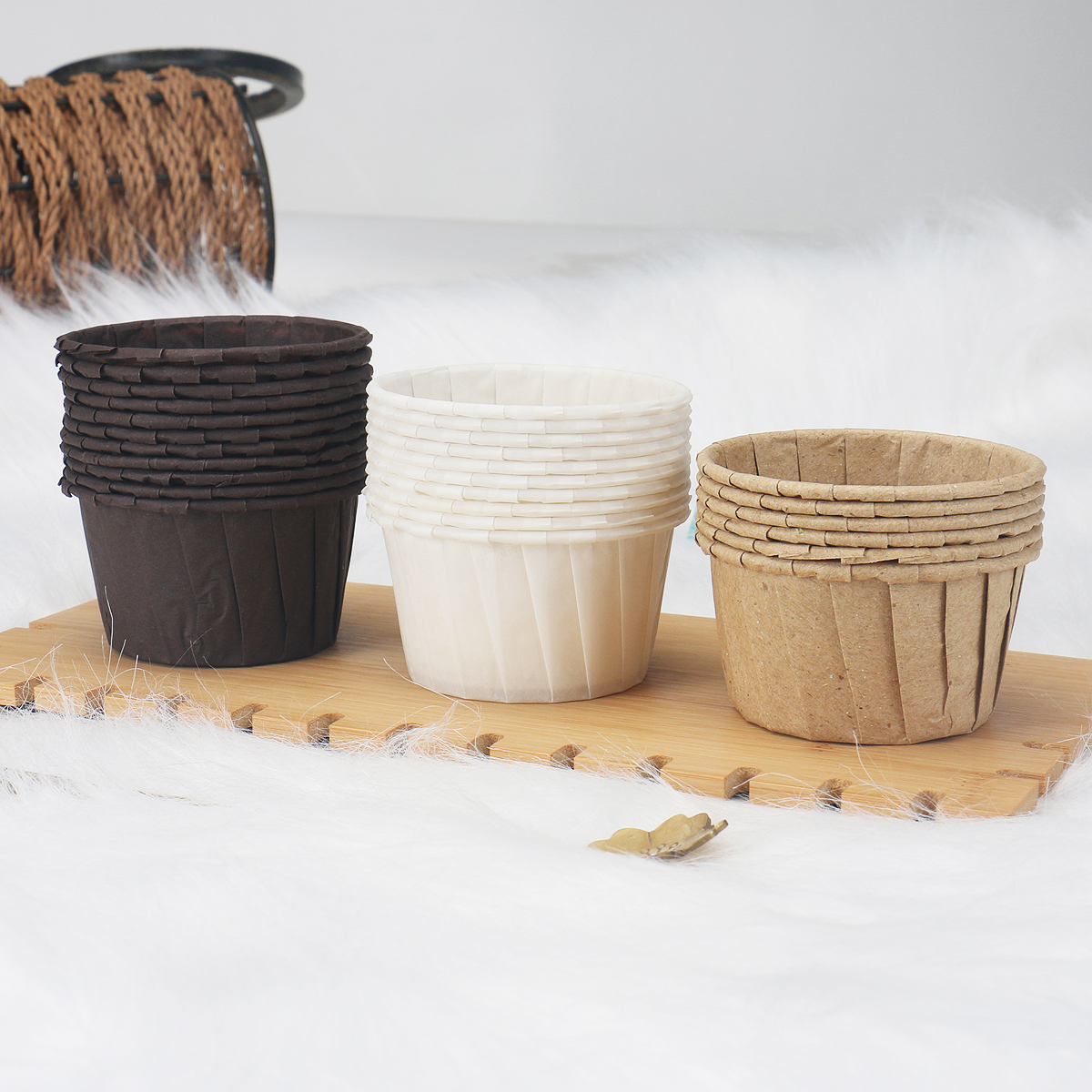
"Roll-mouth cake cup" describes a formed paper cup with a reinforced rolled top edge. Buyers may use it for cupcakes, muffins, mini cheesecakes, mousse desserts, frozen bakery items, cafe display products, gift boxes or private-label retail baking assortments. These use cases do not create the same technical requirement.
Before an RFQ, define the food type, process, support condition, filling weight, required appearance, print requirement, pack route and destination market. These points shape the quote more than the product name alone. For example, an empty retail baking cup pack, a frozen cheesecake program and a cafe display dessert may all use a roll-mouth format, but they need different evidence.
LANGMAI lists roll-mouth paper baking cups as PET-coated products with rigid shape and OEM printing support. Treat that as a starting family, not a substitute for validation. Buyers comparing other cup styles can also review the cupcake liner size guide.
2. Build a Quote-Ready Roll-Mouth Cup Specification
A useful quotation needs more than top diameter and carton price. The supplier should know the full shape, material, artwork, pack count and intended use. Otherwise one quotation may be based on a display cup for chilled desserts, while another assumes an oven-baking cup with different paper and coating.
| Specification field | What to define | Why it matters |
|---|---|---|
| Top rim diameter | Outer rim diameter, tolerance and measurement method | Controls lid, tray, insert and display fit |
| Base diameter | Bottom contact area and tolerance | Affects stability, pan fit and packing density |
| Height and taper | Vertical height, sidewall angle and usable fill line | Influences dessert volume, batter rise and shelf appearance |
| Rim construction | Rolled edge shape, continuity and accepted defects | Prevents sharp edges, cracks, lifting or poor presentation |
| Paper and coating | Paper grade, coating or treatment, color and food-contact side | Drives grease, moisture, heat and document review |
| Printing | Ink location, coverage, artwork revision and odor expectation | Affects brand appearance, set-off risk and evidence scope |
| Pack hierarchy | Pieces per stack, inner pack, carton, pallet and labels | Protects rim shape and supports traceability |
| Testing | Baking, chilled, frozen, denesting and transit checks | Links the purchased cup to the buyer's real use |
Ask for a drawing or specification sheet that identifies the dimension points. A rolled rim can create confusion because the inner opening, outer rim and usable fill diameter are not the same. If a cup needs to fit a lid or a printed paper insert, measure against that component.
3. Evaluate Rim Quality as a Functional Feature
The rolled rim is a handling feature and visible brand surface. It can help the cup feel more rigid, give the dessert a cleaner edge and reduce the chance of a thin paper lip folding inward. But rim defects are highly visible in retail and foodservice channels.
During sample approval, inspect rim continuity, cracks, lifted layers, rough edges, ovality, print distortion near the rolled area, stack-to-stack variation and separation from the stack. Then repeat the check after baking, chilling, freezing or transport when those conditions apply.
Do not approve a rim from loose samples only. Packed samples reveal compression, leaning stacks and rubbing marks. For private-label or display products, check rim appearance under the lighting used in the retail or cafe environment, not only on a factory desk.
4. Match Material and Coating to the Food
Many roll-mouth cake cups use PET-coated paper or another barrier construction to improve shape, oil resistance, moisture resistance and presentation. This can be useful for rich batters, cheesecakes, mousse desserts and products that need a more polished display than a thin fluted liner. It also creates more document and application questions than a plain paper cup.
Buyers should ask the supplier to identify the finished construction clearly: paper or board grade, coating or laminate type, food-contact side, forming method, print system, proposed use conditions and any limitations for oven, freezer, microwave, fatty foods or high-moisture products.
Avoid vague labels such as "food grade PET paper" without evidence. For EU projects, the European Commission food-contact materials page explains that food-contact packaging materials must meet safety rules so they do not endanger health, change food composition or affect taste or smell under normal or foreseeable use. The Commission's food-contact legislation page also notes that Regulation (EU) No 10/2011 is the specific EU measure for plastic food-contact materials and sets composition, restrictions and compliance rules for plastics. If the roll-mouth cup includes a plastic food-contact layer, buyers should make sure the document review covers that layer and the finished use.
For US projects, the regulatory basis may involve paper and paperboard components, plastic components, food-contact notifications or other clearances. FDA's component-status guidance emphasizes that food-contact status depends on the substance, manufacturer, conditions of use and applicable regulatory route. The eCFR includes 21 CFR 176.170 for paper and paperboard in contact with aqueous and fatty foods, and the Cornell Legal Information Institute reproduces 21 CFR 177.1630 for polyethylene phthalate polymers; buyers should still confirm applicability for the actual cup.
5. Run Baking, Chilled and Frozen Application Tests
A roll-mouth cup may be bought for baking, dessert filling or retail presentation. The approval test should match the intended application, not a generic "oven safe" claim.
| Application | Practical test | Approval question |
|---|---|---|
| Oven-baked cupcake | Fill with the buyer's batter, bake on the intended tray, cool and pack | Does the cup keep shape, release acceptably and avoid objectionable odor? |
| Muffin or high-fat batter | Test normal and high-fill conditions within the bakery's process | Does grease staining, wall movement or rim distortion stay acceptable? |
| Cheesecake or mousse dessert | Fill, chill, transport and hold in display conditions | Does the cup resist moisture and keep a clean rim? |
| Frozen dessert program | Freeze, ship simulation if needed, thaw and inspect | Does the cup crack, delaminate, deform or mark the product? |
| Retail empty baking cup pack | Open, separate, bake as instructed and repack partial use | Are consumer handling, count and instructions clear? |
Record sample code, drawing revision, material description, print version, food batch, fill weight, oven or storage conditions, cooling time and result photos. A buyer should retain approved and rejected samples because small changes in rim, base or coating may not be obvious in a written description.
If the cup will run on automated filling or tray-loading equipment, combine the application test with a handling test. Check whether stacks separate cleanly, whether the rim catches on the feeder, whether cups rock on the tray and whether filled cups remain stable during conveyor movement.
6. Review Food-Контакты Documents Without Overclaiming
Food-contact review should connect the purchased roll-mouth cup to the finished construction, food type and conditions of use. A report for unprinted paper, a plastic film, or a different cup size may be useful background, but it is not automatically enough for a printed, formed and packed roll-mouth cup.
For EU-bound orders, Regulation (EC) No 1935/2004 provides the framework principle for food-contact materials, including safety, organoleptic and traceability expectations. Regulation (EC) No 2023/2006 covers good manufacturing practice, including printing inks and set-off. Paper and board do not have one fully harmonized EU-specific measure equivalent to plastic food-contact materials, so destination-market expectations and component evidence need careful review. BfR announced in 2026 that Recommendations XXXVI, XXXVI/1, XXXVI/2 and XXXVI/3 are being revised step by step, so buyers should confirm the current version during document review.
For US-bound orders, 21 CFR 176.170 covers components of paper and paperboard in contact with aqueous and fatty foods, 21 CFR 176.180 covers dry-food paper and paperboard use, and 21 CFR 177.1630 can be relevant to polyethylene phthalate polymer components when conditions match. Do not turn those references into a blanket approval statement. Ask which exact component, supplier, grade and intended use are covered.
The document pack should usually identify the finished product or traceable component, material and coating construction, food-contact side, intended food and conditions, test method or regulatory basis, issuing party, date, limitations and lot link. For private-label programs, add the buyer documents needed for import or customer audits.
Buyers sourcing paper-derived products for the EU should also review EUDR scope and traceability obligations where applicable. EUDR is due diligence, not a product certificate. LANGMAI's EUDR paper baking cups traceability checklist explains the buyer-side evidence questions for paper-origin, species, geolocation and batch records.
7. Control Odour, Print and Brand Appearance
Roll-mouth cups are often chosen for premium presentation. A cup can pass basic size checks but still disappoint if odor, print set-off or color variation appears after sealing, baking or transport. Custom print and deep colors should be tested as production-style samples, not only digital artwork.
Build these checks into approval: smell the inner pack after opening and after storage, warm or bake printed samples when heat applies, check print rub and set-off, compare color against an approved reference, inspect formed rim areas, and confirm that any food-contact-side claim is supported by the document file.
For printed food paper, the non-food-contact side still matters. EU GMP rules include attention to set-off from printed surfaces in stacks or reels. Buyers should discuss low-odor ink expectations early, especially for sealed retail packs, high print coverage or products stored near delicate bakery aromas.
Mid-article CTA: Send LANGMAI your roll-mouth cup drawing, artwork, food type, baking or chilled process, target market and pack count. The team can help prepare a quote-ready sample plan and document checklist.
8. Pack Roll-Mouth Cups to Protect the Rim
The rim gives roll-mouth cups much of their display value, so packaging should protect it. Over-compressed stacks may reduce freight cube but can ovalize rims, increase denesting force and create edge marks. Loose cartons may allow stacks to rub or lean.
Define the pack hierarchy: pieces per stack, stacks per inner pack, bag or sleeve style, divider arrangement, stack height, carton dimensions, gross weight, closure method, lot marks, pallet pattern and any barcode, importer-label or private-label case-mark requirement.
Open a packed sample the same way the warehouse, bakery or retail team will open it. Check whether staff can remove stacks without deforming the rim, whether partly used packs remain clean and identified, and whether the carton supports count control. If the order will ship through parcel networks or mixed-SKU distributor pallets, consider a route-specific transit check rather than assuming full-container conditions.
9. Inspect Bulk Production Against the Approved Version
Pre-shipment inspection should confirm that bulk production matches the approved sample, not just that cartons exist. Agree the sampling plan, defect categories and acceptance method based on product risk and order history; do not copy a fixed AQL from an unrelated product without review.
Useful inspection points include SKU identity, artwork revision, lot code, carton marks, dimensions, stack count, rim continuity, crushed edges, ovality, inner pack cleanliness, odor, print condition, set-off, base flatness, sidewall shape, nesting behavior, pallet condition, document file and retained sample link. Add application or denesting checks when the buyer's plan requires them.
If a supplier changes paper, coating, print coverage, forming tooling, pack compression or inner pack design, repeat the relevant validation. A roll-mouth cup is a finished system. Component substitution can affect shape, release, odor, food-contact review and shipping performance.
10. Supplier Questions Before You Place the Order
Use the same questions with every shortlisted supplier:
- Which roll-mouth cup construction are you quoting, and what is the intended use range?
- Can you provide a dimensioned drawing showing top rim, base, height, taper and tolerance?
- Which paper, coating and printing system are proposed for the food and destination market?
- Are samples production-representative or hand-made approximations?
- What baking, chilled, frozen or display tests do you recommend before bulk production?
- Which food-contact documents connect to the finished cup or its relevant components?
- How are rim quality, odor, print set-off and pack compression inspected?
- What inner pack, carton, pallet and label format will be used for the first shipment?
- Which changes require written buyer approval after sample sign-off?
- How will lot traceability link documents, production records, cartons and retained samples?
Compare price only after the sample route, document scope and packaging assumptions are aligned. A lower unit price can disappear if rim damage, document gaps or carton inefficiency create downstream cost.
FAQ
What are roll-mouth cake cups used for?
They are used where buyers want a more rigid, clean-looking rim than a thin fluted liner. Common uses include cupcakes, muffins, cheesecakes, mousse desserts, cafe display items and retail baking cup packs, subject to application testing.
Are roll-mouth cake cups always oven safe?
No. Oven suitability depends on the paper, coating, forming, print, food type, temperature, time and support condition. Buyers should test production-representative samples under the actual process and review food-contact evidence for the intended use.
Is PET-coated paper suitable for roll-mouth baking cups?
PET-coated paper can be suitable for some roll-mouth cup applications because it can support structure, moisture resistance and appearance. The buyer still needs evidence for the specific PET layer or construction, destination market and use conditions.
What should buyers check first in roll-mouth cup samples?
Start with rim diameter, base stability, wall height, rim continuity, denesting, odor, print condition and packed-sample compression. Then run the relevant trial with the buyer's real product.
Which documents are needed for EU and US buyers?
Ask for documents that identify the finished product or traceable components, food-contact side, material construction, intended food and conditions, test or regulatory basis, issuing party, date and limitations. EU buyers should also review GMP, traceability and applicable EUDR evidence for paper products.
Can LANGMAI make custom printed roll-mouth cake cups?
LANGMAI's local product information describes roll-mouth cake cups with OEM printing support. Buyers should send artwork, size, food use, destination market, pack format and forecast quantity so sample and document requirements can be confirmed before bulk production.
Conclusion
Buying roll mouth cake cups wholesale is a finished-product validation task. The buyer needs to define the dessert application, lock the geometry, inspect the rolled rim, confirm the paper and coating construction, run realistic application trials, review EU or US food-contact evidence and protect the approved cup through packing and inspection.
The safest procurement decision links one approved roll-mouth cup version to one documented use range. Product names, empty-cup stiffness and generic "food grade" wording are not enough. Retained samples, clear drawings, document review, pack testing and change control make repeat orders more reliable.
CTA
Share your target cup size, dessert or baking process, artwork, pack count, destination market and forecast volume with LANGMAI. Request roll-mouth cake cup samples and a quote-ready specification review for your wholesale or private-label project.