
Introduction
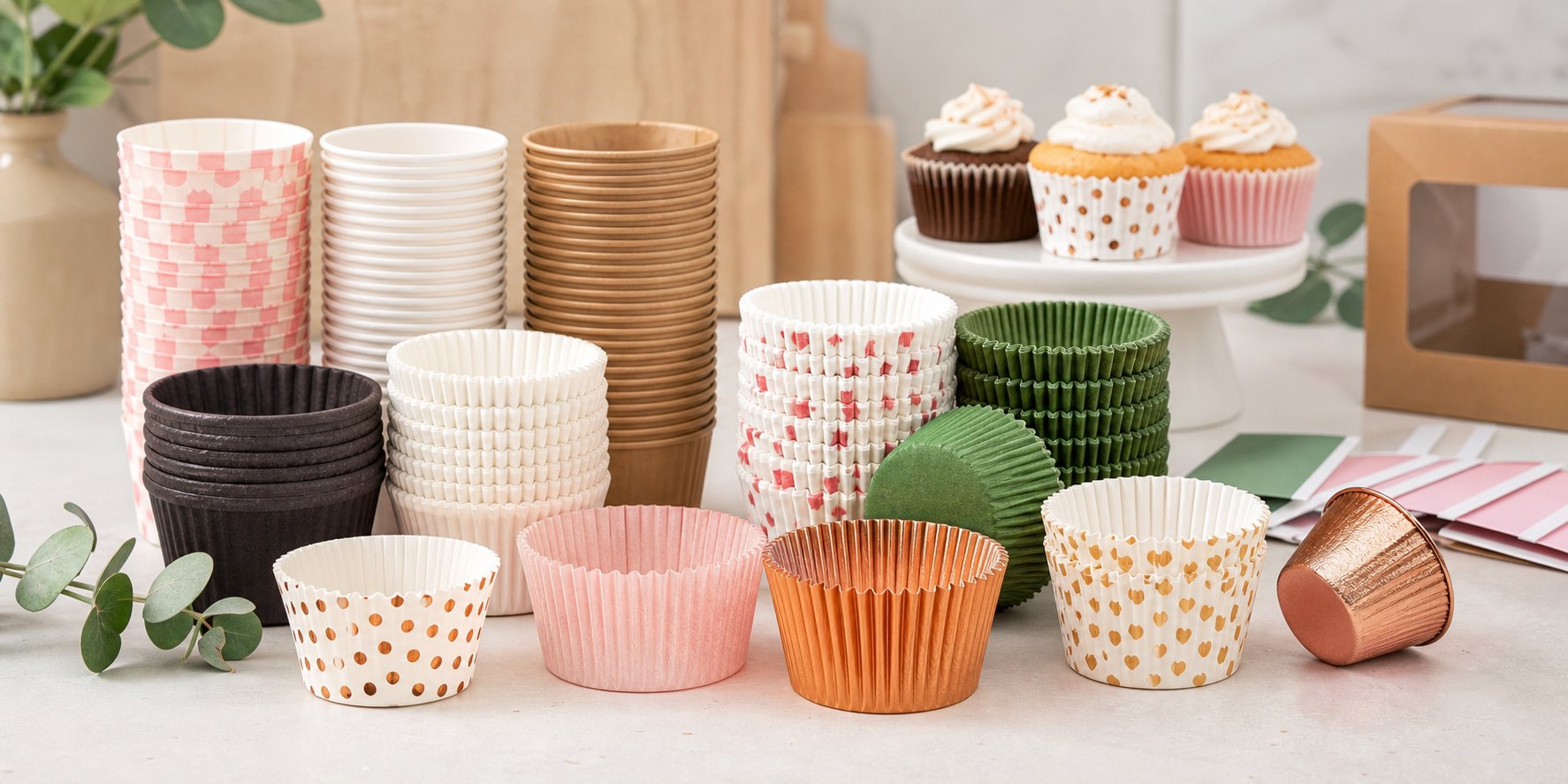
The safest way to specify a cupcake liner is to provide bottom diameter, top diameter, wall height and pan-cavity dimensions in millimetres, then approve a physical sample in the buyer's actual pan and bake process. Labels such as mini, standard, regular and jumbo are useful for browsing, but they are not reliable purchase specifications because dimensions can vary among brands, markets and cup styles.
For a wholesale order, size affects pleat compression, batter capacity, cake shape, denesting, retail box fit and shipping efficiency. A difference of a few millimetres can create wrinkles in the pan, loose stacks or cupcakes that no longer fit the approved insert. This guide turns familiar size names into production-ready specifications for fluted liners, tulip cups, muffin cups and formed baking cups.
1. What Cupcake Liner Size Actually Means
Cupcake liner size is the set of dimensions that defines the paper cup before filling. For a round fluted liner, the core measurements are usually the bottom diameter, the top diameter and the vertical wall height. Some suppliers also state the flat blank diameter, pleat count or overall developed size. Formed cups and roll-mouth cups may require rim diameter, base diameter, total height and rim geometry.
Do not assume that a listing written as "50 x 30 mm" uses the same convention as another supplier's listing. It may mean bottom diameter by height, top diameter by height or a nominal mould code. A purchase order should name each dimension explicitly and include a drawing.
| Measurement | What it describes | Why buyers need it |
|---|---|---|
| Bottom diameter (BD) | Flat circular base that rests in the pan | Controls base fit and finished product footprint |
| Top diameter (TD) | Opening across the top edge | Controls cavity fit, cake width and box-insert clearance |
| Wall height (H) | Vertical distance from base to top edge | Influences fill level, presentation and overflow margin |
| Flat blank diameter | Diameter when a fluted liner is flattened | Helps distinguish similar cups and check forming consistency |
| Pleat count and pitch | Number and spacing of folds | Affects nesting, expansion and appearance |
| Rim dimensions | Rolled or reinforced top geometry | Important for formed and roll-mouth cups |
Use millimetres as the master unit even if the sales market uses inches. If customer drawings show inches, add the converted millimetre value and state which value governs. This avoids rounding changes between artwork, tooling, inspection and packaging files.
2. Why Mini, Standard and Jumbo Are Not Purchase Specifications
Retail and foodservice guides commonly group baking cups as mini, standard and jumbo. These names help users find a general category, but public size guides show that the underlying measurements are not perfectly uniform. One supplier's regular cup may be close to another supplier's standard cup, while height and top flare can still differ.
For wholesale sourcing, treat size names as search filters only. The approved dimensions and tolerances are the contract specification. A useful RFQ can say "standard cupcake liner for a 12-cavity pan," but it should then add the measured cavity and required cup dimensions.
Typical references include a bottom diameter around 50 mm for a standard liner, smaller formats for confectionery and larger formats for oversized muffins. These are starting points, not a promise of compatibility. The same applies to numeric mould codes: a code only has meaning within the supplier's catalogue unless a drawing accompanies it.
3. Measure the Pan Before Selecting the Paper Cup
When a liner will be baked in a metal or silicone pan, measure the pan first. Buyers should record the cavity bottom diameter, cavity top diameter and usable depth. If the cavity wall is angled, also note the taper. For automated or high-volume production, identify the pan model, cavity spacing and whether the liner is placed manually or by denesting equipment.
Follow this sequence:
- Clean the pan so crumbs and residue do not affect the reading.
- Measure at least three cavities from different positions, not only one corner.
- Use a calibrated calliper for diameters and a depth gauge or suitable ruler for depth.
- Record the smallest and largest readings.
- Photograph the measuring points and attach the images to the RFQ.
- Send an actual pan or a verified technical drawing when the fit is business-critical.
The liner should sit flat on the cavity base without severe buckling. Its side wall should follow the cavity without being crushed, yet it should not be so loose that batter pushes it off-centre. The top edge must not interfere with adjacent cavities or the depositor head.
For a private-label product, also measure the retail box and insert. The finished cake, including its crown and decoration, must clear the insert and lid.
4. Match Cup Geometry to the Product and Process
Two cups can share the same bottom diameter and still behave differently. Height, taper, paper stiffness, pleat design and rim construction change how the cup fills, expands and releases.
Fluted cupcake liners
Thin fluted liners usually depend on a baking pan for support. Confirm bottom diameter, top diameter, height, pleat pattern and paper weight. Check whether compressed pleats spring outward before filling and whether nested cups separate cleanly.
Tulip and lotus cups
Tulip cups use higher points and lower valleys rather than a level top edge. Specify base diameter, low-point height, high-point height and number of petals. The high point affects carton height, bakery presentation and clearance under packaging lids.
Muffin cups
Muffin cups are often taller or larger than standard cupcake liners, but the name does not define a fixed measurement. Match the format to batter portion, desired crown and display style. A tall cup can support a premium appearance but may require different filling equipment and a deeper carton.
Freestanding and roll-mouth cups
Stiffer formed cups may bake without a conventional muffin pan when their construction and intended use allow it. Specify base, top or rim diameter, height, board or paper structure and any rolled edge. Buyers must test structural stability with the actual batter weight and bake profile rather than assuming every formed cup is freestanding.
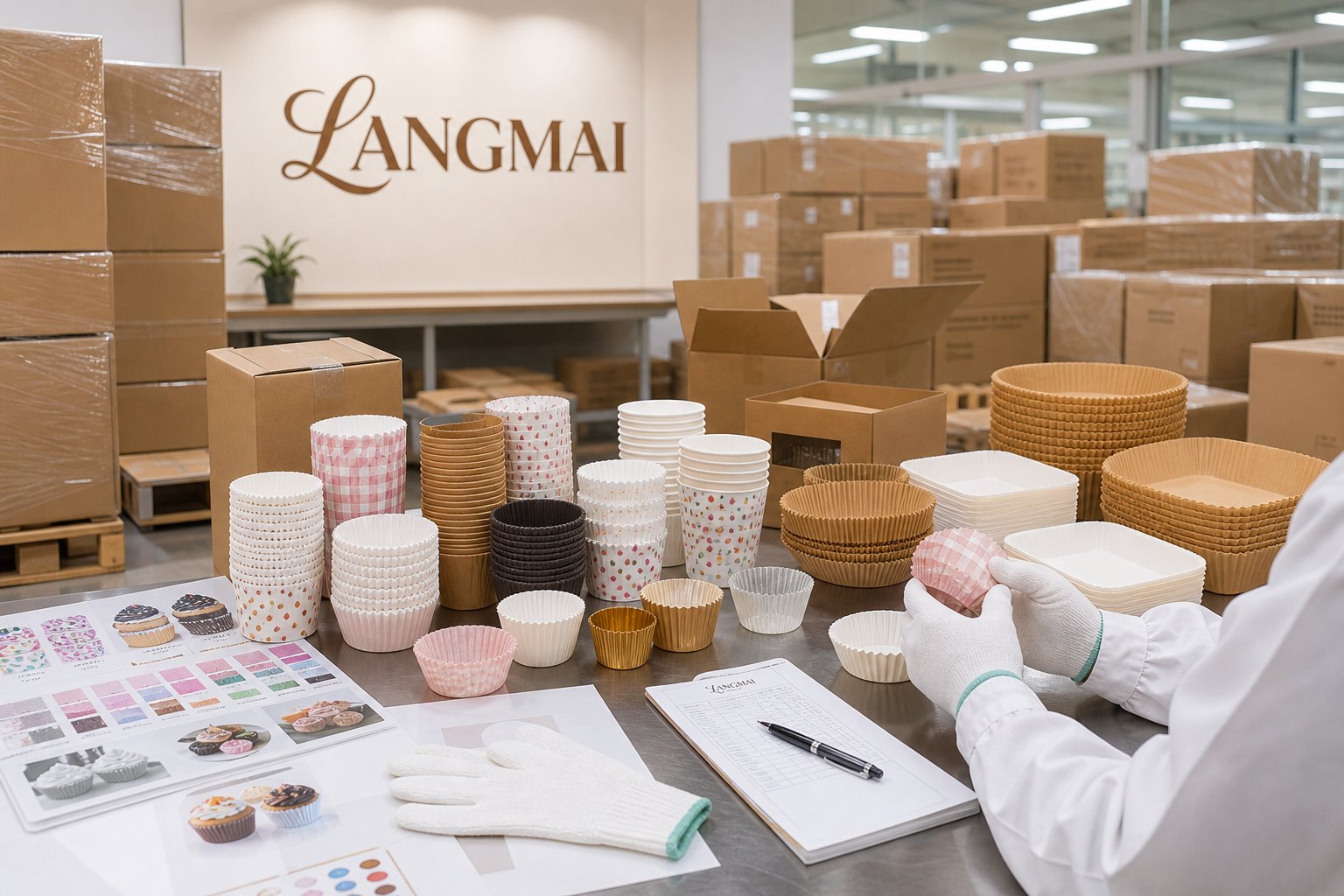
LANGMAI supplies several of these formats across its cake cups, muffin baking cups and roll-mouth cake cups ranges. The correct choice depends on the application and verified sample, not the product name alone.
5. Define Dimensions and Tolerances on One Drawing
A good drawing removes ambiguity. Put the SKU, revision, units, measurement arrows, nominal values and tolerances on one page. Add the substrate, colour, print reference and pan model where relevant.
Avoid a blanket tolerance such as "all dimensions plus or minus 2 mm" unless engineering and quality teams have reviewed its effect. Bottom diameter may need tighter control than flat blank diameter. A formed rim may require a separate roundness or deformation check. The tolerance should reflect process capability and the consequences of a poor fit.
The drawing should also state how measurements are taken. A soft fluted cup changes shape under calliper pressure. Agree whether the top diameter is measured free-standing, seated in a reference fixture or lightly expanded. For height, define the base surface and the top reference point. For tulip cups, record both valley and peak height.
Use version control: issue the drawing with the RFQ, let the supplier mark tooling constraints, approve the final revision before sampling and cite the same drawing on the purchase order. Any later change should create a new revision. The phrase "same as last time" is not enough when tooling, paper or packing has changed.
6. Test Capacity With the Real Batter, Not a Nominal Ounce Label
Some catalogues use fluid ounces, but usable capacity depends on geometry, batter viscosity, expansion and crown shape.
Run a controlled bake test with the buyer's real recipe or a documented reference recipe. Record:
- Empty liner dimensions and weight.
- Pan model and cavity measurements.
- Batter mass per cavity, measured by weight.
- Fill height before baking.
- Oven type, set temperature and time.
- Finished base, top and total product dimensions after cooling.
- Overflow, sidewall folding, release and grease appearance.
- Fit in the retail insert, clamshell or bakery tray.
Weighing batter is usually more repeatable than relying on a scoop number or visual fraction. If multiple bakeries will use the same private-label liner, test the most demanding realistic batter and process. A dense, oily muffin mix can stress a cup differently from a light sponge.
The supplier should not invent a universal heat or capacity claim from paper dimensions alone. Sample confirmation under the buyer's conditions is the practical acceptance step. For additional material and release checks, use the baking paper quality-control guide alongside this size protocol.
Need samples that match an existing pan or retail insert? Send the pan dimensions, photos, target cup style and annual volume so the factory can identify standard tooling or assess a custom route.
7. Check Denesting, Stacking and Production-Line Handling
Commercial buyers should test how cups move through the bakery, not only how one cup looks on a desk. A stack that is too tight can slow manual separation or jam an automatic denester. A stack that is too loose can lean, deform or consume more sleeve and carton space.
During sample approval, take cups from the top, middle and bottom of several stacks. Check separation force, static cling, doubled cups, crushed pleats and whether the base remains flat. If cups are automatically placed, run a meaningful line trial at production speed and document misfeeds.
Paper moisture and storage conditions can influence cup shape. Keep samples and bulk goods dry, away from heat and strong odours, and in the agreed protective packing. When a cup is tightly nested for shipping, allow it to equilibrate under normal bakery conditions before concluding that it has permanent flare or deformation.
8. Connect Liner Size to Retail Packaging and Freight Cost
Cup dimensions determine packaging economics. A taller or wider format may reduce pieces per sleeve, sleeves per carton and cartons per pallet. Tulip peaks and rigid rims can create unused air in the carton. Very tight packing may improve cube efficiency but deform the product.
Request a pack-out proposal before approving the final SKU:
| Packaging item | Confirm before production |
|---|---|
| Inner pack | Pieces per sleeve, stack height, wrap or bag material, label |
| Retail pack | Count, barcode position, artwork, window or insert dimensions |
| Master carton | Internal and external dimensions, gross weight, carton strength |
| Pallet | Cartons per layer, layers, total height, wrap and pallet label |
| Container plan | Estimated carton count and protection from compression or moisture |
Measure a packed production sample rather than calculating carton size from nominal cup height. Stack pitch, bag seams and dividers all matter. Lock size before finishing consumer artwork, because a change can invalidate dielines, photography and case-pack information. The customization process shows where samples and inspection fit into the OEM workflow.
9. Approve a Golden Sample and Control Bulk Production
After the fit and bake trial passes, approve a signed golden sample. Seal and label enough reference pieces for both buyer and supplier. Record SKU, drawing revision, material, colour, production date and approval date. A photo is useful, but it cannot replace a physical reference for flare, stiffness, nesting and fit.
At production start, compare first-off pieces with the drawing and golden sample. Measurements should come from multiple mould positions or forming lanes where applicable. During the run, check at defined intervals rather than waiting for final inspection.
A practical control record should cover bottom and top diameter, height, flatness, pleat formation, stack height for a fixed cup count, pieces per sleeve, print checks and the production lot number.
For shipment inspection, draw cartons from different pallet positions. Recheck dimensions, counts, stack condition, carton marks and selected bake performance against the approved plan. A carton from the top layer alone is not representative of a large shipment.
10. Troubleshoot Common Size and Fit Problems
The liner buckles in the pan
The liner may be too wide at the base or top, the taper may not match the cavity, or pleats may be compressed unevenly. Compare both cup and cavity drawings. Do not solve a systematic mismatch by forcing the liner into every cavity.
Cups are difficult to separate
Review nesting pitch, pleat geometry, static, packing compression and storage humidity. Test samples from across the stack. For automated lines, supplier and buyer should evaluate denesting with the actual equipment.
Bulk cups differ from the approved sample
Quarantine affected lots, record measurements by carton and lot, and compare them with the signed drawing and retained sample. Review tooling, raw paper, forming settings, packing compression and inspection records before deciding on sorting, rework or replacement.
11. Quote-Ready Cupcake Liner Size Checklist
Send the following information when requesting a wholesale quotation:
- Product style: fluted liner, tulip cup, muffin cup, freestanding cup or roll-mouth cup.
- Bottom diameter, top diameter and height in millimetres.
- Tulip peak and valley height or rim geometry where relevant.
- Pan cavity bottom, top and depth measurements, with photos or drawing.
- Batter type, batter mass, bake profile and expected finished product.
- Paper, grease resistance, colour and custom print requirements.
- Destination market and required food-contact documentation.
- Pieces per retail pack, sleeve and carton.
- Annual volume, first-order quantity and requested delivery window.
- Sample quantity and whether a factory, bakery-line or shipment inspection is required.
If an existing product must be duplicated, send unused cups from different packs plus the pan and retail packaging where possible. The buyer should still approve the resulting drawing and trial sample.
FAQ
What is the standard cupcake liner size?
A common market reference is a liner with a bottom diameter near 50 mm and a wall height around 30 to 35 mm, but there is no universally interchangeable standard. Measure the pan cavity and confirm the supplier's bottom diameter, top diameter and height before ordering.
How do I measure a cupcake liner for a wholesale order?
Measure the bottom diameter, top opening and vertical wall height in millimetres. For fluted cups, also record the flat blank diameter or pleat details if available. State the measuring method and send a drawing, pan measurements and physical sample.
Should the liner match the pan's top diameter exactly?
Not necessarily. The correct relationship depends on cavity taper, paper flexibility and cup flare. The liner should sit flat without severe buckling or excessive looseness. A physical fit and bake test is more reliable than matching one nominal number.
Can a supplier copy an existing cupcake liner size?
Usually the supplier can measure a clean unused reference and compare it with existing tooling. However, the buyer should approve a new technical drawing and sample because paper structure, pleat design and forming method can affect performance even when nominal dimensions look similar.
How many samples should a buyer test?
Test enough cups to represent more than one stack and, for a production bakery, more than one pan cycle. The exact quantity depends on risk and order size. Include fit, bake, release, denesting and retail-pack checks rather than approving one visual sample.
What dimensions belong on the purchase order?
Reference the approved drawing revision and list the critical dimensions, tolerances, units, material, print, pack count and inspection method. The purchase order should also identify the approved physical sample and destination-market documentation requirements.
CTA
Send LANGMAI your pan measurements, target liner drawing, product photos, batter application, packaging format and order volume. The team can compare available formats, prepare samples and discuss an OEM or ODM specification before bulk production.
Send Your Cupcake Liner Requirements
Conclusion
Cupcake liner sizing is a fit-and-process decision, not a label-selection exercise. Mini, standard and jumbo can start a conversation, but a dependable wholesale order needs bottom diameter, top diameter, height, cup geometry, tolerances and a defined measuring method. The buyer then needs to prove the specification in the actual pan, batter, bakery line and retail pack.
Lock those results into a revision-controlled drawing, signed sample and inspection plan. That work prevents common failures such as buckled liners, denesting jams, inconsistent cake shape, crushed stacks and packaging rework. It also gives suppliers enough information to quote accurately and maintain the same SKU across repeat shipments.
Sources
- WebstaurantStore, Types and Styles of Baking Cups: https://www.webstaurantstore.com/guide/629/types-and-styles-of-baking-cups.html
- Doric Crimped, Baking Кейсы and Liners Size Guide: https://www.doriccrimped.co.uk/downloads/Doric-Cupcake-and-Liner-Size-Guide-Web-Apr23.pdf
- Enjay Converters, Cupcake liners Product Guide: https://www.enjay.com/_files/ugd/ffabf6_62373640d5ac47be90f4f3195e2c33fc.pdf