
Introduction
Paper baking cups are one of the least efficient products to ship by volume. They are light — a 40-foot container of stacked paper cups may weigh only four to six tonnes against a payload capacity five times higher — yet their nested forms and protective cartons consume enormous cube. The result is that freight and duties frequently represent 15–25% of the landed cost of a cup, and a buyer who optimizes unit price while ignoring load efficiency is leaving real money in the port. Cup programmes usually ship alongside pan lining; our baking parchment paper manufacturing programme specs cover the sheets and rolls that pair with them.
Unlike heavyweight goods, where freight economics are fixed, paper packaging offers unusual room for improvement. This guide covers where cube is lost, how carton and pallet decisions change cost per unit, and what to negotiate with suppliers before the next container booking. Buyers verifying these specifications can review the certificate library alongside supplier documentation requests.
Why Paper Cups Waste Cube: The Physics of the Problem
Three structural factors drive the cube problem:
- Nested geometry. Cups nest into each other, which is efficient within a stack, but stacks must be protected, counted, and subdivided into sellable inner packs — and every subdivision adds walls and air.
- Crush protection requirements. Paper is light but the product cannot tolerate crushing. Inner cartons need adequate board grade, and stacking strength must survive ocean transit humidity, which softens board over weeks at sea.
- Shape mismatch. Tall, narrow cup stacks loaded on standard pallets leave voids at pallet edges and at the container ceiling unless carton dimensions are engineered against the pallet footprint.
The compounding effect is significant: a 5% void reduction at the pallet level, repeated across pallet-to-container and container utilization, can move hundreds of thousands of additional cups into the same 40-foot high-cube container. Where a bakery lines trays and moulds product in the same run, our private-label parchment paper supplier are quoted with the cup programme for a single documentation package.
Carton Design: The Highest-Leverage Decision
Carton dimensions are the single biggest lever, and they should be designed backwards from the container, not forwards from the cup.
Start from the internal dimensions of a 40-foot high-cube container (approximately 12.03 m long, 2.35 m wide, 2.70 m high usable) and your chosen pallet size (typically 1.2 x 1.0 m or 1.2 x 0.8 m Europool). Design the master carton so that:
- An integer number of cartons fits the pallet footprint with minimal overhang and minimal edge voids.
- Carton height divides the usable stacking height cleanly, respecting the maximum safe stack height for board strength — usually 1.6–1.8 m of product before top-heavy instability and crush risk increase.
- Inner pack counts (e.g., 1,000 cups per master carton, 50 per polybag) multiply cleanly so no air is shipped inside half-empty inner packs.
Then ask the supplier to model two or three carton configurations. A carton that is 1 cm wider than optimal seems trivial, but at 12+ cartons per layer and dozens of layers per container, it can cost you an entire carton column per row. Suppliers who convert their own products can usually re-nest stacks to a target carton dimension without changing the cup at all — but only if you ask.
Palletization Strategy: Palletize Loose or Floor-Load?
Buyers importing from Asia to Europe or North America choose between palletized loading and floor-loading loose cartons.
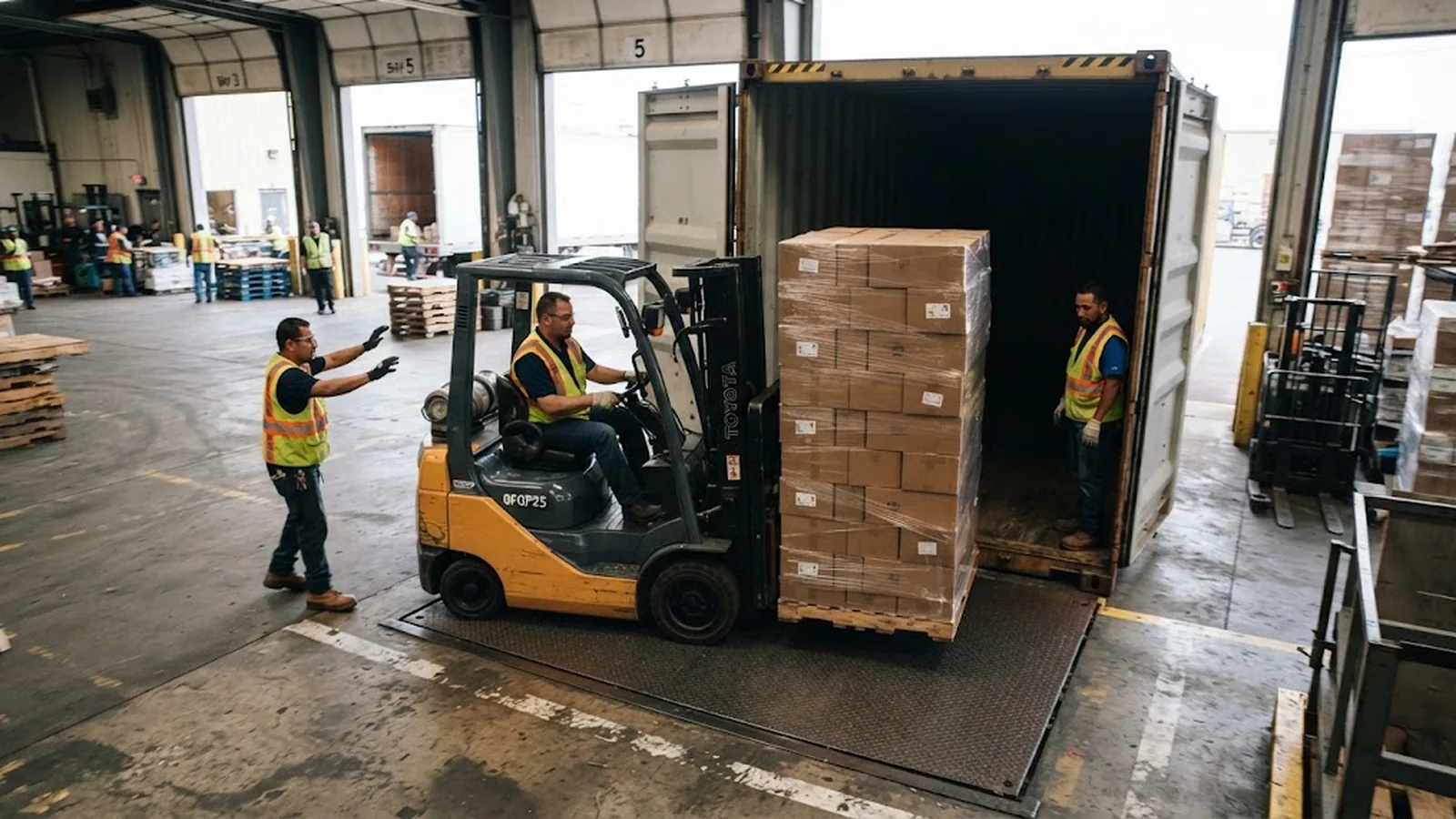
Palletized loading costs cube — typically 8–12% of container space goes to pallet footprint and unusable height above the deck structure — but wins on labor (faster load and unload, forklift handling end to end), damage reduction, and warehouse traceability. It is the default for buyers whose destination warehouses are pallet-based, and effectively mandatory if the goods flow into automated distribution centers.
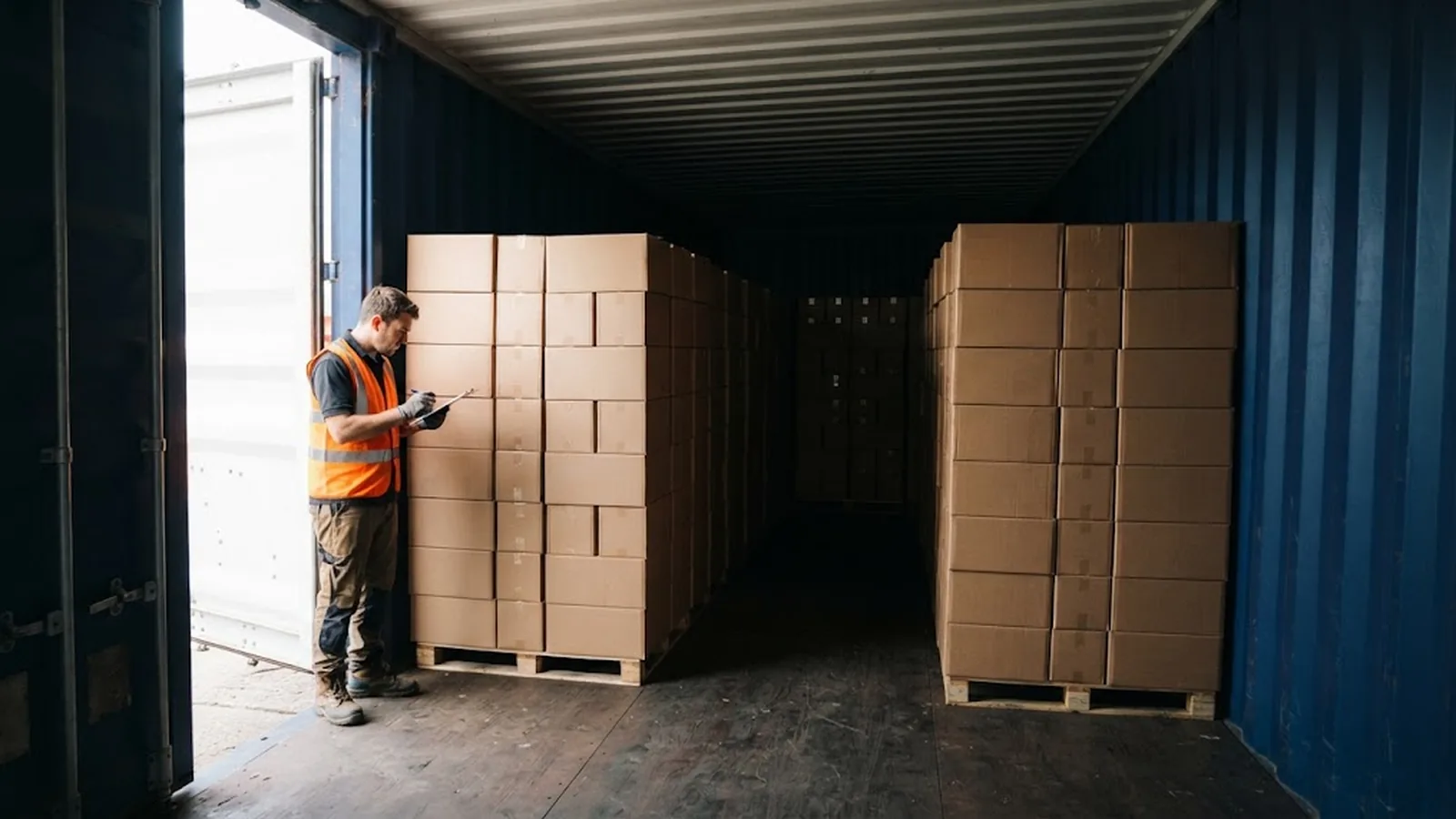
Floor loading maximizes cube utilization — experienced loaders can reach 85–92% container fill versus 78–85% palletized — but requires labor at both ends and tolerates more handling damage. For very high-volume, low-margin programs the freight saving can be decisive.
A middle path gaining popularity: slip-sheet loading, where pallets are replaced by thin slip-sheets and the container is loaded with a push-pull forklift attachment at both ends. This keeps unitized handling while recovering most pallet cube. Confirm your destination warehouse can handle slip-sheets before committing.
Container Utilization Metrics to Track
Put four numbers on every shipment and trend them:
- Units per container — cups per 40' HC, tracked shipment over shipment by SKU mix.
- Cube utilization — theoretical carton cube divided by container cube; target 85%+ palletized, 90%+ floor-loaded.
- Weight utilization — for paper cups this is usually far below capacity, but verify you are not hitting road weight limits on the destination drayage leg, especially with moisture-uptake during transit.
- Damage and moisture claims rate — loading more tightly is not free; crushed corners and humidity-warped cartons cost more than the cube you saved.
Moisture deserves special attention: paper board loses stacking strength in humid ocean transit, so cartons engineered for a 40-day monsoon-season crossing need more headroom than a 20-day dry-season route. Specify board grade and a destination-climate test (e.g., conditioning board per standard humidity cycles) rather than accepting a generic "export carton" specification.
Negotiating Load Efficiency with Suppliers
Load efficiency is a contract topic, not a shipping topic. Put these items in the RFQ:
- Carton dimension flexibility — ask whether carton sizing can be adjusted to your container math and at what tooling or minimum-order cost.
- Nesting count per stack and per carton — confirm the actual cup count, not a nominal count; nesting tolerance variations change real counts.
- Loading plan per order — require a documented loading diagram per shipment showing carton arrangement, layer counts, and calculated utilization, so every container can be audited against the plan.
- Mixed-SKU loading rules — for programs with several cup sizes, define which SKUs are container-compatible so a mixed order does not strand cube.
Buyers who share their destination warehouse constraints (dock height, pallet system, automation) consistently get better loading plans than those who simply order FOB and let the factory improvise.
FAQ
How many paper baking cups fit in a 40-foot high-cube container?
It depends entirely on cup size and carton design. As an order of magnitude, standard-size nested baking cups in well-engineered cartons can reach into the millions of units per 40' HC, but the honest answer comes from a supplier loading calculation for your specific SKU mix — ask for the model, not a round number.
Is floor-loading worth the labor cost?
Floor-loading typically recovers 5–8 percentage points of container cube versus palletization. Run the arithmetic: multiply the recovered cube by your cost per unit of freight, and compare against destination de-vanning labor and expected damage increase. High-volume single-SKU programs usually favor floor loading; mixed or automation-fed warehouses usually favor pallets.
What is slip-sheet loading and when does it make sense?
Slip-sheets replace wooden pallets with thin fiber or plastic sheets, and containers are loaded and unloaded with push-pull forklift attachments. It preserves unitized handling while recovering nearly all pallet cube. It requires both origin and destination to have push-pull equipment, so it suits recurring lane programs more than one-off orders.
Does carton board grade affect my freight cost?
Yes, in two directions. Heavier board protects better in humid transit but adds weight and cost; lighter board saves freight but raises crush-claim risk. The right grade depends on route duration and destination climate — specify conditioning tests rather than defaulting to "export grade."
Who is responsible for container utilization — buyer or supplier?
Both, contractually. The buyer should specify carton dimensions, pallet standard, and target utilization; the supplier should produce the loading plan and be measured against it. Under FOB terms the buyer books the vessel, so agreeing the loading plan before booking is essential.
Conclusion
For light, bulky products like paper baking cups, freight is not an afterthought — it is a design parameter. Carton dimensions engineered against container and pallet geometry, a deliberate choice between pallets, floor-loading, and slip-sheets, and a loading plan written into the purchase contract routinely reduce landed cost per cup by high single-digit percentages. None of these levers require changing the product itself; they require the buyer to treat the container as part of the packaging specification and negotiate accordingly. Buyers standardising on one paper supplier can review our pre-cut parchment paper sheets and rounds next to their cup specifications.
CTA
LANGMAI manufactures paper baking cups and muffin cups with export-optimized carton designs and provides full container loading plans — units per container, utilization calculations, and stacking diagrams — for every wholesale order. Send us your destination port, pallet standard, and volume forecast, and our export team will model the lowest landed-cost configuration. Контакты LANGMAI for a freight-optimized quotation.
Sources
- U.S. Food and Drug Administration — Food Контакты Substances: https://www.fda.gov/food/food-additives-petitions/food-contact-substances
- European Commission — Food contact materials: https://food.ec.europa.eu/food-safety/food-contact-materials_en
- International Organization for Standardization (ISO) — Freight containers standards: https://www.iso.org/committee/46826.html
- FSC International — Chain of Custody Certification: https://fsc.org/en/chain-of-custody-certification