
Introduction
Cheese fails on the shelf in two visible ways: it oils through the wrapper, or it dries, hardens and discolours at the cut face. Both are paper problems, and both are decided long before the wrapper reaches the packing line. A paper that releases cleanly from a sandwich can still let fat strike through a cheese block within days, and a paper chosen purely for grease resistance can pull moisture out of a cut face and dull the surface the retailer depends on. Buyers comparing these specifications can review our custom printed baking parchment paper programme, where coating weight, base grammage and release values are documented per construction.
Cheese buyers also wrap three quite different things. A wheel or block that will ripen for weeks, pre-cut slices that must stay separate and presentable, and a retail wedge that has to look good under a display light for several days all need different paper behaviour from the same production hall. Treating them as one paper order is where most specification errors start. Buyers verifying these specifications can review the certificate library alongside supplier documentation requests.
This guide explains how greaseproof, vegetable parchment, waxed and coated papers differ in cheese applications, what drives fat migration and rind development, which formats suit cut-and-wrap lines and deli counters, and what to document so a delivered lot matches the approved sample.
LANGMAI manufactures baking paper, greaseproof paper, cake cups and food packaging paper for wholesale buyers, including cut sheets and rolls for cheese and deli packing.
Why Cheese Needs Different Paper Than a Sandwich Wrap
Three properties separate cheese from most wrapped foods:
- Fat migration. Cheese contains 20-35% fat depending on variety, and the fat is mobile at cold-room temperatures. Oils migrate into the paper structure, not just onto it. Once oil reaches the outer surface, the pack looks stained, print smears and the wrapper begins to absorb moisture unevenly.
- Moisture balance in both directions. A cut cheese face loses moisture and crusts over, while a ripening wheel can release enough moisture to make the wrapper translucent and flabby. The correct paper either holds moisture in or lets controlled amounts pass, depending on the cheese.
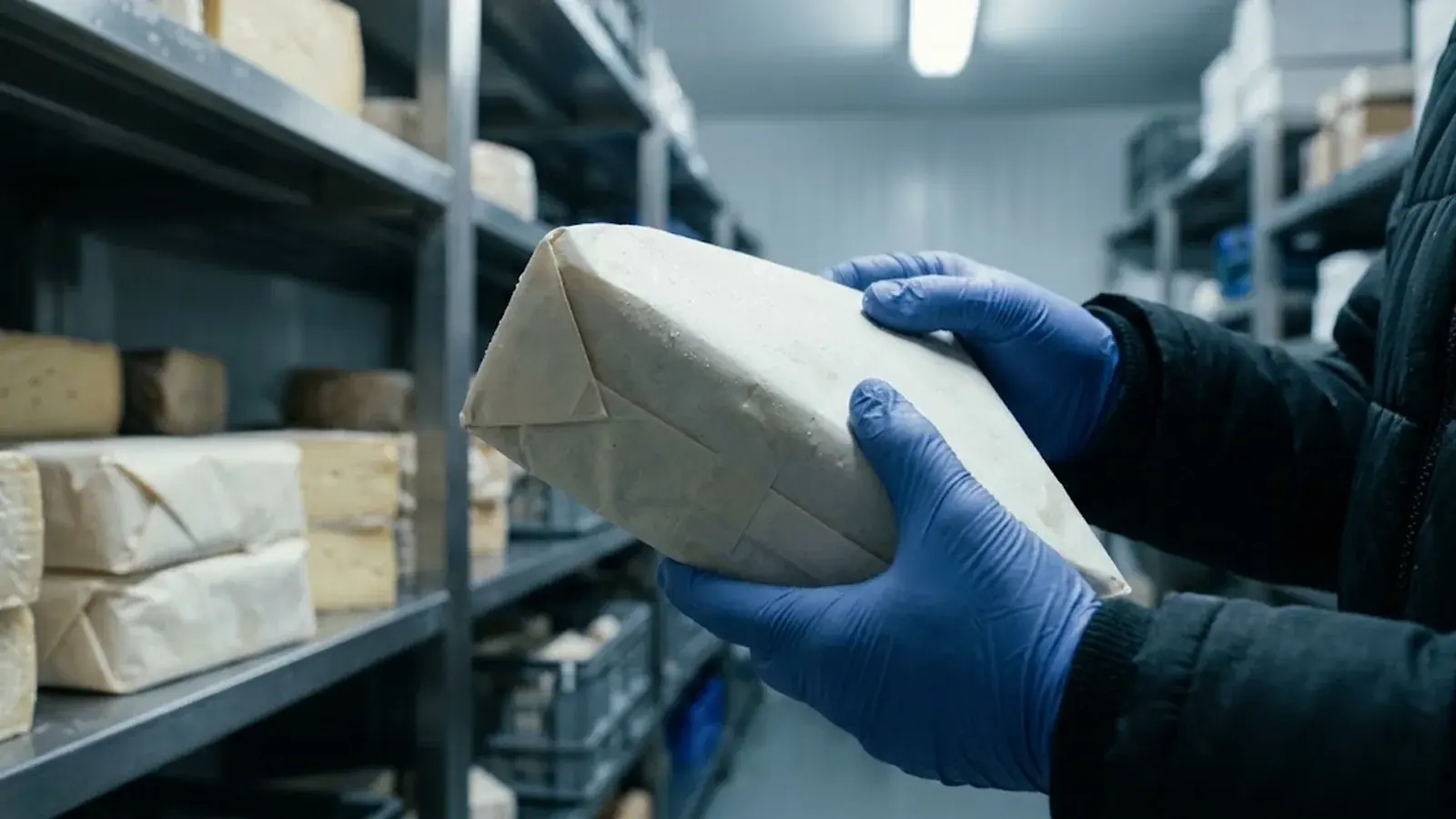
- Cold storage and condensation. Cheese is normally held at roughly 2-8 degrees C at high relative humidity. When a product moves from cold room to wrapping room, condensation forms on both product and paper, and a sheet with weak wet strength tears or delaminates exactly when it must protect the surface.
Because these pressures act together, cheese wrap selection is a barrier question, not a grammage question. Two papers at 40 gsm can behave completely differently in a cut-and-wrap line. For production volumes, the same construction logic applies to our silicone-coated parchment sheets and rolls line, quoted per roll, sheet or die-cut format.
Comparing Greaseproof, Vegetable Parchment, Waxed and Coated Grades
| Grade | How it resists grease | Wet strength | Typical cheese use |
|---|---|---|---|
| Greaseproof | Fibre hydration during refining makes the sheet dense and oil resistant | Low | Interleaving slices, short-life wrap, deli portioning |
| Vegetable parchment | Partial cellulose conversion gives oil resistance plus genuine wet strength | High | Wet or moist cheese, portions handled after chilling, butcher-style wrap |
| Waxed paper | A wax layer resists grease and blocks some moisture | Moderate | Traditional cheese wrap where cold storage only is required |
| Coated / dispersion-barrier paper | A thin functional coating controls grease, moisture or both | Depends on base sheet | Retail wedges and longer-life cut cheese needing presentable appearance |
The practical rule: choose greaseproof for dry, short-exposure jobs and slice interleaving; choose vegetable parchment when the paper will meet moisture or be handled wet; choose a coated grade when the cut face has to stay presentable for a defined shelf life. Waxed paper remains a valid, low-cost option for cold-chain cheese, but it is not a high-heat material and its wax layer must have the correct food-contact clearance for the market it ships to.
Fat Migration, Rind Development and Cold Storage
Two failures account for most complaints:
- Fat strike-through. Oil creeps through the fibre network, usually first along folds, edges and print areas where the sheet has been compressed or abraded. Heavier grammage helps only to a point; what actually slows migration is sheet density and, where needed, a functional coating. Ask the supplier to describe resistance in terms of fat or oil resistance testing rather than grammage alone.
- Rind and surface drying. A cut face wrapped in an overly absorptive sheet dries harder than the customer expects, especially in a low-humidity display case. If the retailer needs a soft, fresh cut surface, the paper must not act as a desiccant. This is where a lightly coated or parchmentised grade usually beats a plain absorptive sheet.
Then check the cold-chain cycle. A cut-and-wrap operation that wraps at cold-room temperature, ships on a chilled vehicle and displays in a semi-open case will expose the wrapper to repeated humidity swings. Test the sheet through that cycle, not on a bench at ambient, and inspect for condensation marks, ink transfer and edge curl.
Formats for Cut-and-Wrap, Deli Counters and Retail
Format decisions decide throughput as much as material choice:
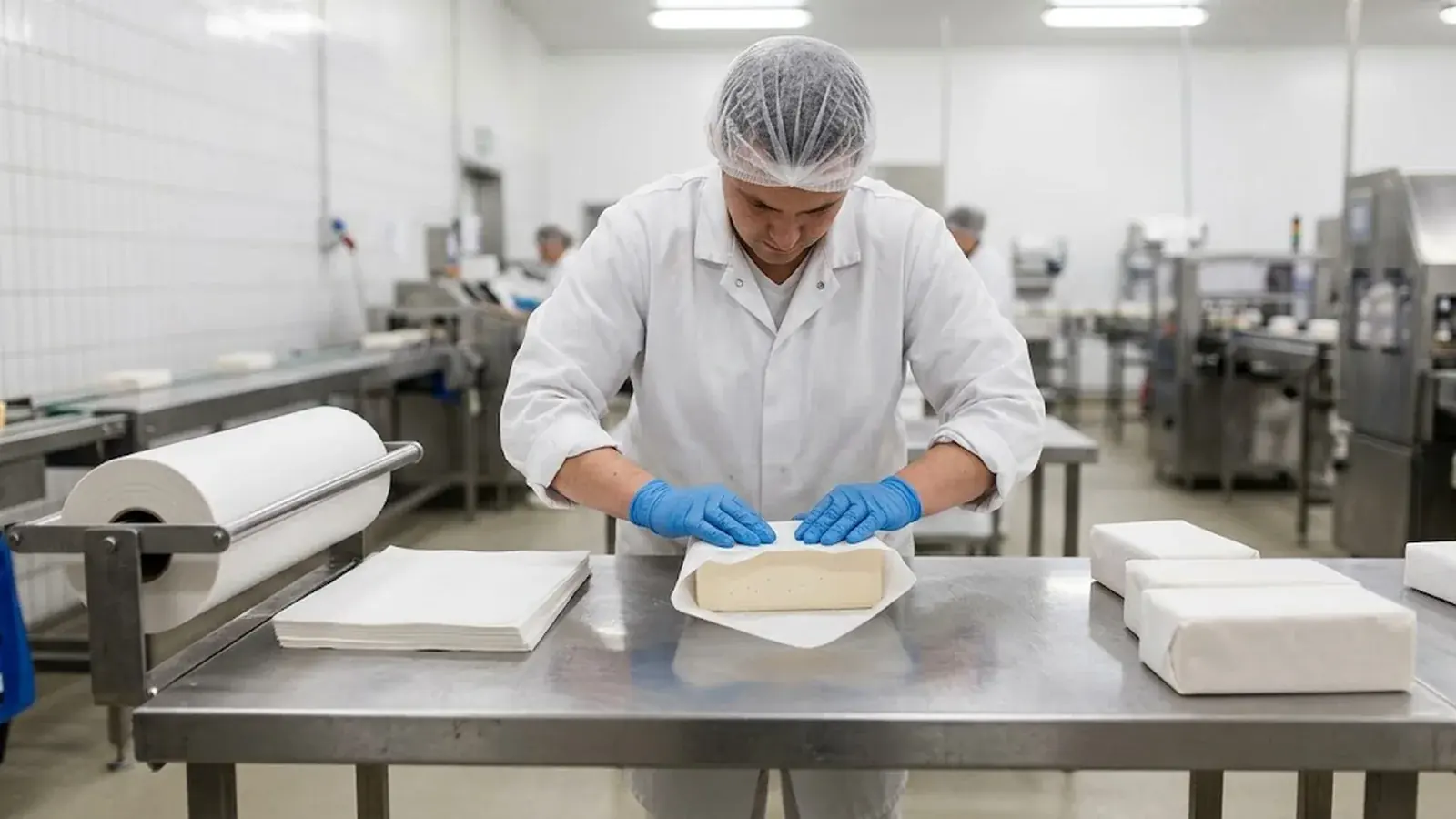
- Cut sheets matched to block and wedge dimensions, with a defined overhang so the pack folds once and seals predictably. Sheets cut fractionally short force a double fold that traps air and accelerates drying.
- Rolls for variable formats such as counter-cut portions in a delicatessen, bought in the width of the wrap station to reduce trim waste.
- Interleaved sheets for pre-cut slices, where each slice needs separation rather than a sealed pack, so the paper must be thin, flat and free of loose fibre.
- Die-cut or pre-folded wraps for retail wedges where appearance matters and staff need a repeatable fold every time.
Also confirm sheet count per pack and pack presentation. Cheese lines that run at speed lose more material to double-sheeting and misfeeds than to any material difference between two acceptable grades, and a poorly presented stack will be used incorrectly no matter how good the paper is.
Printing and Retail Presentation
Printing on cheese wrap introduces two risks that buyers should manage deliberately:
- Ink and coating contact. For direct food contact, the printed side is normally placed away from the cheese, and the ink system must still have the appropriate food-contact clearance for the destination market. If print is on the food-contact face by design, say so in the specification so the correct ink system is quoted.
- Set-off and abrasion. Ink that transfers to the cheese surface or to the sheet above it in a stack is a quality defect. Specify print coverage limits, require a set-off check in the trial, and confirm how the roll or stack is interleaved.
Colour and finish should be trialled under the lights used in the retail case, not in an office, because cheese display lighting is unforgiving of pale, uneven print on a translucent sheet.
Food-Контакты Documentation for Cheese Wrap
Cheese wrap is a food contact material and needs the same paper trail as any other packaging in the range:
- A declaration of compliance naming the paper, the coating or wax, and the inks used.
- Confirmation that the material is suitable for fatty and moist foods, since cheese is both.
- Migration or extractive testing appropriate to the paper and coating system, from a laboratory working to a recognised quality system.
- Clear statements on the maximum storage temperature and conditions, which matters for waxed grades in particular.
- Traceability from delivered lot back to the production batch, so a complaint can be investigated without a full recall.
Keep the approved sample as a retained reference, and compare incoming lots against it for sheet thickness, opacity, print and release rather than against the drawing alone.
What to Put in the Specification
- Grade and construction: greaseproof, vegetable parchment, waxed or coated, with base grammage.
- Grease and oil resistance requirement, plus a moisture barrier target where the shelf life demands one.
- Wet strength requirement if the sheet meets condensation or is handled wet.
- Format: sheet dimensions and tolerances, or roll width, core and length.
- Ink system and which face is intended to contact the cheese.
- Declaration of compliance and the test reports behind it, covering fatty and moist contact.
- Retained sample reference and the incoming checks the supplier will repeat per lot.
FAQ
Which paper is best for wrapping cheese?
There is no single best grade. Greaseproof suits dry, short-exposure jobs and slice interleaving; vegetable parchment is the safer choice where the paper meets moisture or is handled wet; waxed paper works for cold-chain cheese with the right clearances; and a coated grade is worth the cost when a retail cut face must stay presentable for a defined shelf life.
How do I stop fat from striking through cheese wrap?
Fat migration is slowed by sheet density and, where necessary, a functional coating rather than by grammage alone. Check resistance along folds, edges and printed areas, since those are the first places oil appears, and test the actual cheese at real cold-room temperatures rather than using a simulant at ambient.
Should cheese wrap be printed on the food-contact side?
Usually not. The standard approach is to print on the outside face and keep the food-contact face plain, which reduces ink migration risk and simplifies the declaration of compliance. If the design requires print against the cheese, state this explicitly so an appropriate ink system is quoted and tested.
Why does my cheese wrap go limp and translucent?
That is moisture uptake. The cheese is releasing moisture and the sheet is absorbing it, which weakens the paper and spoils presentation. Choose a grade with better moisture control or wet strength for that variety, and check the cold-chain cycle for condensation points that are wetting the pack.
Conclusion
Cheese wrap is a barrier decision first and a print decision second. Match the grade to the cheese and its shelf life, verify grease and moisture behaviour at real cold-room conditions, choose a format that suits the packing line, and hold the delivered lots against a retained sample with documentation that covers fatty and moist contact. Our food-grade die-cut parchment rounds programme publishes the test data behind each grade so specifications can be verified before ordering.
CTA
Контакты Sales for LANGMAI greaseproof paper, vegetable parchment, waxed and coated wraps in cut sheets and rolls, with declarations of compliance and cut-and-wrap trials for cheese and deli programmes.