Introduction
Custom printed cake cups are one of the highest-impact branding decisions a bakery or dessert brand can make: a logo on the cup travels with every photo a customer posts. But for procurement teams, custom printing also introduces the most common sources of delay and rework in the whole order cycle — artwork that arrives in the wrong format, colors that shift between proof and press, food-contact questions about inks that nobody asked at quotation stage, and minimum order quantities that surprise first-time buyers. Cup programmes usually ship alongside pan lining; our food-grade die-cut parchment rounds specs cover the sheets and rolls that pair with them.
This guide walks through the full custom printed cake cup workflow from a wholesale buyer's perspective: preparing artwork files, understanding color management, what MOQs are realistic and why they exist, how lead time is built up, and the ink and food-contact questions to settle before you approve a proof. Buyers verifying these specifications can review the certificate library alongside supplier documentation requests.
Why Printing Specifications Differ from Paper Specifications
A standard (unprinted) cake cup is a straightforward paper product: specify size, paper grade, and food-contact compliance, and the order is defined. Custom printing adds an entire second production layer — ink selection, printing process, color matching, and approval cycles — each with its own specifications and lead time contribution. This is why printed orders are quoted with different MOQs and longer lead times than plain-stock orders, and why two suppliers quoting the "same" cup can differ widely once printing is involved. Where a bakery lines trays and moulds product in the same run, our custom silicone-coated baking parchment paper are quoted with the cup programme for a single documentation package.
The practical consequence for buyers: treat artwork and printing decisions as procurement decisions, not just design decisions. Choices made in the design file directly affect cost, MOQ, and schedule. The factory and certificate library lists the third-party audits and test reports behind these claims.
Artwork Requirements: What Suppliers Actually Need
Most printing delays trace back to artwork. Before requesting a quotation for custom printed cake cups, prepare:
- Vector source files — AI, PDF, or EPS with text converted to outlines and strokes expanded. Bitmap logos (JPG, low-resolution PNG) extracted from websites cannot be printed cleanly at cup scale.
- High-resolution raster assets where vectors are impossible — minimum 300 dpi at print size.
- Color specifications — Pantone (PMS) references for brand colors rather than screen RGB values; screens do not represent print colors.
- Position and size guidance — a marked dieline showing where the logo sits on the cup wall, including bleed and safe-zone awareness, since cup forming wraps and slightly distorts flat printing.
- Font licensing confirmation — fonts must either be converted to outlines or supplied with usage rights.
Ask your supplier for their dieline template before designing. Designing to a generic template and then adapting at proof stage wastes a revision cycle, and revisions are the main driver of slipped lead times.
Color Management and Proofing
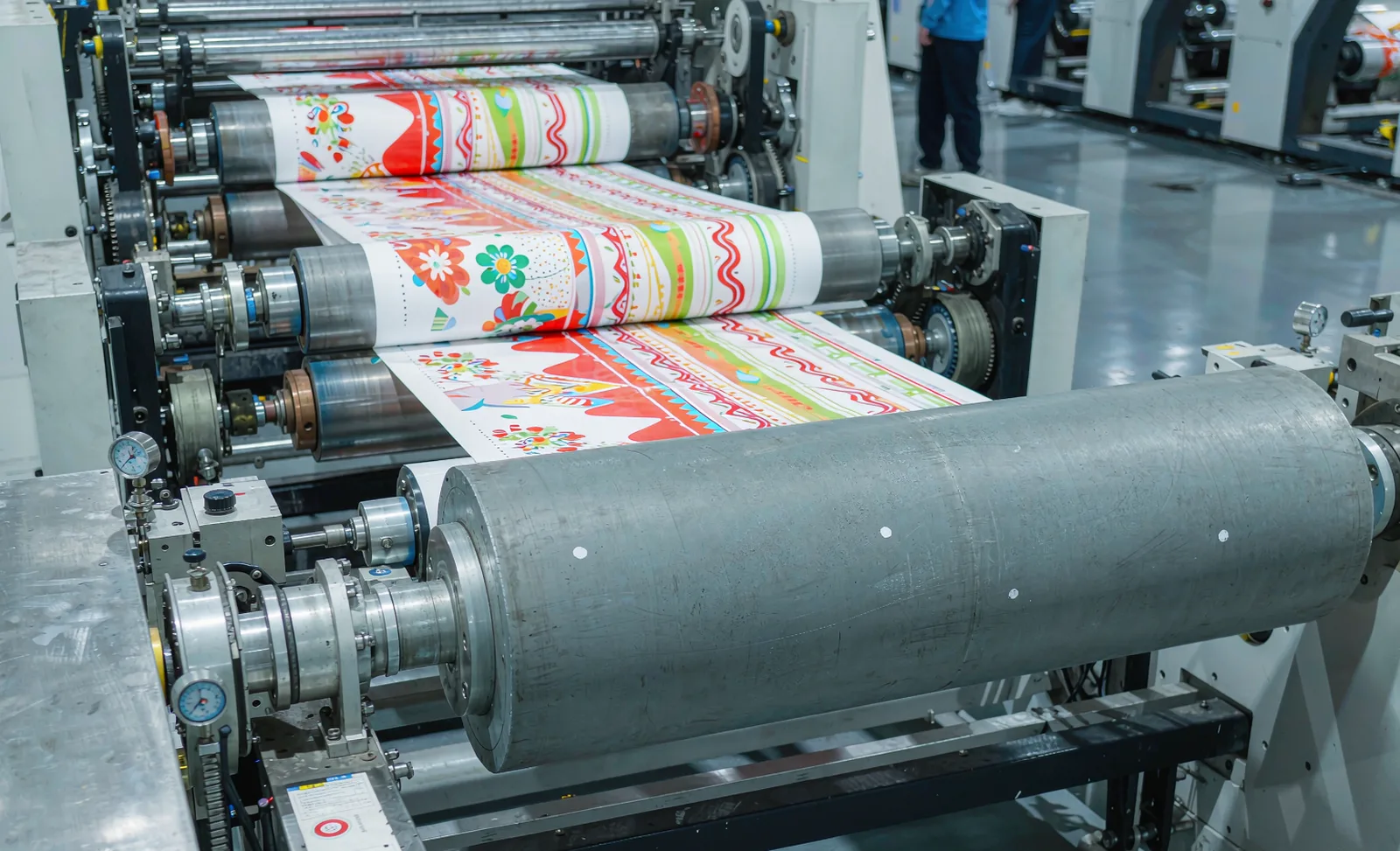
Cup printing is typically flexographic or offset, and neither process prints like a computer screen. Solid brand colors are matched with Pantone inks; photographic or gradient elements are simulated with process color, which is where surprises happen on paper substrates. Paper whiteness also affects perceived color — the same ink reads differently on bleached white paper and on unbleached or colored greaseproof stock.
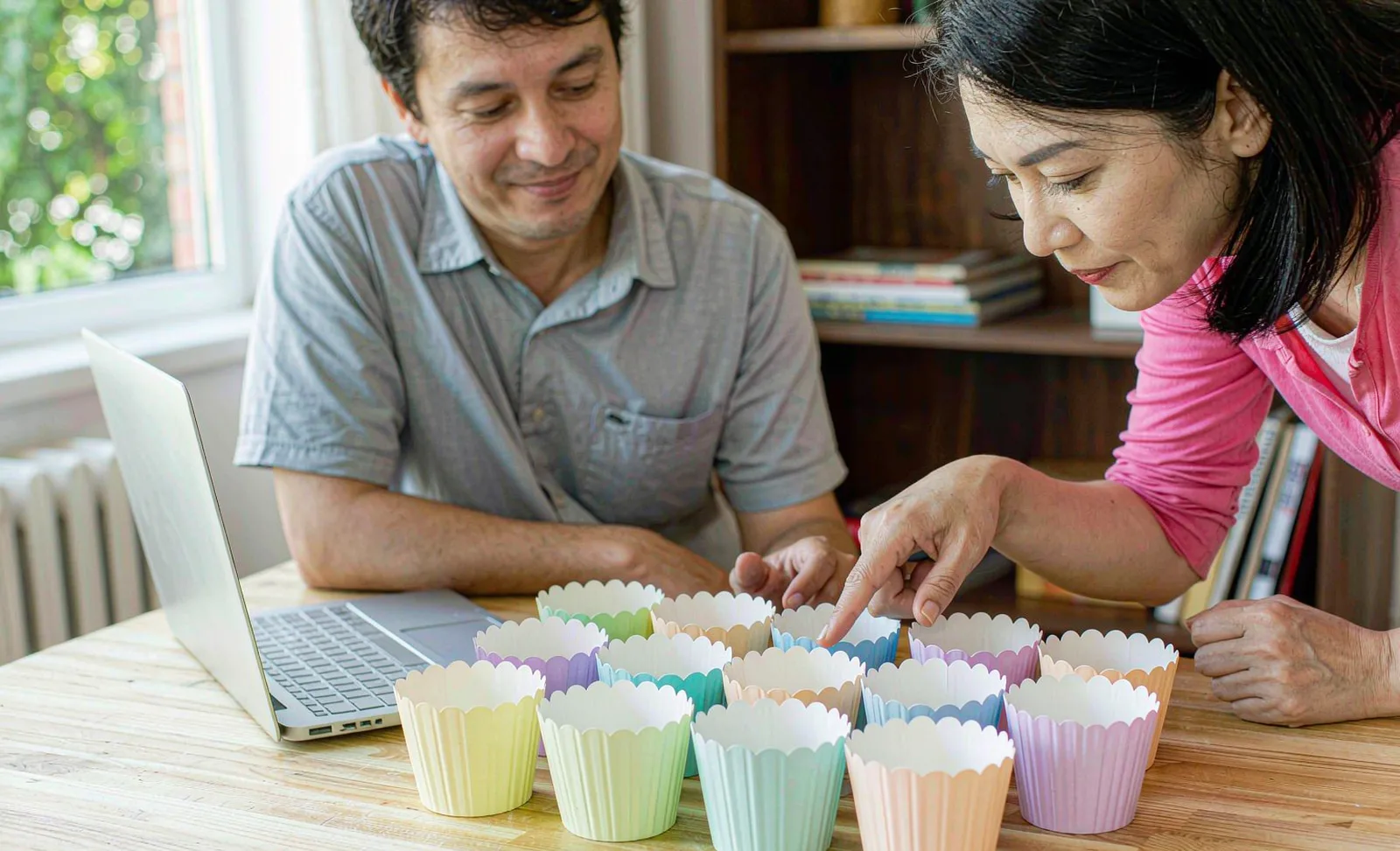
The standard workflow is: digital proof (layout and position approval) followed where appropriate by a physical pre-production sample or proofing plate for color approval. Buyers should sign off the physical sample for color-critical projects — a signed physical proof is the reference both parties return to if a shipment is disputed. Build one proofing round plus one revision into your schedule; most projects need them.
MOQ: Why It Exists and What to Expect
Minimum order quantities for printed cake cups exist because setup dominates cost: plates or cylinders are made for the print run, press time is scheduled, and the paper is allocated in production lots. A short run spreads these fixed costs across too few units, making the per-unit price unattractive to both sides.
Realistic ranges depend on cup size and print complexity, but buyers should expect printed MOQs to sit well above plain-stock MOQs — typically in the tens of thousands of units per design, with multiple sizes shareable in some programs but not all. Multi-color printing and multiple designs each add setup, so MOQ and price scale with design count.
Buyers can manage MOQ pressure by consolidating designs, standardizing one logo across cup sizes, and ordering against a rolling forecast rather than in many small urgent orders. A supplier that produces in-house — rather than trading out the printing — can usually offer more flexible MOQs and shorter, more reliable lead times.
Lead Time: How It Builds Up
A typical custom printed cake cup order timeline:
- Quotation and artwork check: 2–4 working days, faster if artwork arrives print-ready.
- Proofing: 3–7 days for digital proof, plus 5–10 days if a physical pre-production sample is shipped.
- Production: 15–30 days after proof approval for standard volumes, longer for peak season or multi-color work.
- Shipping: variable by lane; sea freight to major markets commonly adds 20–40 days door-to-door depending on route and customs.
The critical path insight for buyers: every artwork revision restarts the proof stage, and proof approval is usually the gate to production scheduling. Locking artwork before requesting a quotation — rather than after — is the single largest schedule saver available to the buyer.
Ink and Food-Контакты Questions to Ask
Printing inks are a food-contact topic, and buyers should ask specific questions rather than accept a general "food safe" assurance:
- Are the inks suitable for food-contact packaging, and can the supplier provide a declaration covering the ink system for the relevant market (for example, FDA food-contact substance rules in the US, or Framework Regulation (EC) No 1935/2004 in the EU)?
- Does the design keep printing out of direct food-contact zones — the inside surface and the rim area where lips and food touch? Good practice and many brand standards keep the print exterior-only with an unbudded or unprinted interior.
- Are low-migration ink systems available for designs where contact is unavoidable?
- Can the supplier provide the declaration of compliance for the finished printed cup, not just the base paper?
A supplier who answers these with documents — not assurances — is the supplier whose printed cups will pass your customers' audits.
FAQ
Q: What artwork files do I need for custom printed cake cups?
A: Vector files (AI, PDF, or EPS) with fonts converted to outlines, Pantone color references for brand colors, and a completed supplier dieline showing logo position with bleed. Avoid website-extracted JPG logos — they lack the resolution and clean edges required for printing at cup scale.
Q: What is the typical MOQ for printed cake cups?
A: Printed MOQs are substantially higher than plain-stock MOQs — commonly in the tens of thousands of units per design — because plate-making and press setup are fixed costs. Consolidating designs and standardizing one logo across sizes are the most effective ways to manage MOQ.
Q: How long does a custom printed cake cup order take?
A: Expect roughly 4–8 weeks from print-ready artwork to ex-works, including proofing and production, plus transit time. The timeline extends with every artwork revision, so finalizing artwork before quotation is the biggest schedule saver.
Q: Are the printing inks food safe?
A: Reputable suppliers use ink systems suitable for food-contact packaging and can provide declarations of compliance covering the finished printed cup for your target market. Confirm that printing stays on the exterior surface away from direct food-contact zones, and ask for documentation referencing the applicable regulations rather than a general assurance.
Conclusion
Custom printed cake cups turn a functional item into a brand asset, but they reward preparation. Print-ready vector artwork, Pantone-specified colors, a physical proof sign-off for color-critical designs, MOQ planning against a rolling forecast, and documented ink compliance are the five habits that separate smooth printed-cup programs from expensive ones. Bring these questions to the quotation stage, and the printing layer of your order becomes a schedule line — not a risk list. Buyers standardising on one paper supplier can review our wholesale parchment paper rolls and sheets next to their cup specifications.
Call to Action
LANGMAI manufactures cake cups and baking cups with in-house custom printing, providing dielines, color management, physical pre-production proofs, and finished-cup declarations of compliance. Send your artwork for a quotation and lead time at https://www.lmcakecup.com.
Sources
- European Commission — Materials in contact with food (Regulation (EC) No 1935/2004): https://food.ec.europa.eu/food-safety/food-contact-materials_en
- FDA — Food Контакты Substances program: https://www.fda.gov/food/food-ingredients-packaging/food-contact-substances-fcs
- EuPIA — European Printing Ink Association, food packaging ink guidelines: https://www.eupia.org
- Swiss Federal Food Safety and Veterinary Office — Ordinance on materials and articles (food contact): https://www.fedlex.admin.ch/eli/cc/2016/568/en
- Pantone — Color standards and matching system: https://www.pantone.com