Introduction
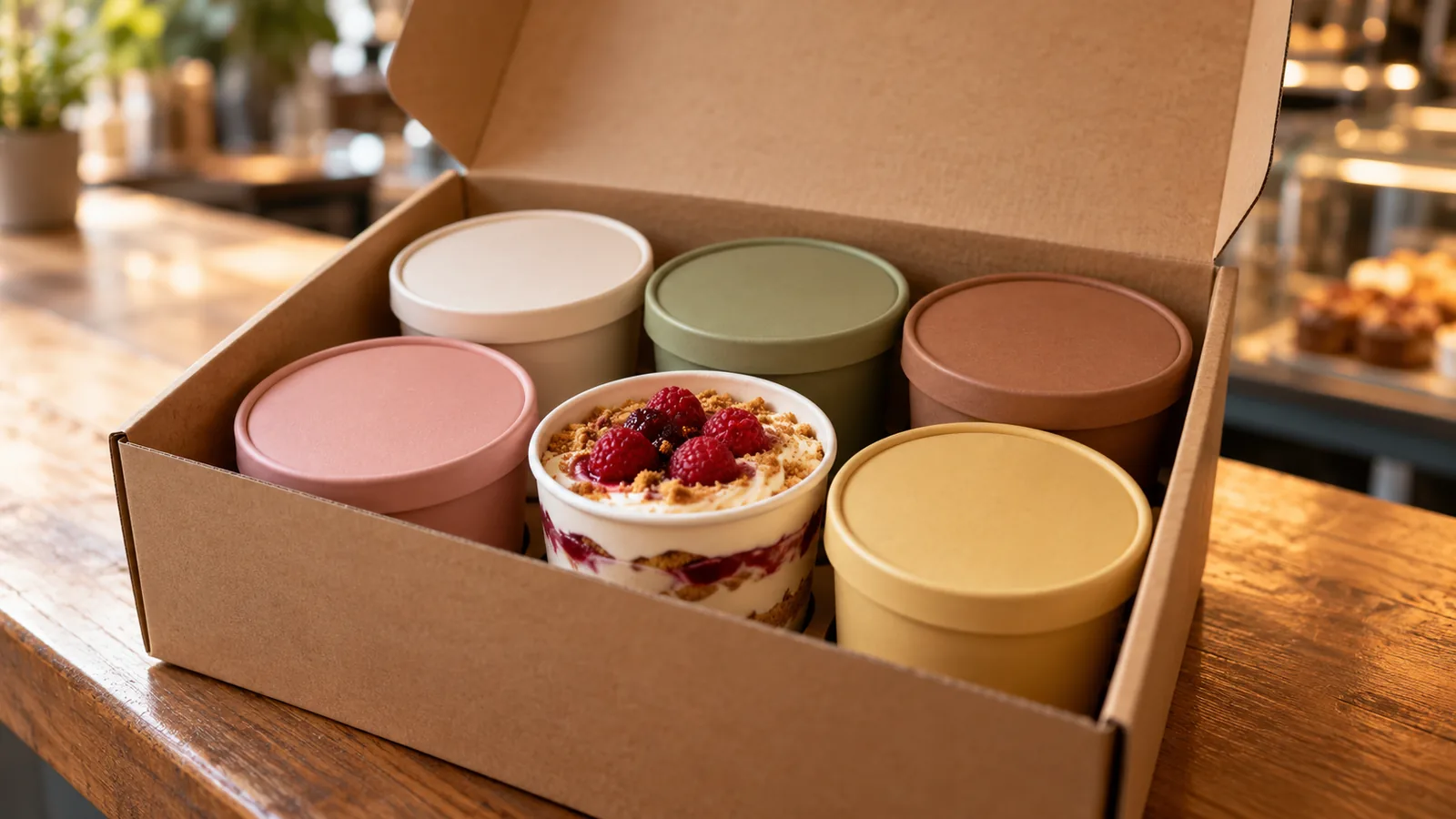
A cloud kitchen dessert brand lives or dies by two things: how the product survives delivery, and how it looks in the photo that earned the order. Paper cake cups sit at the center of both. Unlike a dine-in bakery, a delivery-only operation never controls the last thirty minutes — the cup rides in a bag through traffic, next to a hot coffee and a cold smoothie, gets opened on a customer's table and is judged first through a camera lens. Standard retail packaging assumptions break down here. This guide covers how delivery-focused dessert brands should size cake cups, which barrier properties actually matter when there is no display case, how to design for the photo, and how to structure wholesale purchasing around MOQs and growth. Cup programmes usually ship alongside pan lining; our pre-cut parchment paper sheets and rounds specs cover the sheets and rolls that pair with them.
1. Why Delivery Changes the Cup Specification
Three differences between a cloud kitchen and a retail bakery define the spec: Where a bakery lines trays and moulds product in the same run, our custom printed baking parchment paper are quoted with the cup programme for a single documentation package.
- No climate control in transit. Chilled mousses, no-bake cheesecakes and panna cotta cups leave refrigeration and sit in insulated bags. The cup must hold its shape and barrier through condensation cycles — a property that matters far more than in a refrigerated display. Cup behavior in chilled applications is detailed in the chilled no-bake dessert cups guide.
- Movement instead of stillness. Delivery bags tilt, bounce and stack. A weak base or a thin sidewall that is invisible in a static bakery becomes a leaning, leaking dessert on arrival. Self-supporting construction and a flat, rigid base are non-negotiable for transit.
- The unboxing moment is the store visit. The customer's first physical contact with the brand is opening the box. A cup that is soggy at the rim, stained on the outside or collapsed at the corner damages the brand more than a late driver does.
2. Capacity and Sizing for Dessert Menus
Size the cup to the menu's economics and the camera, not to a generic catalog:
- Portion discipline. Delivery desserts are usually portioned smaller than dine-in servings: 60–120 ml cups suit tasting flights and mini cheesecakes; 150–250 ml suits single-serve mousse and trifles. Fixed fill weights depend on a consistent cup capacity — the cake cup capacity sizing guide explains matching capacity to fill lines.
- Height versus diameter. Tall, narrow cups photograph elegantly and protect layered desserts from sliding, but are harder to fill consistently on a fast line. Wide, shallow cups show toppings well and travel with a lower center of gravity. Most delivery menus justify two SKUs at most: a tasting size and a signature size.
- Lids and stacking. If desserts carry lids, confirm lid fit on the exact cup and that lidded cups stack in the delivery bag without crushing toppings. A lid that fits on paper but not on a chilled, condensation-covered rim will fail in week one.
- Freezer-to-counter cycles. Brands that blast-freeze or hold cups frozen need paper rated for freezer storage without brittleness or delamination; the freezer-safe baking cups guide covers what to verify.
3. Barrier Properties That Decide Reviews
For a delivery dessert cup, four properties generate most five-star-versus-one-star outcomes:
- Moisture resistance. Condensation inside a delivery bag wets paper from the outside while the dessert wets it from inside. Ask for moisture-resistance data and test the cup through a full simulated delivery: filled, chilled, bagged, forty minutes, opened.
- Grease resistance. Buttercream, custards and oil-based fillings migrate into untreated paper and show as translucent stains that photograph badly. Specify grease-resistant grades and confirm resistance on your actual formulation, not a datasheet.
- Color fastness when wet. Deep-colored cups that bleed or blotch at the rim look unappetizing. Color stability under wet and chilled conditions is a documented test — see the color fastness testing guide.
- Rigidity at temperature. A cup rigid at room temperature can soften when filled with a chilled mousse in a warm bag. Test rigidity at the worst realistic combination, not the average one.
4. Designing for the Camera
The photo happens before the first spoonful, so design deliberately:
- Solid colors photograph cleaner than patterns. Small prints blur in compressed delivery-app photos; a clean solid-color or two-tone cup reads sharply at thumbnail size.
- Contrast with the dessert. Match cup color against your fillings: dark chocolate pops in white or kraft; pale mousses hold definition in deeper tones. Test with your actual photographer and lighting, not under shop fluorescent tubes.
- Rim quality matters most. The rim is the cup's closest point to the camera in overhead shots. A crisp, even, unblemished rim signals quality; a wavy or stained rim undoes everything inside it.
- Custom printing with restraint. A small logo on the cup or sleeve survives delivery better than full-coverage prints, which raise ink-migration questions on food contact. The custom printing artwork guide walks through proofing printed cups.
5. Buying Wholesale: MOQs, Growth and the RFQ Checklist
Delivery brands scale in steps, so structure purchasing to match:
- MOQ versus menu risk. Lock high volumes only on the cup size proven across at least one full season of the menu. For new items, negotiate a smaller first run at a higher unit price and reserve the volume price for the reorder — a far cheaper mistake than pallets of cups for a dessert that flopped.
- Consolidate two sizes, many flavors. Flavors change monthly in dessert brands; cup sizes should not. Standardizing on two capacities concentrates volume and simplifies restocking.
- Lead time and peak planning. Holiday spikes can triple dessert volumes. Put forecast volumes in the supply agreement so capacity is reserved, and confirm reprint lead times for custom-printed cups.
- Compliance baseline. Require food-contact declarations for your market and per-lot documentation. Cups touching chilled and fatty desserts sit squarely within food-contact frameworks such as FDA 21 CFR and EU Regulation (EC) No 1935/2004 — the same rules discussed in the paper baking cup food contact declarations guide.
Score RFQs on barrier test data against your real menu, rim and color quality samples, lid fit confirmation, per-lot documentation and delivery-reliability references from other e-commerce food brands — unit price last, at equal specification.
FAQ
What cup sizes should a new delivery dessert brand start with?
Two sizes cover most menus: a 60–120 ml tasting cup for mini portions and flights, and a 150–250 ml signature cup for single-serve desserts. Standardizing on two capacities concentrates purchasing volume and simplifies line filling and stock management.
Are paper cake cups suitable for chilled mousse desserts?
Yes, provided the grade is verified for moisture resistance and rigidity under chilled, condensing conditions. Test the filled cup through a simulated delivery cycle — chilled fill, sealed bag, forty minutes in transit temperatures — before committing to a volume order.
How do I stop cups staining from buttercream and fillings?
Specify grease-resistant paper grades and confirm performance on your actual formulation during sampling. Transparent datasheet claims should be backed by a filled-cup test observed over the longest realistic delivery window.
Can I get custom-printed cake cups at small quantities?
Many manufacturers offer digital or short-run flexo printing for smaller first orders, with unit prices falling at standard MOQs. Keep the artwork simple, confirm food-safe inks and expect longer lead times than for stock cups.
Conclusion
For cloud kitchen dessert brands, the cake cup is packaging, merchandising and quality control in one purchase. Size for the menu's economics and the camera, specify for transit rather than the display case, verify barriers against your real recipes, and buy in two standard capacities with volume commitments only on proven items. Brands that treat the cup as a specification — not a consumable — win the unboxing moment, order after order. Buyers standardising on one paper supplier can review our silicone-coated parchment sheets and rolls next to their cup specifications.
CTA
Send LANGMAI your dessert menu, fill weights, delivery times and target image. The team will recommend cup capacities, barrier grades and print options with food-contact documentation and samples — plus a trial quantity sized for your next menu launch.
Sources
- U.S. eCFR, 21 CFR 176.170: Components of paper and paperboard in contact with aqueous and fatty foods
- EUR-Lex, Regulation (EC) No 1935/2004 on materials and articles intended to come into contact with food
- U.S. FDA, Food Контакты Substances program
- TAPPI, Paper testing standards for grease resistance and quality control