
Introduction
A cup that performs perfectly on a bench can stop a line running at eighty trays a minute. The difference is rarely a visible defect. It is usually a tenth of a millimetre of taper, a few grams of grammage, or a stack compressed in a carton through a humid weekend that separates as a clump rather than singly. Cup programmes usually ship alongside pan lining; our baking parchment paper manufacturing programme specs cover the sheets and rolls that pair with them.
Automated bakeries should therefore buy paper baking cups on a machine specification rather than a catalogue one. Two cups that look and bake identically can behave very differently under vacuum pick-up, simply because stiffness and rim tolerance sit at different points on the allowable range. Buyers verifying these specifications can review the certificate library alongside supplier documentation requests.
The fix is to translate machine requirements into numeric tolerances, agree them in writing, and prove them in a line trial before the first production order. This guide covers how a depositing line handles cups, the variables that matter, how to structure a trial, and the changes that resolve common stoppages.
1. What the Machine Does to a Cup
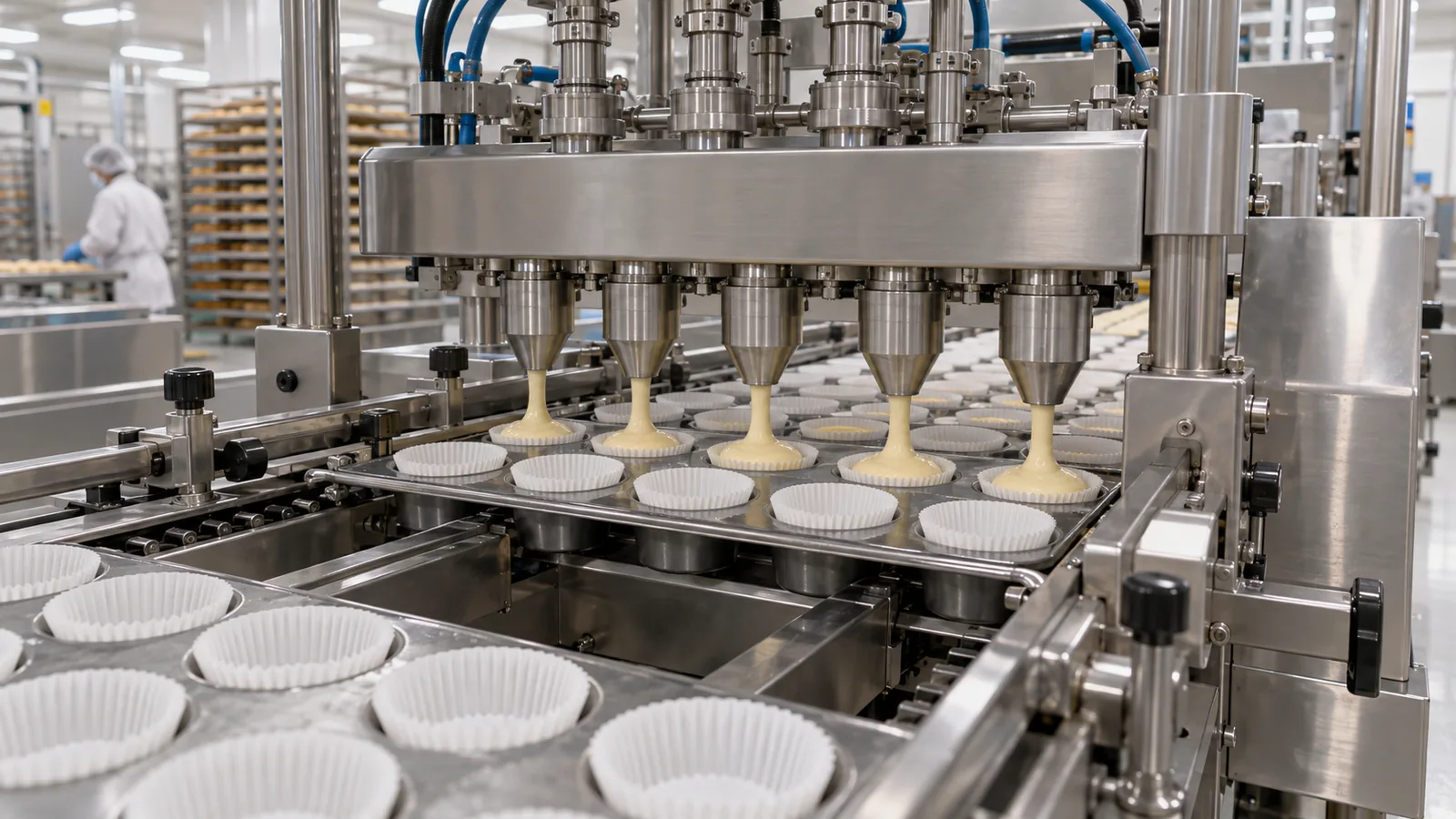
Most cup handling follows one sequence. A magazine holds nested stacks, a vacuum head, gripper or pick arm separates one cup, the cup drops into a tray pocket or onto a belt, the depositor fills it at speed, and the tray enters the oven. Where a bakery lines trays and moulds product in the same run, our private-label parchment paper supplier are quoted with the cup programme for a single documentation package.
Each step imposes a different demand. Separation needs enough stiffness for the lowest cup to be pulled clear without dragging the next, yet not so much interlock that two leave together. Transfer needs dimensional stability so the cup releases cleanly. Placement needs predictable geometry so it drops squarely rather than catching on its rim. Depositing needs immediate wet strength, because batter arrives within seconds. The factory and certificate library lists the third-party audits and test reports behind these claims.
A line does not care whether a cup looks good. It cares about repeatability.
2. Stiffness Is the Variable That Matters Most
If only one property could be specified, it would be stiffness. It determines whether the pick mechanism gets exactly one cup, whether the cup holds shape through transfer, and whether it stays open long enough to fill. It comes from grammage, fibre quality, sheet density, wall construction and coating, and it is the property most affected by environment. Paper is hygroscopic, so a specification silent on moisture delivers inconsistent performance across seasons and warehouses.
Specify measurable outcomes rather than grammage alone, which says nothing about construction. Useful ones are compression resistance under a defined method and conditioning atmosphere, and minimum and maximum force to separate one cup from a stack. Reference retained samples so disputes are settled by measurement. Stiffness has a ceiling too: rigid cups resist forming and may crack at the pleats.
3. Diameter and Wall Tolerance: Where Cups Jam
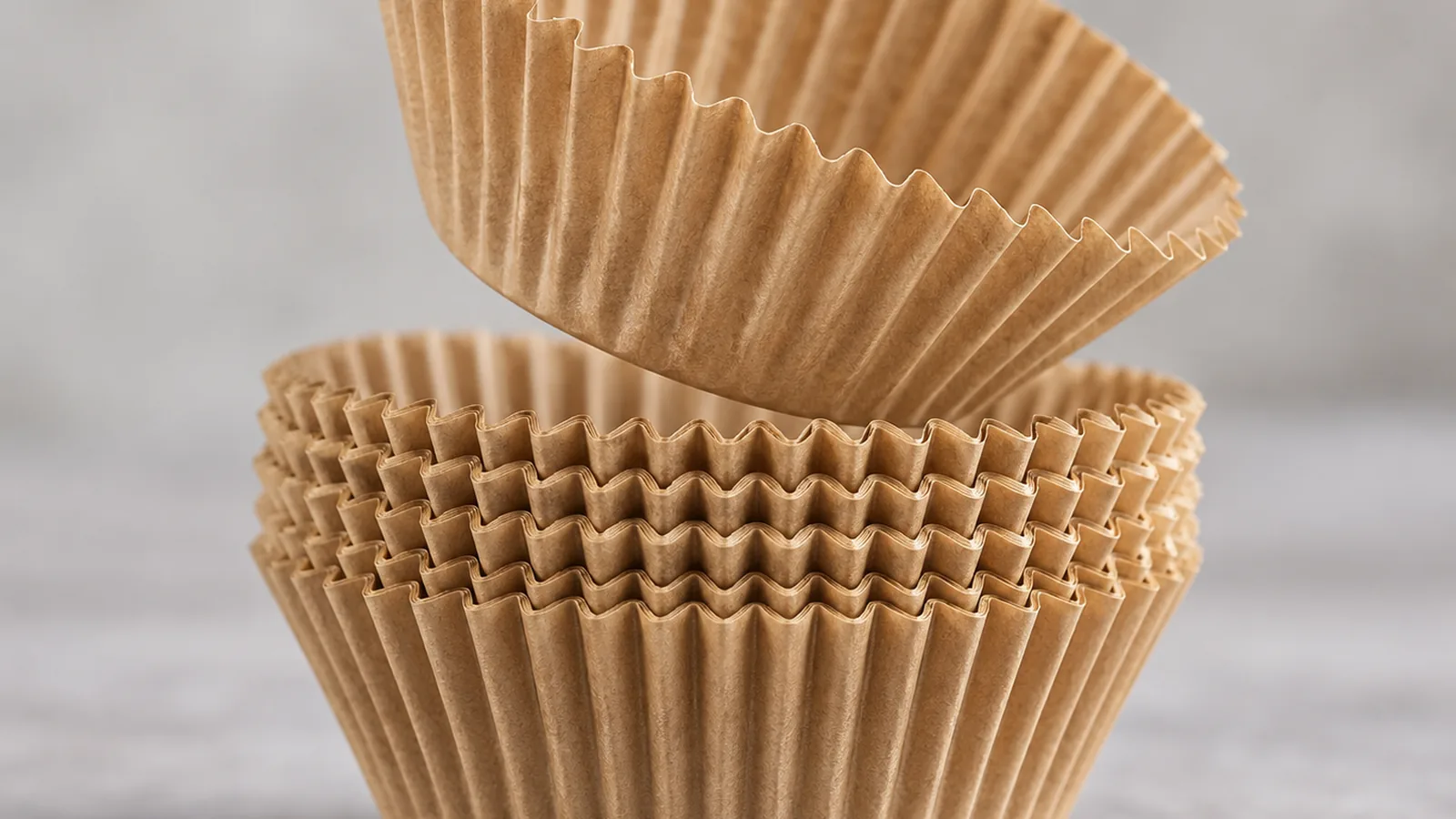
Nested paper cups behave less like rigid parts and more like shallow cones, which makes taper critical. The relevant dimensions are rim diameter, base diameter, wall height and included taper angle, each with a stated tolerance.
Oversized rim diameter causes cups to bind inside magazines and pockets, so they hang up instead of dropping. Undersized base diameter means the cup rocks loose and batter can bridge the gap. Inconsistent taper is worse than either, because it changes nesting depth so separation force varies unpredictably. Wall height affects pocket clearance and nozzle height: too tall and the rim interferes, too short and the cup may not register.
Specify targets with explicit plus-or-minus tolerances rather than nominal figures, and state where each measurement is taken, since a compliant paper edge gives different readings depending on applied pressure.
4. Stack Height, Nested Depth and Separation Force
A carton of nested cups is a spring waiting to be managed. Stack height per defined number of cups determines magazine capacity and how consistently the pick head meets the stack.
Pick-and-place equipment is set up around a nominal stack height and travel. If actual stacks vary, pick heads over-travel and crush cups, or under-reach and fail to pick. Hold stack height within a stated tolerance per hundred cups, measured after a defined settling period; newly formed cups relax, so measurements off the machine will not match what arrives.
Separation force is the other half. Too high and the mechanism tears cups or lifts doubles; too low and cups fall out during magazine transfer. Establish what the design targets, test it under your own conditions, and set an agreed range.
5. Oven Performance After Filling
Automation failures get the attention, but the cup still has to bake. Once filled, requirements divide into heat resistance and grease hold-out.
Heat performance means the cup retains shape and colour without scorching, curling or excessive rim darkening through the specified bake, including freezer-to-oven routes where condensate forms.
Grease resistance means batter fats do not strike through as visible wet spots on the outside of the cup, a defect on shelf and a contamination issue in tray handling. Qualify against the worst case, since a sheet that separates beautifully may still fail in the oven.
6. Running a Trial That Proves Something
Agree pass criteria before starting, then work through four stages. Desktop review confirms every tolerance is stated numerically and how it will be measured. Cold evaluation measures received samples, then cycles enough stacks without batter to expose separation and placement faults, recording pick success, double-pick rate and jam points with ambient conditions noted.
Hot trial runs at production speed with real batter through oven and cooling, inspecting strike-through, distortion, rim condition, release and dimensional change. Extended run covers at least one full shift, ideally across different ambient conditions, drawn from production-representative stock rather than a pilot batch. Record everything, keep samples from each stage, then lock the agreed dimensions into the specification with change-notification terms covering grammage, base paper mill, coating chemistry and forming tooling.
7. Common Stoppages and the Specification Answers
- Double picks and clumping. Force too high or nesting too deep. Adjust taper or nested depth and set an explicit force range.
- Dropped or missed cups. Stiffness too low for the pick force, or vacuum insufficient. Raise grammage or density, and verify vacuum first.
- Jams at magazine or pocket. Rim or base diameter out of tolerance, or taper inconsistent. Tighten tolerances and measurement method.
- Cups tipping or loose. Base diameter too small or wall too short. Correct the dimension and confirm pocket clearance drawings.
- Deforming on deposit. Insufficient wet strength for batter viscosity and depositor velocity. Raise grammage or adjust the coating.
- Grease strike-through. Grease resistance below the real fat load. Move to a construction matched to worst-case batter.
- Seasonal variation. Moisture uncontrolled between lots. Specify a moisture range and improve carton and warehouse protection.
Conclusion
Buying cake cups for automated depositing means specifying variation rather than average quality, since a line tolerates a consistently adequate cup far better than one that is excellent on the sample and inconsistent on the pallet. Convert machine behaviour into numbers: measurable stiffness and separation force within limits, rim and base diameter with tolerances and a stated measurement method, and stack height, taper and moisture within range. Prove it with a staged trial ending in a full shift, then write the figures into the specification with change-notification terms. The cup then stops being a variable. Buyers standardising on one paper supplier can review our pre-cut parchment paper sheets and rounds next to their cup specifications.
Why do paper baking cups jam on fast depositing lines?
Usually a critical dimension sits outside what the machine tolerates. Oversized rims bind in magazines and pockets, undersized bases rock loose, and inconsistent taper changes nesting depth so separation force varies within one stack. Specify numerical tolerances plus measurement method.
What cup stiffness is best for automated handling?
No single value, because stiffness must sit inside a band set by the pick mechanism. Too soft and cups deform, tear or are missed by the vacuum head; too rigid and they resist forming or crack at the pleats. Specify measurable outcomes such as compression resistance and separation force.
How does humidity affect cake cup performance?
Paper absorbs and releases moisture, and higher moisture measurably softens the sheet, so a damp warehouse changes stiffness and separation behaviour without any change to the product. Specify a moisture range and require conditioning for measurement.
How many cups should we trial before approving a supplier?
Enough for a full shift at production speed, across more than one ambient condition, using production-representative material. Structure it as desktop review, cold cycling, hot trial with batter and oven, then extended run, with pass criteria agreed first.
Can the same cake cup run on several different machines?
Sometimes, but not reliably by default. Designs differ in pick method, magazine geometry and tray pocket dimensions. Qualify per machine, or specify to the tightest tolerance set across the fleet.
CTA
Send LANGMAI your cup dimensions, tray pocket drawings, depositor type and target line speed, along with batter fat content, bake profile and monthly volume. The team can propose matched constructions and prepare production-representative samples for line trials.