Introduction
Japan is one of the most attractive premium bakery markets in the world — and one of the least forgiving on food-contact compliance. Buyers who have navigated FDA 21 CFR 176 for the United States or EU Regulation 1935/2004 for Europe often assume Japan is a variant of one of them. It is not. Japan's Food Sanitation Act and its specifications for food-contact paper follow their own logic, their own test methods and their own importer-responsibility structure, and the distribution system has habits — from importer screening to packaging expectations — that reward preparation and punish improvisation. This guide covers what JFSL 195 requires for paper food packaging, how testing differs from Western frameworks, what Japanese importers will ask you for, and how B2B and B2C distribution actually works for bakery paper products. Every document in our compliance library is tied to a specific construction; see how the silicone-coated parchment sheets and rolls programme aligns test reports with the exact grade supplied.
1. The Legal Framework: Food Sanitation Act and JFSL Specifications
Japan's baseline law is the Food Sanitation Act, administered by the Ministry of Health, Labour and Welfare (MHLW). Its technical core for food-contact materials is the Specifications and Standards for Foods, Food Additives, etc. — historically referred to as JFSL — where Section 195 and related notices set material specifications. For paper food-contact articles, the requirements include: Documentation scope is confirmed per SKU and destination market, as outlined on our food-grade die-cut parchment rounds page.
- Positive-list style restrictions. Paper and paperboard specifications limit certain substances — for example, restrictions on fluorescent whitening agents, formaldehyde, and heavy metals such as arsenic, lead and cadmium — with defined test methods.
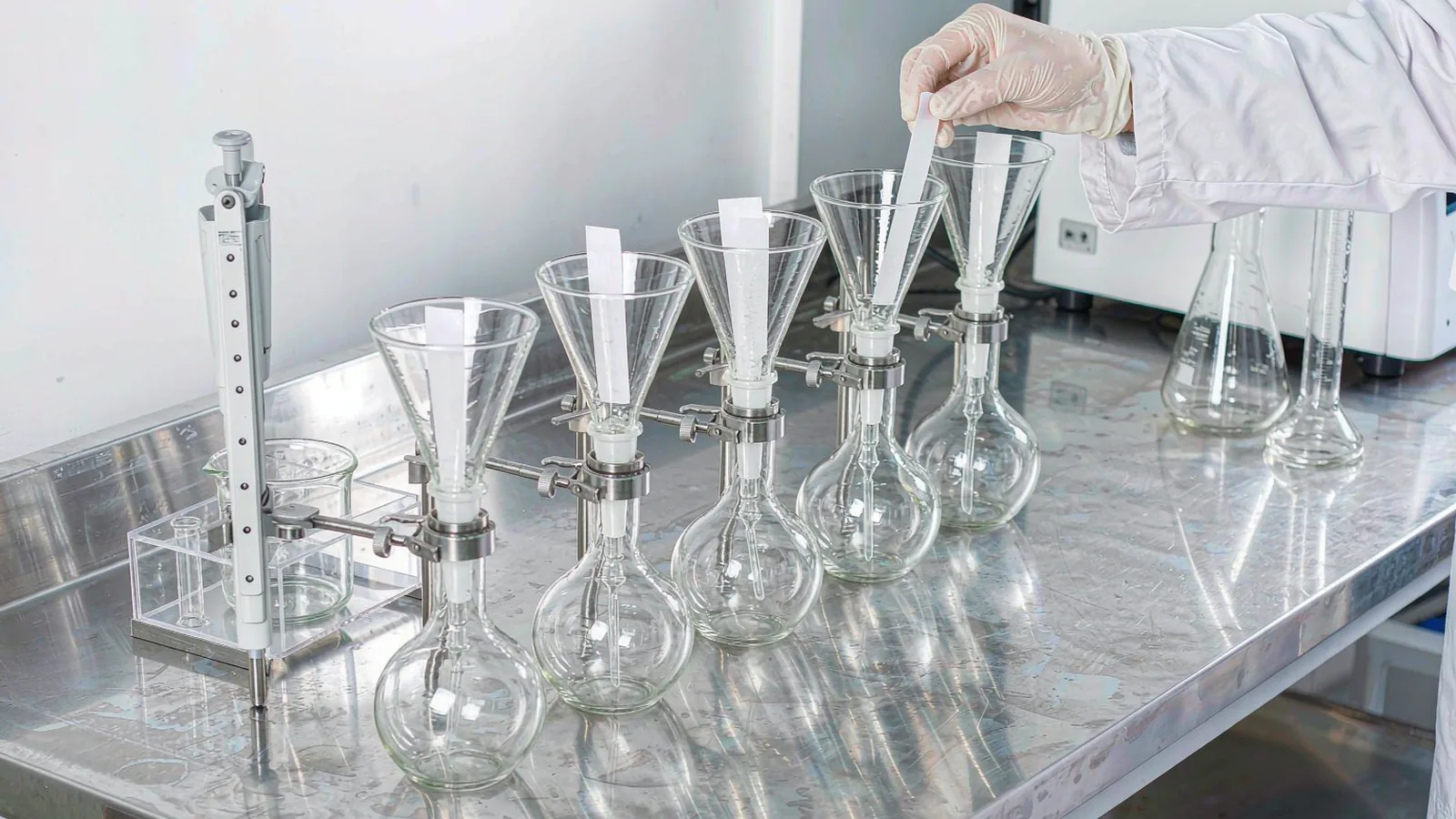
- Material tests. Paper destined for food contact must pass prescribed tests: potassium permanganate consumption (a proxy for water-soluble extractives), heavy metal content and specific substance limits, using Japanese test protocols that differ from EU or US methods.
- Voluntary industry standards. The Japan Food Industry Center and industry bodies maintain voluntary standards widely used in practice; many Japanese customers demand compliance with these stricter self-imposed norms in addition to the legal minimum.
A key structural difference: Japan's regime for food-contact materials is less harmonized internationally than the EU system, so existing EU migration reports do not substitute for Japanese testing. Buyers selling across all three regions should read the comparison in the EU and US compliance comparison guide and treat Japan as its own track. The factory and certificate library lists the third-party audits and test reports behind these claims.
2. What Testing Means for Baking Paper and Baking Cups
In practice, a Japan-ready baking paper file includes:
- JFSL paper specification tests on the finished article, from the actual production lot — base paper tests alone do not cover coated or printed products.
- Testing through a laboratory recognized by your Japanese importer. Importers often specify which labs they trust; arranging the wrong lab means repeating the work.
- Additional screening for concern substances. Leading Japanese customers frequently request data beyond the legal list — mineral oil hydrocarbons, PFAS-related screening and coating-specific migration — reflecting market expectations that exceed statute; the evidence discipline resembles the food-contact testing approach for baking cups.
- Retention of test reports tied to production lots. Japanese importers commonly expect traceable documentation per shipment, aligning with the traceability records structure.
Note on timing: Japan has been modernizing its food-contact regime, and buyers should confirm current requirements with their importer or a Japanese test institute at the start of each program, not only at first entry.
3. Who Is Responsible: The Role of the Japanese Importer
Unlike the EU, where food business operators at each stage carry defined duties, Japanese practice concentrates responsibility on the domestic importer or seller, who is legally treated as the party accountable for the safety of what they place on the market. Consequences for exporters:
- The importer will scrutinize you. Expect document requests covering composition, coating chemistry, test reports and production traceability before the first order — often more detailed than EU or US distributor onboarding.
- First-shipment notifications. Certain food-related businesses in Japan must notify prefectural authorities; your importer handles this, but their questions flow down to you.
- Change control is contractual. Japanese importers typically require advance notice of any material or process change, and retesting after change is standard practice — the same discipline as formal change control agreements.
- No "equivalency" shortcut. A Japanese importer cannot waive legal testing because you hold FDA or EU documents. Budget time and cost for Japan-specific testing as a separate line in market-entry planning.
Choosing an importer with bakery packaging experience is a compliance decision as much as a commercial one: an experienced partner tells you exactly which tests and documents their customers expect.
4. Distribution Realities: B2B Channels and B2C Expectations
Japan's bakery packaging moves through distinct channels:
- B2B routes. Baking paper reaches commercial bakeries, patisseries, hotel groups and food manufacturers via specialized foodservice distributors and trading companies. These buyers order smaller, more frequent volumes than Western counterparts, prize stable quality and precise specification adherence, and expect long-term relationships — pricing pressure exists, but reliability outweighs the lowest quote.
- B2C routes. Retail packs of baking paper and baking cups sell through supermarkets, home centers, kitchen goods specialists and increasingly e-commerce. Japanese consumers read packaging carefully: clear usage instructions, Japanese-language labeling, precise size statements and honest temperature claims are baseline expectations.
- Labeling and language. Food-contact articles for consumer sale need Japanese labeling; even B2B packaging benefits from Japanese-language usage notes. Allergen and safety statements follow Japanese conventions, not translated Western texts.
- Quality perception. The Japanese market tolerates premium pricing for demonstrable quality but has minimal tolerance for defects, curl, odor or inconsistent cutting — the reasons rigorous pre-shipment inspection matters disproportionately here.
Plan entry realistically: many exporters begin with one importer-distributor relationship, prove consistency over several shipments, then expand to broader distribution — reverse-engineering a national retail launch before proving reliability is the classic failure pattern.
FAQ
Do EU or US food-contact certificates cover baking paper sold in Japan?
No. Japanese requirements are defined by the Food Sanitation Act and JFSL specifications with their own test methods and substance lists. EU migration reports and FDA compliance letters support your general file but do not replace Japan-specific testing of the finished article.
What tests does baking paper typically need for Japan?
Finished-article testing against the JFSL paper specifications — including extractives and heavy metal limits using Japanese methods — plus, commonly, additional screens requested by the importer such as mineral oils, formaldehyde and fluorescent whitening agents. The importer and their designated laboratory define the exact panel for your product.
Who bears legal responsibility if a food-contact problem occurs in Japan?
The domestic seller or importer carries responsibility under the Food Sanitation Act, which is precisely why importers audit their overseas suppliers so thoroughly before and during the relationship. Your protection is a documented compliance file and a written change-notification agreement.
Is Japan only viable for large exporters?
Not necessarily. The B2B segment — patisseries, hotel suppliers, specialist distributors — supports focused programs from mid-size exporters who offer stable quality, precise customization and dependable documentation. The cost of entry is dominated by Japan-specific testing and samples, which amortizes over a committed importer relationship.
Conclusion
Japan rewards preparation. The Food Sanitation Act and JFSL 195 specifications set testing requirements that no Western certificate can substitute, the importer structure concentrates scrutiny on your documentation, and the distribution system prizes reliability and precise, Japanese-appropriate presentation over aggressive pricing. Build a Japan-specific testing file, choose an experienced importer, prove consistency through B2B channels first, and treat labeling quality as part of product quality. Exporters who accept these terms find one of the world's most stable premium bakery markets at the other end. Our custom silicone-coated baking parchment paper programme is audited against the same standards referenced in this guide.
CTA
Planning a Japan program? Send LANGMAI your product range and target channel. The team will map required JFSL testing for your grades, prepare the documentation set Japanese importers expect, and quote Japan-ready baking paper with lot-traceable test reports from the first shipment.
Sources
- Ministry of Health, Labour and Welfare (Japan), Food Sanitation Act overview and food-contact specifications
- Japan Food Industry Center, Voluntary standards for food-contact packaging materials
- JETRO, Guide to Japanese food and food-packaging import regulations
- National Institute of Health Sciences (Japan), Research on food-contact material safety