Introduction
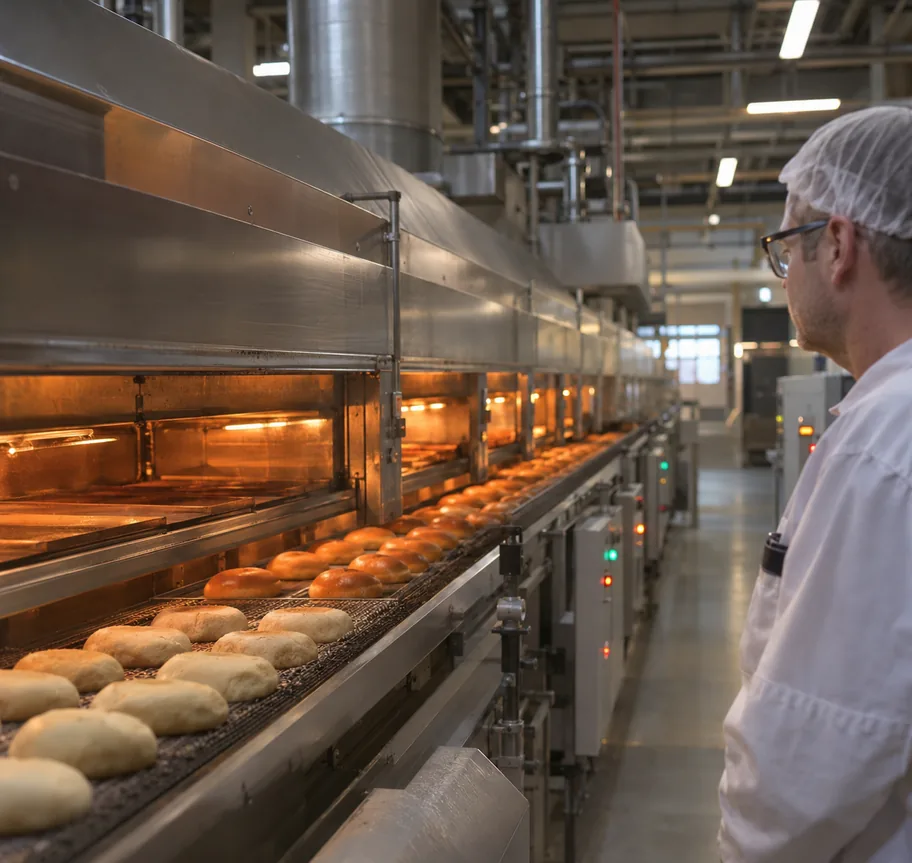
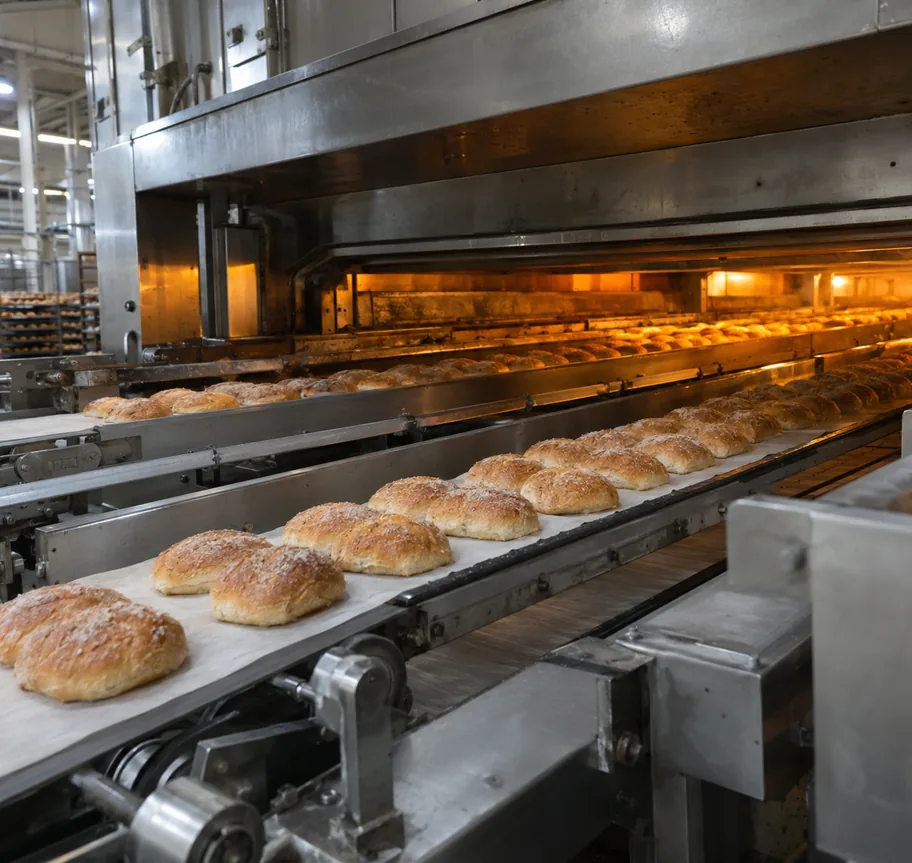
Tunnel ovens punish baking paper in ways deck ovens do not. The sheet travels continuously through temperature zones, spends minutes rather than seconds in transit, may pass under direct radiant heat at the oven mouth, and often runs for an entire shift as one long campaign. A paper that performs well on a tray in a rotary rack oven can brown, brittle, or drift on a multi-lane tunnel line long before the same product would show a problem in batch baking. Buyers comparing these specifications can review our private-label parchment paper supplier programme, where coating weight, base grammage and release values are documented per construction.
This guide is for industrial bakery operations, plant engineers, and private-label buyers who need to specify baking paper for continuous tunnel lines: which formats fit tunnel work, what to verify about temperature and run length, how to structure a line trial, and which documents should support the purchase. Buyers verifying these specifications can review the certificate library alongside supplier documentation requests.
LANGMAI supplies silicone-coated baking paper, greaseproof formats and related food-paper products to wholesale and industrial buyers, and supports specification-based quotation for continuous bakery lines. The guidance below is written to be supplier-neutral so it can structure your trials with any candidate.
What Makes Tunnel Oven Service Different
Three characteristics define tunnel oven service:
- Zoned heat exposure. The sheet passes through several temperature zones, and the oven mouth or radiant section is often the hottest exposure the paper sees. Peak exposure, not average temperature, governs paper behavior.
- Long continuous contact. In batch baking, the sheet cools between cycles. In tunnel service, the sheet stays hot and loaded for the length of the campaign, which accelerates browning and changes release behavior over the run.
- Mechanical transport. The sheet is fed, tensioned, and transferred across lane dividers and discharge sections. Tearing resistance and dimensional stability under motion matter as much as release.
Because of these differences, buyers should never extrapolate a tunnel specification from a deck-oven trial, and should ask each supplier explicitly whether the proposed grade is used in continuous lines. For production volumes, the same construction logic applies to our pre-cut parchment paper sheets and rounds line, quoted per roll, sheet or die-cut format.
What Buyers Should Define Before Comparing Suppliers
- Oven profile: zone setpoints, measured product-zone temperature, and the peak the paper sees at the oven mouth or radiant section.
- Product and loading: dough type, coverage per lane, portion spacing, and whether the paper carries product through the full oven or acts as a take-off surface.
- Format: pre-cut sheets per lane, continuous roll feed, or fan-fold stacks, and the width and length tolerances the feeding system requires.
- Run length: whether the paper is used for one pass or reused across campaigns, and the change frequency the line can tolerate.
- Downstream handling: denesting, cooling time, and whether sheets must release cleanly into packaging without static or curl.
Paper Properties That Matter Most in Tunnel Service
Heat resistance and browning behavior
Ask each candidate for the maximum continuous use temperature and compare it against your measured peak zone, with margin. During trials, record edge browning and brittleness per pass, because the oven mouth usually decides the sheet's appearance life even when the product zone is moderate.
Release stability over the campaign
Release force should stay stable from the first lane pass to the last. During the trial, score release at the start, middle, and end of the run. A sheet whose release decays mid-campaign creates late-run sticking that operators learn to work around, at a cost that never appears in the paper price.
Dimensional stability and curl
Heat and moisture cycling can curl or shrink paper. In tunnel lines, curl affects lane tracking and discharge into packaging. Record curl direction and magnitude after each pass, and check whether the supplier controls fiber orientation and moisture content lot to lot, because consistency matters more on a continuous line than on a single tray.
Tearing resistance on the line
Tunnel transport adds mechanical stress that batch baking does not: tension at feed, drag at lane dividers, and pull at discharge. Wet-tear behavior matters for high-moisture doughs. Note any edge tearing and where along the line it occurs, because the location points to the specific stress that needs a different grade or format.
Format and Supply Considerations for Continuous Lines
Tunnel lines consume paper differently from batch bakeries, and the supply format should match the feeding system:
- Pre-cut sheets suit lane-specific layouts and automated placement, and require tight length and squareness tolerances.
- Continuous rolls suit lines that feed directly, and shift the tolerance question to width consistency and splice policy across the roll.
- Fan-fold stacks suit manual or semi-automatic loading, and reduce handling compared with loose sheets.
Whichever format applies, agree on lot-to-lot consistency expectations: grammage, caliper, width, and coating uniformity. On a continuous line, a subtle width drift shows up as lane misalignment within minutes. LANGMAI manufactures to buyer specification and can quote against declared tolerances, formats, and campaign volumes, so the specification belongs in the RFQ rather than in an after-delivery adjustment.
Food-Контакты and Documentation for Industrial Use
Industrial bakeries carry the same food-contact obligations as any other producer, and the continuous, high-temperature nature of tunnel service makes the documentation review more important:
- Confirm the food-contact declaration covers the actual peak temperature the paper sees, not just the average product-zone temperature.
- Confirm the migration test conditions reflect repeated or extended contact where your run length requires it.
- For EU programs, align the file with Regulation (EC) No 1935/2004 and GMP under Regulation (EU) No 2023/2006; for US programs, align with FDA food-contact expectations for the paper's components.
- Keep retained samples per lot linked to production batch records, so a customer audit can trace the paper that ran under a specific product date.
LANGMAI provides market-specific documentation with product quotations so the paper file can be merged into the buyer's own compliance folder without rework.
How to Structure a Line Trial
A tunnel line trial should be short, controlled, and decisive:
- Define the pass criteria in writing: release scores at start, middle, and end of campaign; browning limits; curl limits; tearing tolerance; and the number of passes the sheet must support.
- Run at least three trial sessions on different days, because oven zone behavior varies with load.
- Photograph and retain sheets from each session stage, from fresh through final pass.
- Record operator observations separately from measured scores; the feeding and discharge experience often decides which candidate survives in daily use.
- Convert results to cost per campaign, including sheet changes per shift and any downtime caused by paper handling.
FAQ
What temperature can baking paper handle in a tunnel oven?
Silicone-coated baking paper grades commonly declare continuous use in the range around 220C or higher, but the binding figure is the supplier's declaration for the specific grade, and the relevant number for your oven is the peak exposure at the hottest zone, not the average. Verify both in writing before the trial.
Can the same baking paper sheet be used across multiple tunnel passes?
It can when the grade, coating, and food-contact documentation support repeated or extended contact and the sheet's physical condition still meets your release and appearance criteria. Run length should be defined by trial results and your written retirement criteria, not by habit.
Which format works best for automated tunnel lines?
Pre-cut sheets with tight tolerances suit automated lane placement; continuous rolls suit direct feed systems. The right format is the one that matches your feeding mechanics, so define the feeding system in the RFQ and let the supplier propose the matching format.
Does LANGMAI supply tunnel-oven formats for wholesale buyers?
Yes. LANGMAI manufactures silicone-coated baking paper in roll and sheet formats to buyer specification, supports line trials with samples, and quotes against declared formats, tolerances, and volumes. Контакты Sales with your oven profile, lane dimensions, and campaign volumes to receive matched samples and a quotation.
Conclusion
Tunnel oven service is the most demanding environment baking paper faces in a bakery: zoned heat, long continuous contact, and mechanical transport all act on the sheet at once. Specify peak temperature, run length, and format tolerances up front, run a structured line trial with written pass criteria, and require food-contact documentation that matches real exposure conditions. Do that, and the paper becomes a controlled production input rather than a recurring line interruption. Our custom printed baking parchment paper programme publishes the test data behind each grade so specifications can be verified before ordering.
CTA
Контакты Sales for LANGMAI baking paper samples and specifications matched to your tunnel oven profile, including formats, tolerances, and wholesale quotation for industrial bakery programs.