
Introduction
Can baking paper go straight from the freezer into the oven? Yes, when the construction is specified for it, and this capability is central to how frozen dough reaches market. The liner must survive storage at minus eighteen degrees, resist frost and condensate, release cleanly after thawing, and tolerate full baking temperature without embrittling or scorching. Buyers comparing these specifications can review our custom silicone-coated baking parchment paper programme, where coating weight, base grammage and release values are documented per construction.
The failure modes are expensive. A liner that absorbs moisture in frozen storage tears at release. Paper that loses flexibility at low temperature cracks when a gloved operator handles the tray. A sheet with insufficient heat rating browns, goes brittle or leaves fragments on the product. Each failure surfaces at bake-off, the costliest point to discover a problem. Buyers verifying these specifications can review the certificate library alongside supplier documentation requests.
This guide is for frozen food manufacturers, par-baked producers, foodservice distributors, supermarket central bakeries and bake-off operators sourcing freezer-to-oven baking paper.
1. Map the Cold Chain Before Selecting the Paper
Frozen dough operations are not identical, and the paper requirement changes with each route. For production volumes, the same construction logic applies to our wholesale parchment paper rolls and sheets line, quoted per roll, sheet or die-cut format.
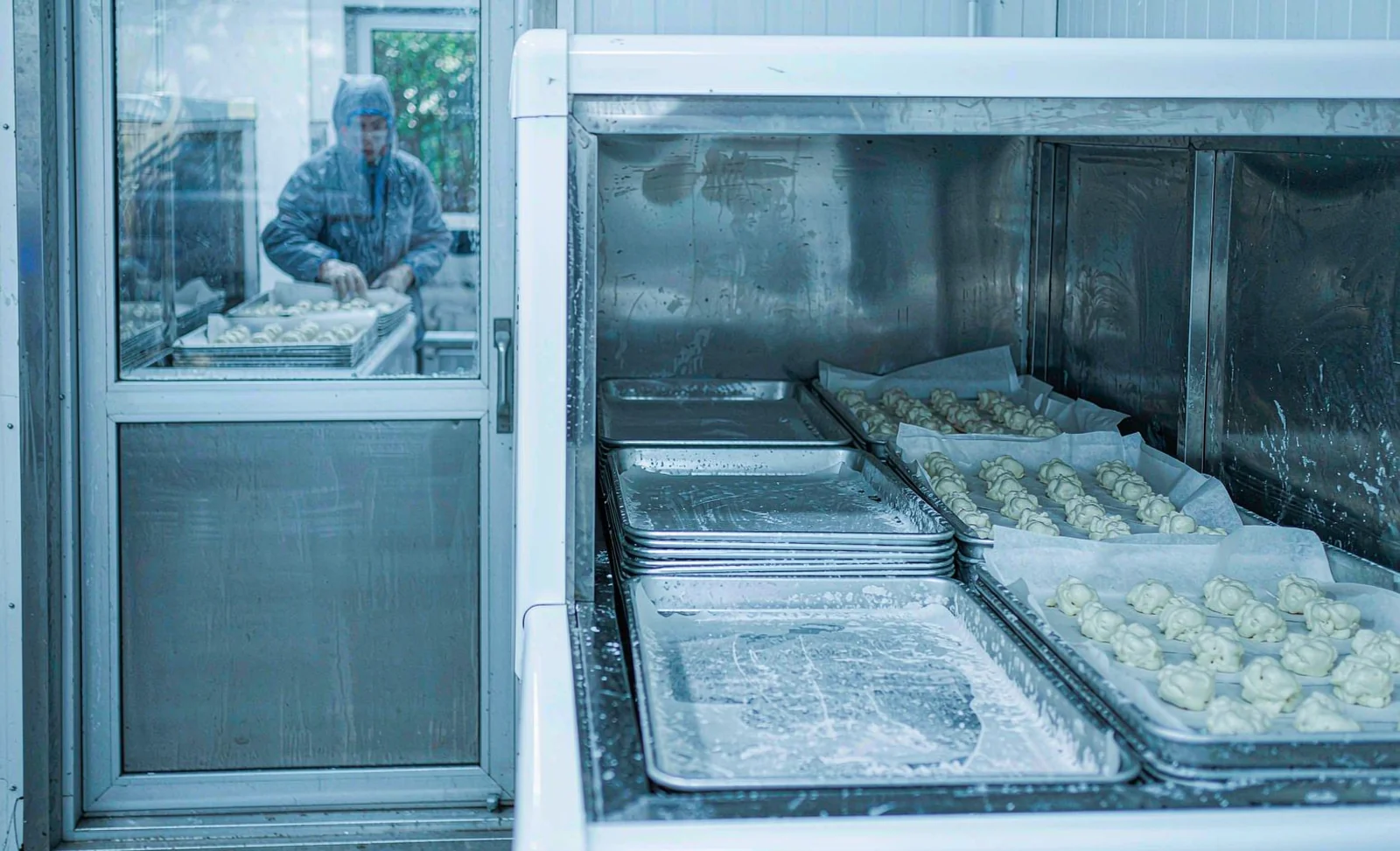
Raw frozen dough is formed, frozen with the liner in place, distributed, then thawed, proofed and baked at the destination. The liner sits against wet dough through the hold and thawing, producing condensate on the paper. The factory and certificate library lists the third-party audits and test reports behind these claims.
Par-baked product is part-baked, frozen, distributed, then finished in a bake-off oven. The liner may be present only for the first bake or may need to survive the full chain, depending on whether the product is depanned before freezing.
Proofed-then-frozen product is partially proofed before freezing, making the surface softer and stickier, so release demands are higher.
Interleaved formats — dough discs, pastry sheets, stacked buns — see paper contacting product on both faces, which drives the single-sided versus double-sided decision.
Each route needs a different answer on coat weight, base grammage, whether one or both faces are coated, and how much wet strength the base carries. Write the cold chain down before approaching suppliers.
2. Frost Control and Condensate Management
Frost forms on paper during frozen storage and especially during temperature cycling — loading, transport, warehouse transfers and retail handling. Uncoated base paper absorbs this readily, then loses tensile strength, tears at release and can glue itself to the dough.
Silicone on the contact face is the main defence, preventing water uptake where failure starts. Where both faces see frost and condensate, double-sided coating gives markedly better stability. Stacked and interleaved frozen formats should generally specify double-sided rather than economising on the second coat.
Condensate during thawing is often more damaging than frost. As product warms, water migrates to the coldest surface, frequently the liner. Papers for this stage should retain wet strength through the thaw-and-proof window. Ask whether wet-strength resin is used and request evidence for the contact conditions.
Operating controls matter too: minimise cycling, avoid loading warm product into freezers, keep cartons sealed until use, and specify carton liners in humid warehouses.
3. Release Performance After Freezing and Thawing
Release is easier to specify than to verify, so test with your own product rather than relying on a generic claim.
Run a production trial with the actual dough, freeze for a period representative of real distribution, thaw following the site procedure, then bake and evaluate. Score four things: how cleanly the product separates, whether residue remains, whether the liner tears, and whether crust colour and texture match target.
Test both faces where the format involves handling, and evaluate at the end of the intended frozen shelf life rather than the start, because release degrades as moisture redistributes.
Watch high-sugar formulations, egg washes, glazes and seeded surfaces. Sugar migrates during freezing and concentrates at the contact interface, welding product to the liner even when the paper performs correctly. Increase coat weight, move to double-sided paper, or use a formed cup that keeps the contact surface mechanically separated.
4. Oven-Ready Formats and Heat Performance
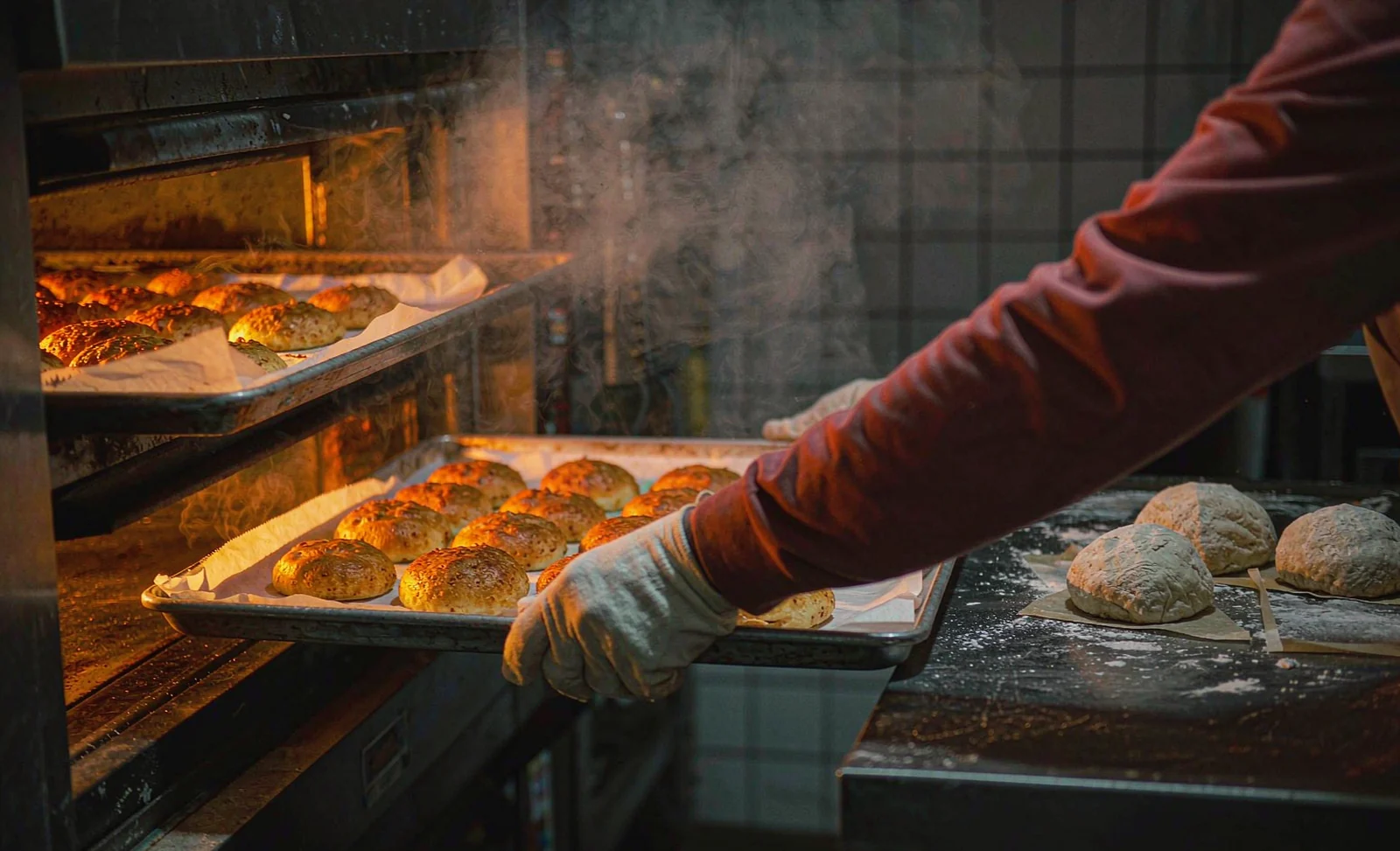
"Oven ready" should be tested, not marketing copy. Specify maximum continuous use temperature and dwell time, then require written confirmation that the construction is rated for it. Standard silicone-coated paper supports temperatures well above two hundred degrees Celsius, but ratings differ — critically, between dry paper in open air and wet paper against product in a steam-injected deck oven.
Check the end use: microwave, air fryer, steam oven or deck oven, since each imposes different thermal and moisture conditions. Ask directly about steam injection, common in bake-off ovens and harder on paper than dry heat.
Format decisions follow the line. Flat sheets suit tray-lined rolls and buns, roll stock suits automated depositing with inline cutting, die-cut rounds suit tart and pastry bases, and formed cups suit premium frozen muffin products that must hold shape through freezing and baking. Pre-cut sheets reduce labour at bake-off sites.
Check low-temperature handling too. Paper that goes brittle when frozen cracks during depanning, so request handling trials at freezer temperature with gloved operators, especially for larger sheets that flex during transfer.
5. Distribution and Bake-Off Site Requirements
Frozen distribution adds requirements unrelated to baking performance that still decide whether product arrives usable.
Cartons must survive cold, humid environments. Standard corrugated loses strength when cold and damp, so specify appropriate board grade and moisture-resistant treatment. Pallets should suit cold-chain equipment and standard freezer racking.
Portion control matters. Bake-off sites work to fixed recipes and labour budgets, so counted bundles, interleaved dispenser packs or pre-cut formats reduce errors and speed production. Where central bakeries supply many small sites, match inner-pack quantity to one production batch.
Operators need clear instructions — whether the liner stays through baking, when to remove it, and whether it can be reheated. Include these in specification documents and, where relevant, in pack copy in the required languages.
6. Specification, Evidence and Change Control
A freezer-to-oven specification should state base paper type and grammage, number of coated faces, silicone coat weight per side, wet-strength treatment, maximum continuous temperature and dwell, contact conditions including frozen storage duration, format and dimensions with tolerance, carton and pallet configuration, and destination markets.
Request a declaration of compliance for the exact SKU. In the EU this falls under the framework regulation supported by good manufacturing practice rules; in the US components need an applicable food-contact authorisation. Recognised national recommendations for paper and board add further criteria many buyers require.
Insist on change control in writing: notification before any change to base supplier, coat weight, grammage or curing parameters, plus evaluation rights before adopting a change. Many problems blamed on "paper getting worse" are actually unannounced construction changes between lots.
Independent laboratory verification supports incoming acceptance for larger programs, particularly where migration testing under frozen and baked contact conditions is required.
Conclusion
Freezer-to-oven baking paper is a performance component, not a commodity wrap. Specify it against the actual cold chain, then approve it through a trial evaluated at the end of the intended frozen shelf life. Match construction to the challenge: double-sided coating and wet strength for interleaved routes, higher coat weight for sugary surfaces, formed cups where shape retention matters, and low-temperature flexibility testing where operators handle frozen sheets. Put the specification, evidence and change-control terms in writing before ordering. Our baking parchment paper manufacturing programme programme publishes the test data behind each grade so specifications can be verified before ordering.
Can baking paper safely go from freezer directly into the oven?
Yes, when the construction is specified and tested for it. Silicone-coated baking paper tolerates both frozen storage and normal baking temperatures. Confirm the maximum continuous temperature rating in writing, match it to the oven type including steam injection, and run a trial with the real dough, real hold period and real thaw procedure.
Is single-sided or double-sided paper better for frozen dough?
Double-sided is usually better. Frost and condensate form on both faces during storage and thawing, so a single uncoated face absorbs moisture and can tear at release. Single-sided can suit tray-lined product where only one face contacts dough, but stacked and interleaved formats should specify double-sided.
Why does baking paper stick to dough after freezing?
Main causes are moisture absorption into uncoated paper, sugar migration at the contact interface, and inadequate coat weight. Condensate during thawing often does more damage than frost itself. Remedies include increasing coat weight, moving to double-sided or higher wet-strength paper, reducing temperature cycling, and testing the actual recipe.
How long can frozen dough stay on the liner?
Storage duration should be validated, not assumed. Commercial programs commonly hold product for weeks to months, so approval trials should be evaluated at the end of the intended frozen shelf life, since release behaviour and paper strength change as moisture redistributes.
What documentation should buyers request for freezer-to-oven programs?
Request a declaration of compliance for the exact SKU referencing the destination framework, supported by composition or migration evidence appropriate to frozen and baked contact conditions. Also require construction details, maximum temperature rating, lot traceability and formal change control covering base paper, coat weight and curing parameters.
Do bake-off sites need special pack formats?
Usually yes. Bake-off sites work to fixed labour budgets and recipes, so counted bundles, interleaved dispenser packs or pre-cut sheets reduce counting errors and speed production. Cold, humid storage makes carton board grade important, and handling instructions should appear in the required languages.
CTA
Send LANGMAI your frozen dough route, storage duration, thaw procedure, oven type, liner format and destination market. The team can propose suitable silicone-coated constructions, arrange production-representative samples for freezer-to-oven trials and prepare a quote-ready specification.