Introduction
Parchment paper is one of those quiet categories in retail baking aisles: stable demand, low seasonal drama, and a shopper who repurchases on rhythm because the product runs out at predictable intervals. For retail chains, discounters and import brands, that makes baking paper an attractive private label line — and also a deceptively technical one. The paper that performs in a hotel kitchen is not automatically the paper that survives a warehouse club pallet, a 24-month shelf life claim and a category manager's margin target. Every document in our compliance library is tied to a specific construction; see how the silicone-coated parchment sheets and rolls programme aligns test reports with the exact grade supplied.
This guide is written for the wholesale side of that decision: retail buyers, private label brands and distributors building an own-brand parchment range. It covers pack format selection, specification and claims, the compliance file, artwork and packaging realities, and the commercial mechanics — MOQ, pallet configuration and reordering — that decide whether the program stays profitable after the first container. Buyers verifying these specifications can review the certificate library alongside supplier documentation requests.
1. Why Parchment Suits Private Label — and Where Programs Fail
The category's appeal is structural. Baking paper is a replenishment product with weak brand loyalty: shoppers pick by format, size and price point, which is exactly the environment where own-brand ranges win shelf space. Margins are healthy, returns are minimal, and the product photographs well in tiered planograms. Documentation scope is confirmed per SKU and destination market, as outlined on our food-grade die-cut parchment rounds page.
Programs fail in three predictable ways:
- Under-specified paper. A product that curls in the box, sticks to cookie dough or shreds at the dispensing edge generates the kind of low-level disappointment that quietly ends repurchase.
- Over-engineered first orders. Launching with four formats, custom die-cuts and full-color cartons multiplies MOQ risk before any sales data exists.
- Compliance gaps. A food-contact product on a retail shelf needs a document file that survives retailer audits and, increasingly, regulatory scrutiny — not just an attractive carton.
All three are avoidable with a staged program design, which the rest of this guide lays out. The factory and certificate library lists the third-party audits and test reports behind these claims.
2. Choosing the Pack Formats for the Range
Most successful own-brand ranges start with two or three SKUs, not eight. The proven core:
- Pre-cut sheets in a flat carton (typically 30 x 40 cm or local pan-standard sizes, 50–100 sheets) — the volume driver, matched to the market's dominant tray size.
- A master roll (commonly 8–10 m or 15–20 m) — serves wrapping, irregular pans and shoppers who prefer cutting to length.
- Pop-up interfolded sheets — the premium convenience SKU, dispensing one-handed from a countertop-compatible carton.
Round cake-pan circles, jumbo rolls and perforated sheets are rational second-wave additions once the core SKUs prove velocity. Buyers should also decide on paper color early: bleached white dominates Western European and North American shelves, while unbleached kraft carries a natural-positioning signal that some retailers deliberately add as a second tier.
3. Specification and Claims: What Goes on the Pack
A retail parchment pack makes promises — directly and implicitly — that the procurement specification must back up. The core spec sheet for a private label program should fix:
- Grammage (typically 38–45 GSM for retail sheets and rolls; heavier grades for premium tiers).
- Silicone coating system — single or double sided, food-grade silicone, with the release performance defined by test method rather than adjective.
- Grease resistance by a named test and pass level, sized to the fattiest home-baking use case.
- Temperature rating stated honestly against the market's typical home oven ceiling.
- PFAS-free evidence, which is now a baseline question from large retailers rather than a differentiator.
Claims discipline matters. "Non-stick" should map to measured release performance; "compostable" and "biodegradable" claims must match certification reality in the destination market; "chlorine-free" requires knowing whether the bleaching process is ECF or TCF before it is printed. Every claim on the carton should trace to a document in the product file.
4. The Compliance and Documentation File
Retail food-contact paper carries the same regulatory weight as any packaged food item. For a private label parchment program, the buyer should collect and file, per product code and per destination market:
- A declaration of compliance referencing EU Regulation 1935/2004 and applicable national measures for the EU, or FDA 21 CFR 176 for the US.
- Migration test reports from accredited laboratories, current and tied to the exact paper and coating construction.
- PFAS-free documentation, whether total organic fluorine screening or supplier attestation backed by process controls, according to the retailer's policy.
- Changing-market items: some retailers now also ask about sourcing due diligence and packaging recyclability data.
The buyer's brand owns the product on the shelf, so the file belongs to the buyer — not to the factory. Request the full set before artwork approval, not after production.
5. Artwork, Packaging and Pallet Realities
Parchment cartons look simple and print complex. Three practical notes save private label programs real money:
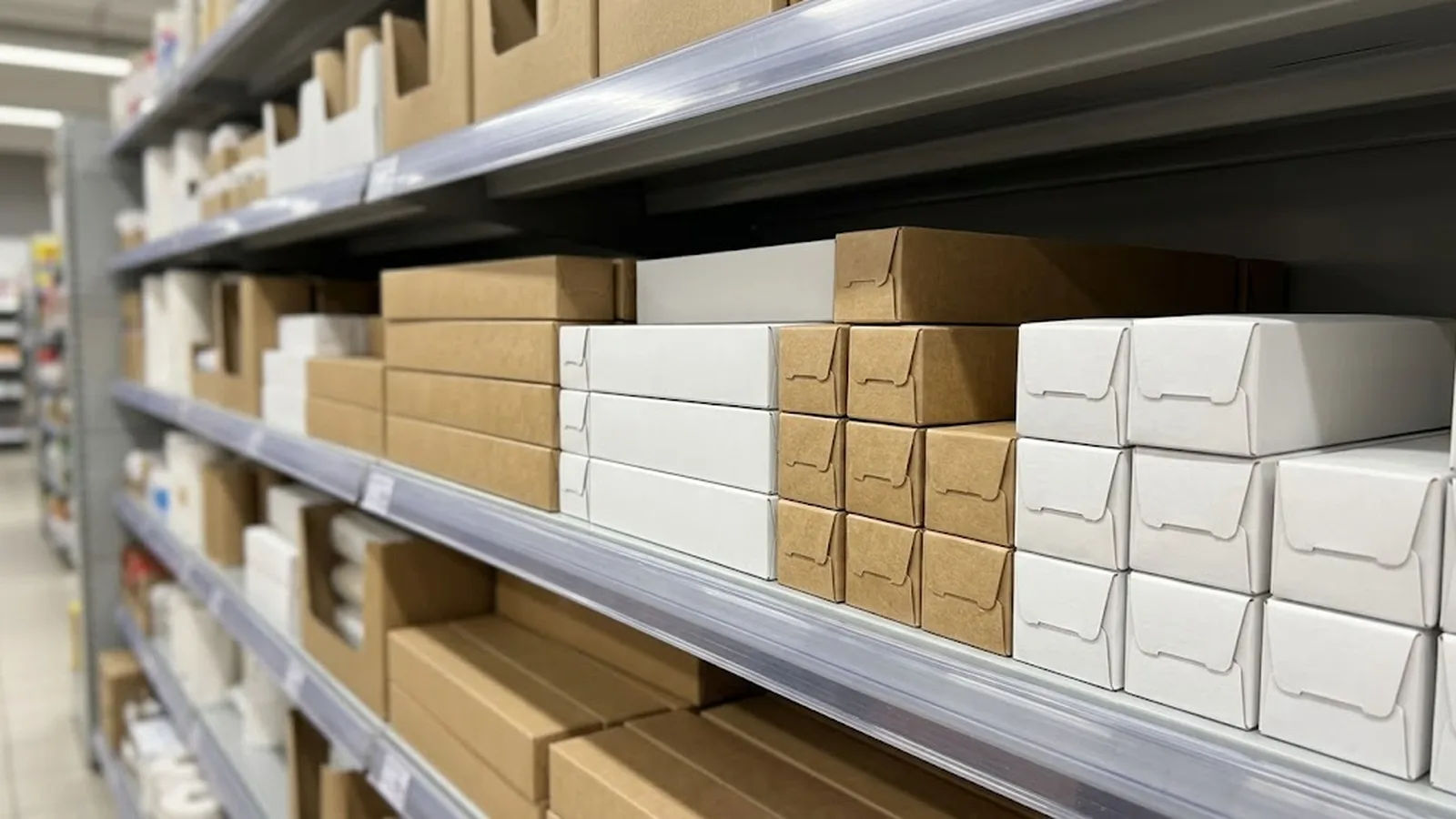
- Design for the dispensing format. Flat sheet cartons need a clean tear-open with a resealable closure that survives shelf handling; pop-up cartons must match the fold width of common countertop dispensers or the pack will jam and generate complaints.
- Protect the product inside the box. Sheets must stay flat through container transit and warehouse humidity; carton board weight, inner wrapping and pallet stretch-wrap are specification items, not supplier discretion.
- Plan the cube. Parchment is light but voluminous. Sheet cartons waste container space compared to master rolls, so pallet height, carton nesting and mixed-SKU container plans deserve a line in the RFQ. A well-planned pallet configuration frequently funds the artwork budget.
6. MOQ, Reordering and Program Economics
Private label MOQs for parchment typically follow the conversion step: rolls are cheapest and lowest MOQ; flat pre-cut sheets carry moderate MOQs tied to sheeting setup; pop-up and custom die-cut formats sit highest. A sensible launch path orders the core SKU at a volume sized for six to nine months of realistic velocity, and adds variants only after the first reorder.
Buyers should negotiate the repeat economics as carefully as the first order: price-break ladders by volume, artwork plate retention so reprints do not restart the tooling clock, and a rolling forecast arrangement that lets the supplier hold semi-finished stock for fast replenishment of proven SKUs. For seasonal baking peaks, order cutoffs land earlier than most new buyers expect — a program planned in September for a Christmas shelf is usually already late.
FAQ
What is a realistic MOQ for private label parchment paper?
Roll formats can start at comparatively low volumes; pre-cut sheet cartons typically require several thousand cartons per SKU; pop-up and custom formats carry the highest thresholds. Suppliers can reduce first-order risk with stock paper grades and a shared print plate. Ask each supplier to state MOQ per format in the RFQ rather than quoting a single program minimum.
Can one supplier cover both bleached and unbleached retail SKUs?
Usually yes — most baking paper manufacturers run both bases on the same coating lines. Confirm that the compliance file covers each grade separately, since migration testing and documentation follow the specific product construction, not the brand.
How do we validate the paper before committing to a full container?
Order production-representative samples in the actual carton format, run home-bake-style trials on the products your shoppers actually bake, and check dispensing behavior, flatness after transit-simulation and carton durability. A structured sample approval before artwork sign-off is the cheapest insurance in the program.
Conclusion
Private label parchment is a forgiving category for wholesale buyers who respect its few hard edges: match the pack format to real shopper behavior, write the specification and claims so every carton statement traces to a document, and sequence the range so MOQ risk trails proven velocity instead of leading it. The winning programs are rarely the ones with the most SKUs on launch day — they are the ones whose second reorder arrives on time, at the agreed price, with the carton still looking sharp on the shelf. Our custom silicone-coated baking parchment paper programme is audited against the same standards referenced in this guide.
LANGMAI supplies private label parchment and baking paper programs for retail chains, distributors and import brands — pre-cut sheets, rolls and pop-up formats with full food-contact documentation, custom carton packaging and pallet planning built into the quote. Contact our wholesale team with your target market and pack formats for samples and a program quotation.
Sources
- EU Regulation 1935/2004 — Materials and articles intended to come into contact with food
- FDA — Food Contact Substances: 21 CFR 176 Indirect Food Additives: Paper and Paperboard Components
- EFSA — Food contact materials
- TAPPI — Technical resources for pulp and paper testing
- German BfR — Paper and board for food contact recommendations