Introduction
Food buyers are fluent in best-before dates on the products they sell, but the packaging materials themselves raise different and often misunderstood questions. Does baking paper expire? Should cake cups carry a date? What does a supplier's "two-year shelf life" actually promise, and who decides when a carton of liners sitting in a warehouse for three years is still fit for use? Every document in our compliance library is tied to a specific construction; see how the custom printed baking parchment paper programme aligns test reports with the exact grade supplied. The same questions decide acceptance for paper cake cups, whose coatings and inks age on their own schedule.
The confusion is understandable because the legal and technical frameworks differ by market, and because paper packaging genuinely does change over time — just not in the way perishable food does. A muffin becomes unsafe; a paper baking cup becomes, in most cases, simply less predictable: coatings can age, oils can oxidise and transfer odour, moisture uptake can stiffen or relax the paper, and printed inks can scuff or fade. Buyers verifying these specifications can review the certificate library alongside supplier documentation requests.
This guide explains what shelf life means for paper food packaging, how date labelling rules treat packaging versus food, what degradation mechanisms buyers should care about, and how to write storage, retest and acceptance terms into wholesale contracts.
1. Do Paper Food Packaging Products Even Have a Shelf Life?
Legally, in most markets, finished food contact paper products are not required to carry a best-before or use-by date the way food is. Date marking rules such as those in EU Regulation 1169/2011 apply to food; packaging materials sit outside them. The United States similarly regulates food contact substances rather than dating the materials. Documentation scope is confirmed per SKU and destination market, as outlined on our silicone-coated parchment sheets and rolls page.
Commercially, however, reputable paper packaging suppliers do declare a shelf life — typically 24 to 60 months from manufacture, depending on the product type — for three practical reasons: The factory and certificate library lists the third-party audits and test reports behind these claims.
- Performance guarantees: the supplier's migration test reports, grease resistance values and coating performance claims are generated on material at or near the time of manufacture. A declared shelf life defines the window in which the supplier stands behind those values.
- Quality consistency: silicone release coatings and barrier treatments age. Release performance, measured as peel behaviour, can drift over years, especially in poor storage.
- Traceability and retest discipline: a declared period gives both parties a clear trigger for retesting or requalification instead of endless debate about whether "old" stock is still good.
So the correct buyer question is not "does this expire?" but "for how long do you guarantee the specified performance values, and under what storage conditions?"
2. How Paper Packaging Actually Degrades
Paper does not spoil, but several slow mechanisms can move a product outside its specification:
- Moisture exchange. Paper equilibrates with ambient humidity. Cycles of humid and dry storage change stiffness, flatness and denesting behaviour. Baking cups that nested smoothly at manufacture can bridge or grip in the magazine after a year in a damp warehouse.
- Coating ageing. Silicone release systems and aqueous barrier coatings can crosslink or oxidise slowly, changing release force and, in extreme cases, adding faint odour. Heat accelerates this; storage near ovens or in hot containers is the classic cause.
- Odour and taint pickup. Paper is an effective odour sponge. Storage alongside chemicals, fragranced goods or strong-smelling foods can taint the packaging and, transitively, the food. Off-odour complaints often trace to warehouse neighbours, not the manufacturer.
- Oil and grease component ageing. Where papers contain internal sizing or processing aids, very long storage can shift grease resistance test results slightly.
- Print and surface scuff. Mechanical abrasion in transit and storage degrades appearance before it degrades function — significant for retail-packaged cups and printed liners.
None of these mechanisms has a sharp deadline, which is exactly why a declared shelf life and sensible storage conditions matter: they define when the risk of drift becomes worth testing for.
3. Storage Conditions: The Other Half of the Shelf-Life Promise
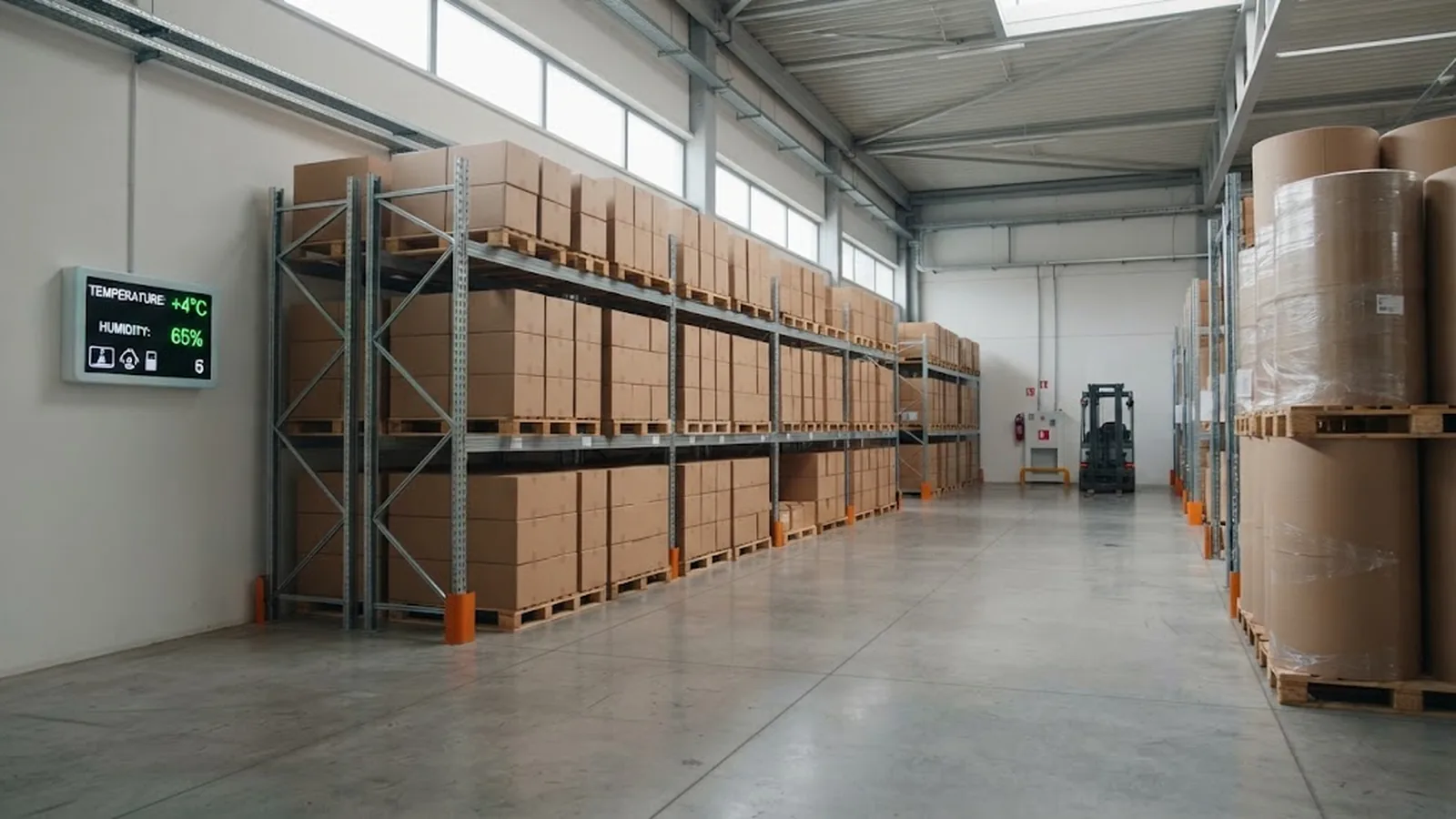
A shelf life declaration is only meaningful alongside storage conditions. The usual commercial standard for food contact paper is a cool, dry, odour-free store, roughly 10–25 °C and 50–65 percent relative humidity, product sealed in its original moisture-barrier wrapping until use, and kept off concrete floors and away from exterior walls where condensation forms.
Buyers should check three things against their own operations:
- Your warehouse reality. If your distribution centres routinely exceed these ranges, negotiate the declared conditions to match reality or invest in the storage. A guarantee voided by your own warehouse is worth nothing.
- Container transit. Ships' holds and containers can reach 50–60 °C internally for days. For long ocean lanes to hot climates, discuss heat exposure with the supplier — coated products are the most sensitive — and consider seasonal shipping windows for sensitive SKUs.
- FIFO discipline. Most shelf-life drift is discovered in stock that quietly sat for years. Enforce first-in-first-out and keep receipt dates visible on cases.
4. Date Labelling on Packs: What to Print and Why
Even where no law requires it, many wholesale buyers ask suppliers to print a production date and lot code on each case or inner pack. This is best practice for several reasons:
- Traceability. Production date plus lot code is the backbone of any recall or complaint investigation, and most food safety standards your customers audit against — BRCGS, FSSC 22000, IFS — expect traceability records that link a packaging lot to its test reports.
- Retest management. With the date visible, warehouse staff can pull stock approaching the declared shelf-life end for requalification instead of discovering it by complaint.
- Customer audits. Retail and foodservice auditors frequently ask how incoming packaging age is controlled. A printed date answers the question in seconds.
A typical convention is "PROD: 2026-10" plus lot code, rather than a best-before, precisely because packaging is not food and a best-before implies edibility. Buyers importing into markets with labelling language requirements should also confirm what must appear on packaging labels in the destination market — that is a packaging labelling question, distinct from the food's own date marking.
5. Retest, Requalification and Acceptance Rules for Older Stock
Practical buyers write three rules into contracts:
- Declared shelf life and conditions. For example: "Performance values guaranteed for 36 months from production date when stored at ≤25 °C and ≤65% RH in original sealed packaging."
- Retest trigger. Stock older than the declared period, or stock exposed to out-of-specification conditions, is requalified against the original specification — release behaviour for coated cups, grease resistance for barrier papers, odour check for all products — before release to production.
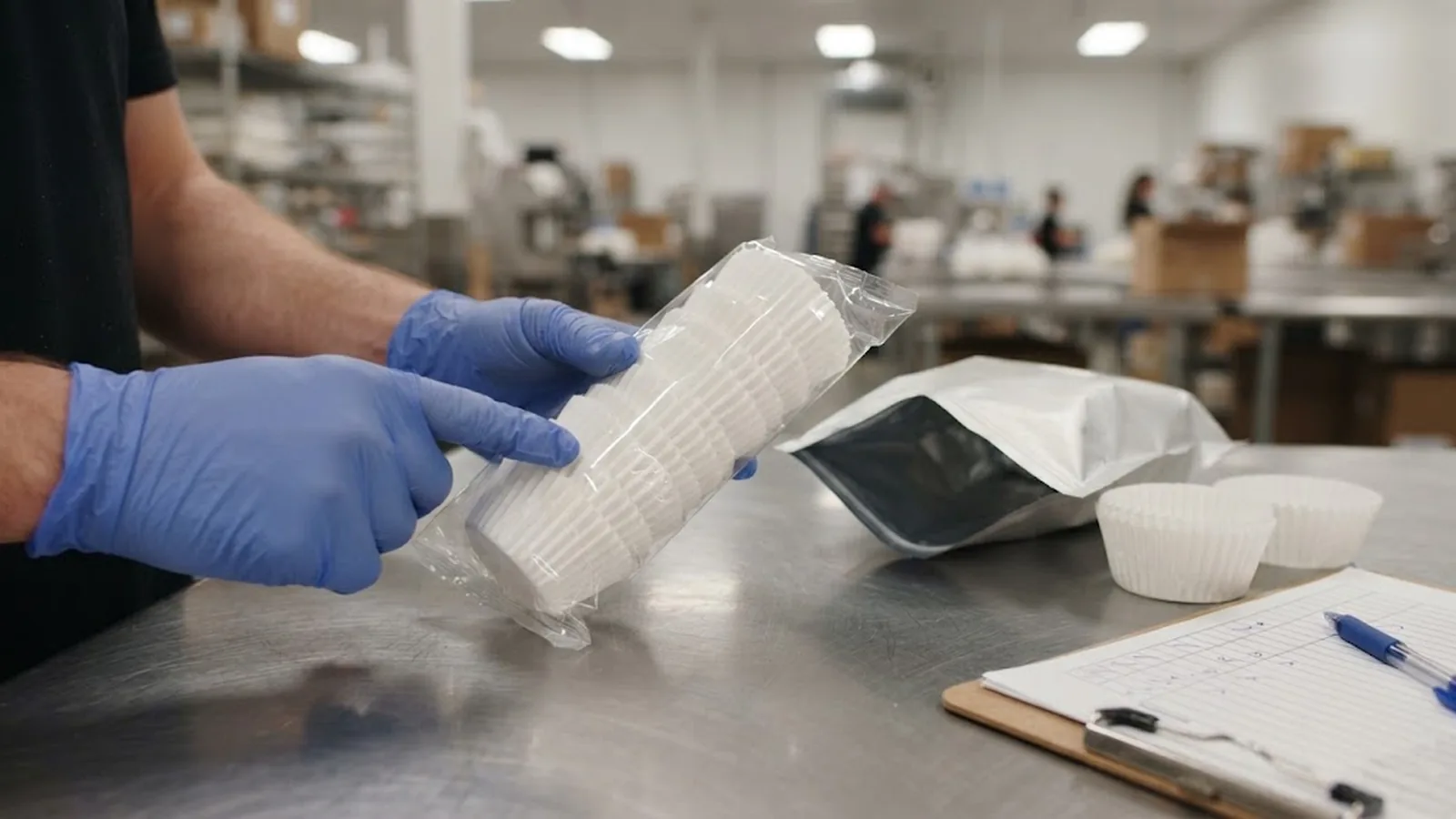
- Receiving acceptance. Incoming inspection checks date and lot code presence, seal integrity, and a sensory odour check on a sample. Reject or quarantine lots with broken seals, missing codes or any off-odour, since taint discovered at the filling line costs far more than a rejected carton.
These rules cost nothing to a supplier delivering fresh, well-stored goods and protect both sides when something goes wrong. Suppliers who resist declaring a shelf life at all are worth a follow-up question about their own retest discipline.
FAQ
Do baking paper and cake cups expire?
Not in the food sense. They are not required to carry best-before dates, and properly stored paper products remain functional for years. Suppliers typically declare 24–60 months of guaranteed performance, after which retesting rather than automatic disposal is the right response.
Is a packaging product past its declared shelf life unsafe?
Almost never. The risks are performance drift — release behaviour, grease resistance, nesting, odour — rather than safety. Retest against the original specification; dispose only on failure and only for the failed attribute.
Who is responsible if packaging taints our food after long storage?
It depends on cause, which is why storage conditions and lot traceability matter. Taint from the supplier's materials or manufacturing is a supplier issue; taint picked up in your warehouse from storage conditions or odorous neighbours usually is not. Documented storage conditions and printed production dates make the investigation answerable.
Should we ask suppliers to print best-before dates on packaging cases?
Prefer production date plus lot code. A best-before implies the packaging is perishable food, which can confuse inspectors and auditors. Production date gives you the same retest and traceability control without the misleading implication.
Conclusion
Shelf life for paper food packaging is not about expiry — it is about a supplier standing behind measured performance for a defined period under defined conditions, and a buyer operating storage and retest discipline so the guarantee stays valid. The paper itself will outlast most of the food it touches; what drifts over time is coating behaviour, moisture content, odour neutrality and print condition. Our food-grade die-cut parchment rounds programme is audited against the same standards referenced in this guide.
The wholesale buyer's toolkit is short and effective: require a declared shelf life and storage conditions in the specification, require production date and lot code on cases, enforce FIFO and sealed storage, and requalify rather than guess when stock ages or storage goes wrong. Put those four points in the contract and the "does paper expire?" question never has to be argued in an emergency again.
LANGMAI supplies food-grade baking paper, cake cups and food packaging papers with declared shelf lives, full lot traceability and migration test documentation for your compliance file. Contact our wholesale team with your storage conditions and market requirements, and we will specification-match products and documentation to your programme.