
Introduction
A wholesale inquiry that says "we need grease-resistant paper, translucent if possible" will attract two very different quotations: one for greaseproof paper and one for glassine. Both are uncoated, both resist oil through fiber refining rather than added barriers, and both are common in foodservice. But they are manufactured differently, behave differently on the packing line, and suit different applications — and quoting one when the application needs the other is a costly substitution in either direction. Buyers comparing these specifications can review our baking parchment paper manufacturing programme programme, where coating weight, base grammage and release values are documented per construction. Programmes that need those liner properties in a formed cup can compare the lined formats on the cake cups page.
Greaseproof paper is the workhorse wrap for oily foods; glassine is the dense, smooth, semi-transparent sheet used for liner work, photo-like presentation and delicate interleaving. This guide explains how each is made, how their grease resistance actually works, where each fits in foodservice and bakery operations, how they compare on cost, and ends with a selection checklist to attach to your next RFQ. Buyers verifying these specifications can review the certificate library alongside supplier documentation requests.
1. How Each Paper Is Made
Both products start from the same raw material — cellulose pulp — and both get their grease resistance from refining, not from a coating. The difference is in how far the refining is pushed and what the finished sheet is designed to do. For production volumes, the same construction logic applies to our private-label parchment paper supplier line, quoted per roll, sheet or die-cut format.
Greaseproof paper is produced by intensively beating (hydrating) the pulp fibers so they swell and bond into a tight, dense sheet with very small pores. Oil migrates through paper by wicking through air gaps between fibers; refine those gaps away and oil penetration slows dramatically. No barrier layer is added, which is why greaseproof keeps an uncoated, natural feel and remains printable with standard food-safe inks. The factory and certificate library lists the third-party audits and test reports behind these claims.
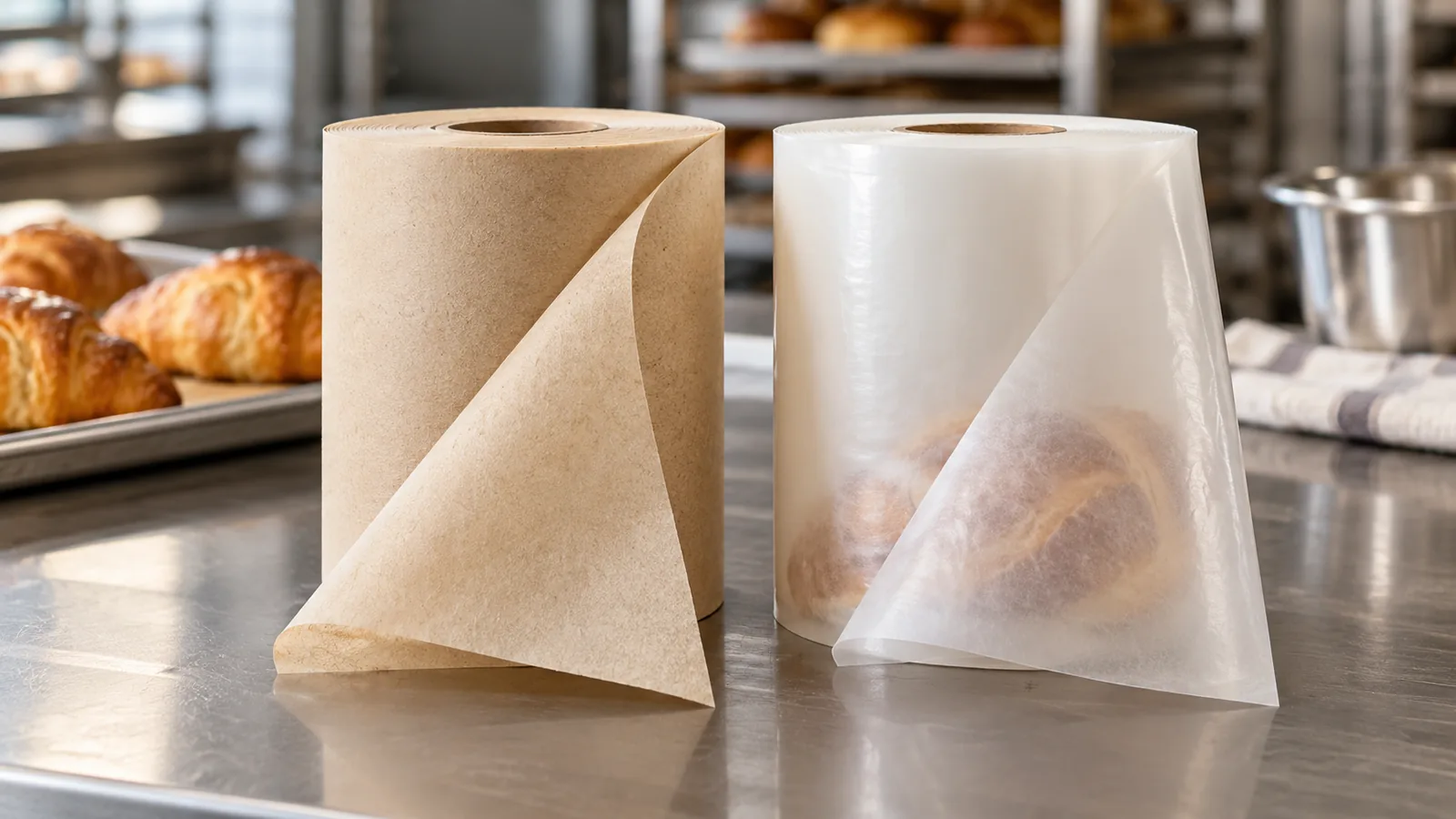
Glassine takes refining further and adds a critical second step: supercalendering. The dense sheet passes through hardened steel rollers under high pressure and temperature, which polishes the surface to a smooth, glossy finish and increases translucency. The result is a paper with very high density (commonly 70–90 gsm for food grades), a distinctive glass-like sheen, and semi-transparency — you can see the product silhouette through the sheet. Glassine is also available in white and colored grades, where dyes are added at the pulping stage.
2. How Grease Resistance Works — and How It Is Specified
Because both papers rely on refining, grease resistance is measured the same way: the KIT test (TAPPI T559), where increasingly aggressive oil mixtures are dropped onto the sheet until one penetrates. Higher KIT numbers mean stronger resistance.
- Standard greaseproof: KIT 6 to 8, suitable for pastries, cookies and moderate-contact wraps.
- High-performance greaseproof: KIT 10 to 12, required for burger wraps, fried food liners and long-hold oily applications.
- Glassine: naturally resistant due to extreme density, typically performing well in the KIT range for its weight, but its thinner light grades can be penetrated by hot, high-fat foods over long contact times.
The buyer rule is the same for both: specify a minimum KIT number with the test method, matched to the fattiest product and longest contact time in your application. The words "greaseproof" and "glassine" on a quotation are grades, not guarantees.
3. Appearance, Stiffness and Handling Differences
These physical differences drive most application decisions:
- Transparency: glassine is semi-transparent to translucent; greaseproof is opaque. If the customer should see the product through the wrap — confectionery, delicate pastries, sandwich presentation — glassine wins.
- Surface: glassine is smooth and glossy on both sides; greaseproof has a matte, slightly fibrous feel. Smoothness matters for print quality and for sheets that must slide in dispensers without catching.
- Stiffness and density: at equal grammage glassine is denser and stiffer; at the light weights common for glassine (30–50 gsm), it is a crisp, snappy sheet that feeds well in automatic dispensers. Greaseproof is a softer, more flexible wrap that conforms around food.
- Breathability: neither paper is breathable like open parchment alternatives; both trap steam, which matters for fried foods that must stay crisp — for those, greaseproof at lower weights is often preferred in perforated formats.
4. Foodservice Application Fit
Where each paper earns its place:
- Burger and sandwich wraps: high-KIT greaseproof (KIT 10+). Opaque, folds well, handles hot fat and sauces.
- Fried food basket and tray liners: greaseproof, 40 gsm or heavier, for opacity against grease staining.
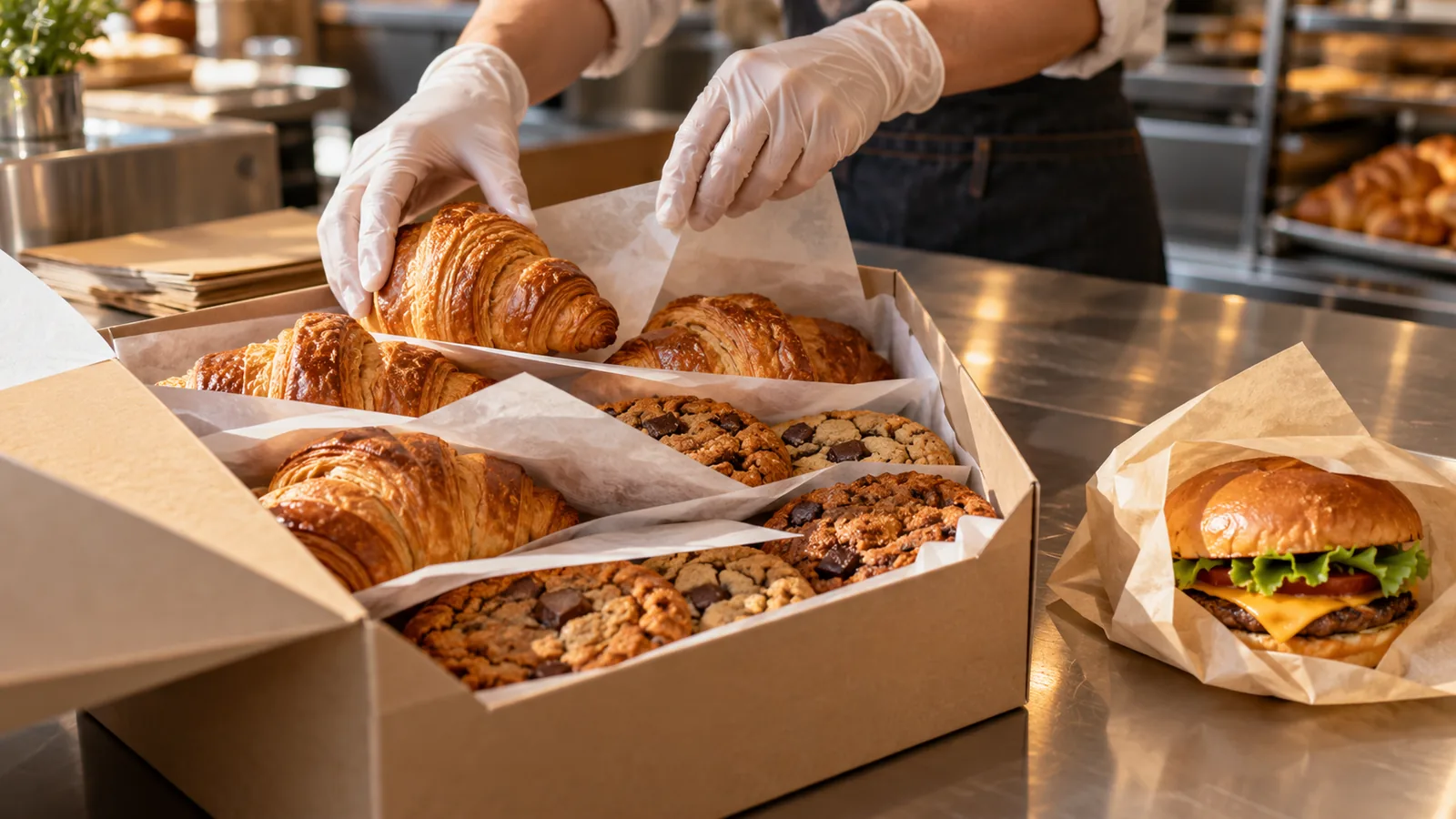
- Confectionery and cookie interleaving: glassine at 30–40 gsm — smooth, non-sticking, semi-transparent, and it separates delicate surfaces without linting.
- Bakery tray liners for display: glassine where presentation matters; greaseproof where oil load is high.
- Inner box liners for baked goods shipping: glassine for a clean, dense barrier face; greaseproof where the goods are wetter or oilier.
- Cake cup and case production: both serve as raw material feedstock, but molded products are their own category with forming requirements beyond the sheet.
5. Cost Structure and How to Compare Quotes
At the mill level, both papers carry the cost of intensive refining. Glassine adds supercalendering but often runs at lower grammage for the same barrier duty, which can offset the process cost — a 35 gsm glassine may match the performance of a heavier greaseproof in interleaving, lowering both material and freight cost per thousand sheets.
When comparing quotations, normalize on cost per usable sheet at your exact size and specification, not per tonne: sheet dimensions, die-cut waste and packing format reorder tonne-price rankings quickly. Confirm that food-contact documentation (FDA, EU 1935/2004, BfR as applicable) is included as standard, and that KIT values are stated per lot, not just per grade brochure.
6. Selection Checklist for Your RFQ
Send suppliers this list and compare answers line by line:
- Product type and target application, with the minimum KIT rating and test method specified.
- Grammage and caliper tolerance; white, colored or unbleached base.
- Sheet or roll dimensions, die-cut format, and packaging (reams, dispenser boxes, cartons).
- Food-contact compliance for destination markets, with fat-migration test reports.
- Print: food-safe inks, coverage limits, and which side may be printed.
- KIT value per production lot, with certificates of analysis available.
- Cost per sheet at your volume, including packaging.
Conclusion
Greaseproof and glassine are close relatives with different jobs. Greaseproof is the softer, opaque, high-KIT wrap for oily food contact; glassine is the denser, supercalendered, semi-transparent sheet for interleaving, presentation and clean barrier liner work. Match the KIT rating to your fattiest application, the opacity and stiffness to your presentation and dispensing needs, and compare quotes per usable sheet — then put the numbers in the RFQ so suppliers answer in specifications, not adjectives. Our pre-cut parchment paper sheets and rounds programme publishes the test data behind each grade so specifications can be verified before ordering.
Is glassine paper food safe?
Yes — food-grade glassine is manufactured to food-contact standards (FDA, EU 1935/2004, BfR as applicable) and is widely used for confectionery and bakery interleaving. Always request the compliance declaration for the specific lot.
Which is more grease resistant, greaseproof or glassine?
It depends on grade and contact conditions. High-performance greaseproof reaches KIT 12 for hot, high-fat foods; glassine resists grease through density but very light weights can be penetrated by hot fat over long contact. Specify KIT numbers rather than relying on the paper name.
Can glassine paper be used in the oven?
No. Neither glassine nor uncoated greaseproof is an oven liner — without a silicone coating they stick to dough and scorch at baking temperatures. Use silicone-coated parchment for oven duty.
Why is glassine paper translucent?
Intensive fiber refining produces an extremely dense sheet, and supercalendering polishes and compresses it further. With very few air pockets inside, light passes through the sheet rather than scattering — the same density that blocks oil.
CTA
Send LANGMAI your applications — wraps, interleaving, tray liners or case liners — with target volumes and the fattest product in the mix. The team will recommend greaseproof or glassine grades with KIT values, grammages and food-contact documentation, and quote per sheet in your sizes.
Get a Paper Grade Recommendation and Quote