Introduction
Two quotations land on the same day for what the request described as "greaseproof baking paper". One is a 40 gsm greaseproof sheet with no coating. The other is a 38 gsm paper coated with silicone on both sides. Both repel oil. Only one survives a 220°C oven, and only one is the right answer for a burger wrap. Buyers comparing these specifications can review our food-grade die-cut parchment rounds programme, where coating weight, base grammage and release values are documented per construction.
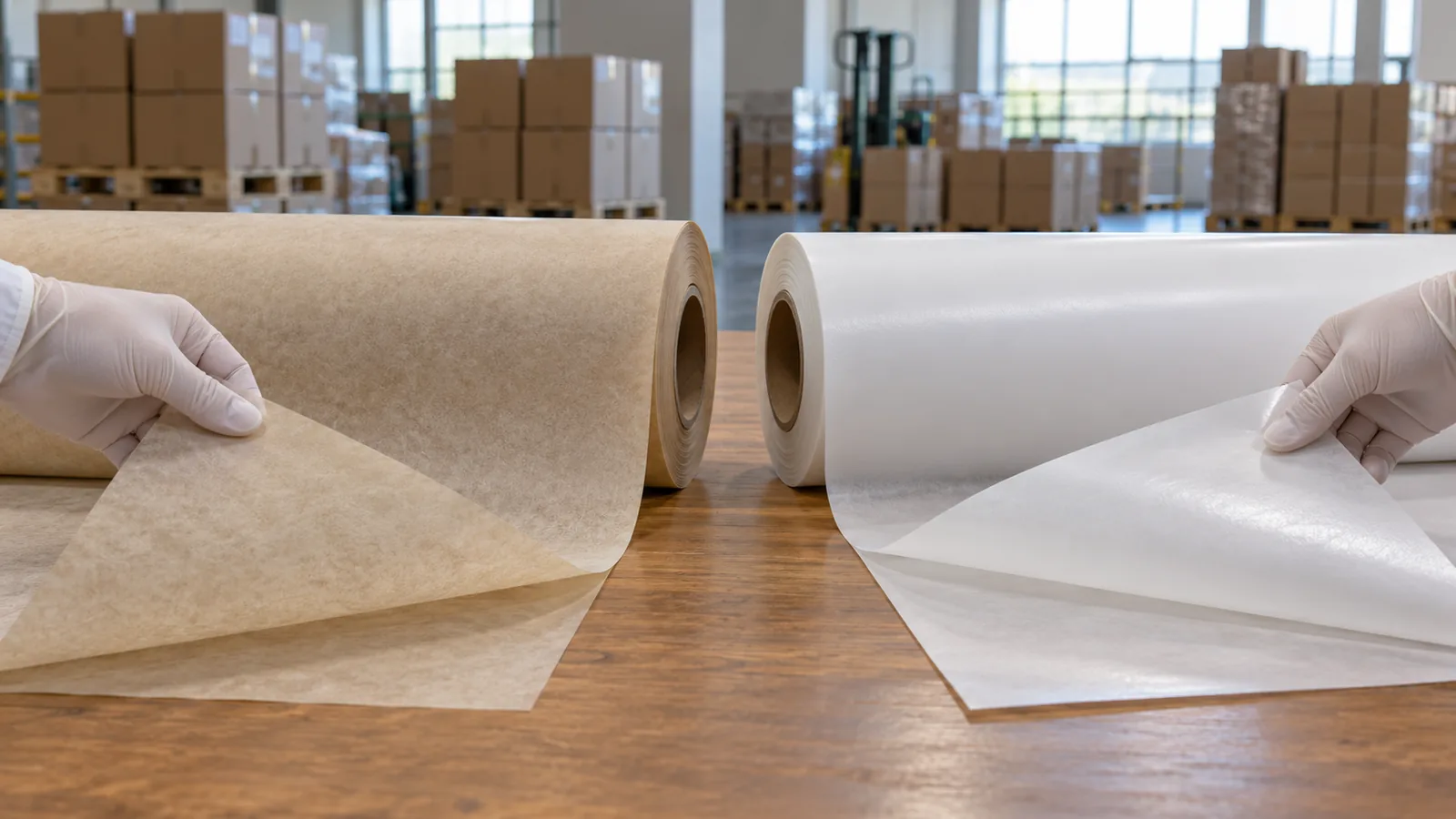
Greaseproof paper and parchment paper get quoted interchangeably because they look similar and overlap in some applications. For a wholesale buyer, treating them as substitutes is expensive in either direction: paying silicone-coating prices for a sandwich wrap, or shipping uncoated greaseproof into a bakery application it will fail. This guide defines each product, compares them on grease resistance, grammage, temperature tolerance, cost and application fit, and ends with a specification checklist you can send directly to suppliers. Buyers verifying these specifications can review the certificate library alongside supplier documentation requests.
1. What Each Product Actually Is
Greaseproof paper is an uncoated paper whose oil resistance comes from the refining process. The cellulose fibers are beaten and hydrated until the sheet is dense enough to slow oil penetration on its own. There is no added barrier layer, which is why it is often chosen for direct food contact where a "natural, uncoated" story matters: sandwich wraps, basket liners, cookie interleaving, tray liners for oily finger foods. For production volumes, the same construction logic applies to our custom silicone-coated baking parchment paper line, quoted per roll, sheet or die-cut format.
Parchment paper — in modern commercial supply, baking paper — starts from a similar base paper but adds a silicone release coating, usually on both sides. The silicone does two jobs greaseproof cannot: it prevents sticking to dough, caramel and melted cheese, and it tolerates dry oven heat. True vegetable parchment, made by sulfuric acid treatment, still exists in niche grades, but most buyers comparing quotes are looking at greaseproof versus silicone-coated paper. Confirm which one a quotation refers to before comparing prices. The factory and certificate library lists the third-party audits and test reports behind these claims.
2. Grease Resistance: KIT Ratings and What They Mean
Grease resistance is measured with the KIT test (TAPPI T559), where castor oil, toluene, heptane and xylene mixtures of increasing aggressiveness are dropped on the paper until one penetrates. A KIT 12 sheet resists the harshest mixture; KIT 4 fails quickly with real oils. Typical ranges:
- Standard greaseproof: KIT 6 to 8, adequate for pastries, cookies and short-contact wraps.
- High-performance greaseproof: KIT 10 to 12, for burger wraps and long-hold oily foods.
- Silicone-coated parchment: the coating blocks oil almost completely, so KIT numbers matter less; barrier performance is effectively top of the scale for practical foodservice contact.
The buyer rule: specify a minimum KIT number with the test method, not just the word "greaseproof". Two sheets both sold as greaseproof can differ by four KIT points — the difference between a clean delivery and oil-stained cartons.
3. Grammage: Weight, Strength and Cost
Grammage (gsm) drives stiffness, wet strength, opacity and price more than almost any other parameter.
- 28–35 gsm: interleaving, light wraps, delicate pastry liners. Cheap and flexible, but tears easily when wet.
- 38–45 gsm: the workhorse range for both greaseproof wraps and parchment sheets. Balanced handling and cost.
- 50–70 gsm: heavier liners, pizza circle bases, pan liners that must survive scraping and multiple handling steps, and food-portioning sheets where the customer may reuse a sheet.
Note that a heavier greaseproof sheet does not automatically gain grease resistance — KIT comes from refining, not weight. And a lighter parchment usually outperforms a heavier greaseproof on release. Weight and barrier are separate specifications; never let one substitute for the other on a purchase order.
4. Temperature Tolerance
This is the sharpest line between the two products.
Silicone-coated parchment is rated for dry oven use, typically up to 220–230°C with short excursions higher, depending on the silicone system and base paper. That is why it lines cake tins, oven trays and steam-table pans. Prolonged contact above the rating, or contact with hot fat at frying temperatures, will darken the sheet and eventually degrade the release layer.
Greaseproof paper is not an oven liner. Without silicone it can scorch, stick to dough and lose strength at baking temperatures; its thermal role is limited to wrapping warm foods at hold temperatures. If your application includes any oven step, parchment is the only candidate of the two. If it is a cold or warm wrap, coating adds cost without benefit.
5. Cost Structure and Price Drivers
Uncoated greaseproof is usually the cheaper sheet per tonne: no silicone, no double-sided coating step, fewer process controls. Silicone-coated parchment carries the coating cost but often converts faster on the packing line because nothing sticks — fewer rejects, less release spray, quicker changeovers.
When comparing quotes, normalize on cost per usable sheet at your size, not cost per tonne: sheet dimensions, die-cut waste and reject rates can reorder a ranking built on tonne prices. Also confirm whether quotes include food-contact documentation, which a reputable converter supplies as standard, and whether packaging (reams, dispenser boxes, cartons) is priced in.
6. Application Fit: Which Grade Where
- Sandwich and burger wraps: high-KIT greaseproof (KIT 10+). Uncoated feel, printable, folds well.
- Basket and tray liners for fried or oily finger food: greaseproof, 40 gsm or heavier for opacity against grease staining.
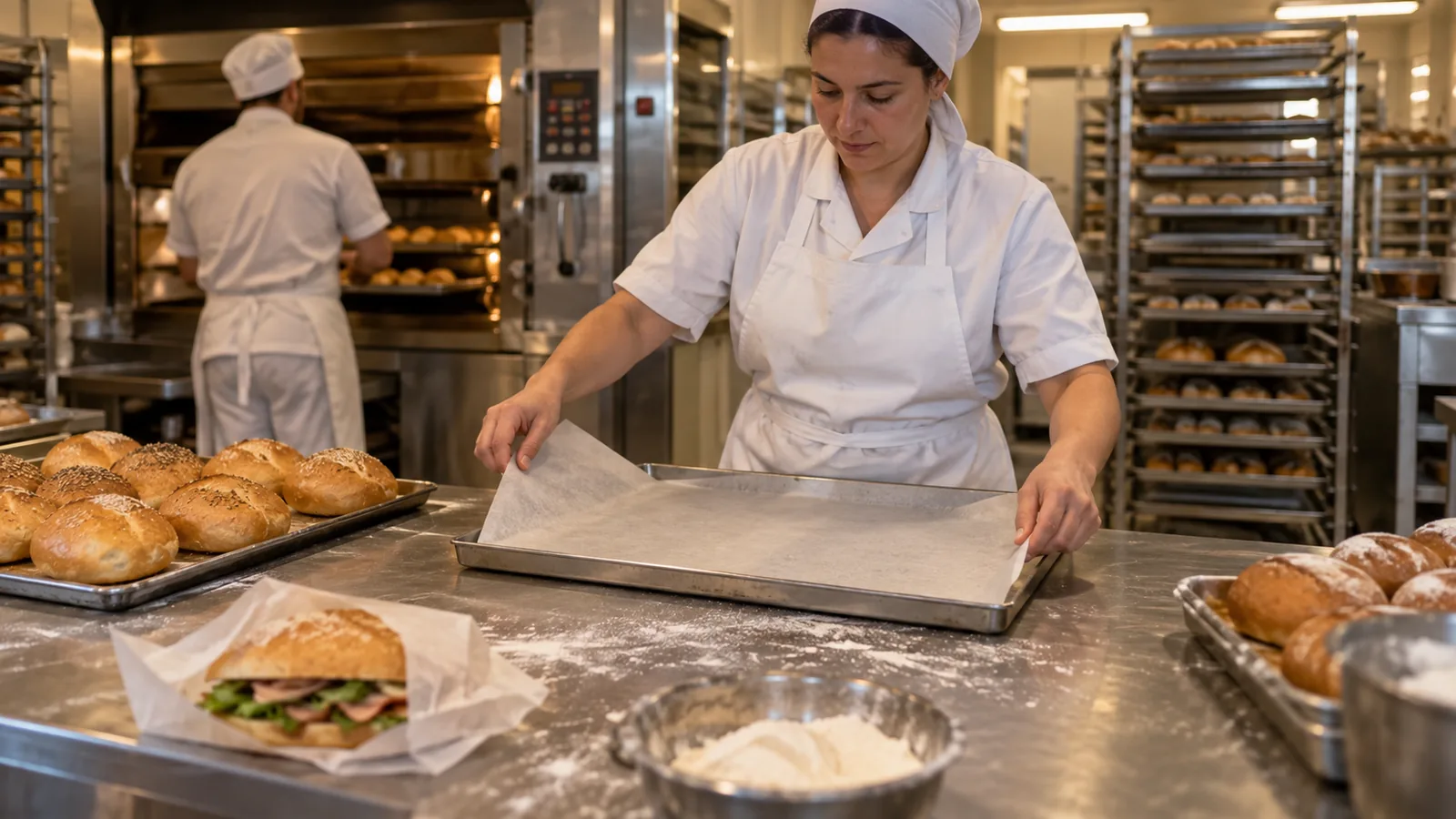
- Cake tin and tray lining in bakeries: silicone-coated parchment, 38–45 gsm.
- Cookie and pastry interleaving: either works; light greaseproof usually wins on cost, parchment wins where sticky icings are involved.
- Steam-table and hotel pan liners: parchment, for heat and release.
- Pizza and dough handling: parchment for release under dough and par-baked goods; see our dedicated pizza application guide.
- Molded products: baking cups and cases are their own category with forming, not just sheeting, requirements.
7. Specification Checklist for Your RFQ
Send suppliers this list and compare answers line by line:
- Product type: greaseproof (state KIT minimum and method) or silicone-coated parchment (one or two sides).
- Grammage and tolerance, sheet or roll dimensions, die-cut format, maximum continuous dry-heat temperature (parchment only).
- Food-contact compliance for the destination market: FDA, EU 1935/2004 and BfR as applicable, with fat-migration test reports.
- Allergen and fragrance-free confirmation, unbleached or FSC-certified base paper options.
- Print: flexo or offset, food-safe inks, coverage limits on the food-contact side.
- Packaging format and sheets per pack, cost per sheet at your volume.
Conclusion
Greaseproof and parchment are not two names for one product. Greaseproof is a refined, uncoated paper selected for grease resistance at contact temperature; parchment is a silicone-coated paper selected for release and oven tolerance. Match the KIT rating to the fat load, the grammage to the handling, the temperature rating to the process, and the cost per sheet — not per tonne — to the budget. A quotation that answers this checklist in detail is usually the quotation from a converter worth auditing. Our wholesale parchment paper rolls and sheets programme publishes the test data behind each grade so specifications can be verified before ordering.
Is greaseproof paper the same as baking paper?
No. Baking paper in commercial supply is silicone-coated parchment rated for oven use. Greaseproof is uncoated; it resists oil through fiber refining but is not an oven liner.
What KIT rating should I require for burger wraps?
Specify KIT 10 or higher with the TAPPI T559 method. Lower ratings allow oil strike-through during extended holding.
Can greaseproof paper go in the oven?
Not for direct tray contact. It can wrap warm foods, but without a silicone release layer it sticks to dough and scorches at baking temperatures.
Why do two "greaseproof" quotes differ so much in price?
Differences in refining level (KIT), grammage, sheet format and documentation scope. Normalize quotes to cost per usable sheet at your exact size before comparing.
Which paper is better for the environment?
Both are paper-based and recyclable where grease load permits; uncoated greaseproof is simpler to repulp. Ask for FSC-certified base paper options and unbleached grades from either family.
CTA
Send LANGMAI your applications — wraps, liners, oven sheets or cups — and target volumes. The team will recommend greaseproof or silicone-coated grades with KIT values, grammages and food-contact documentation, and quote cost per sheet in your sizes.
Get a Grade Recommendation and Quote