
Introduction
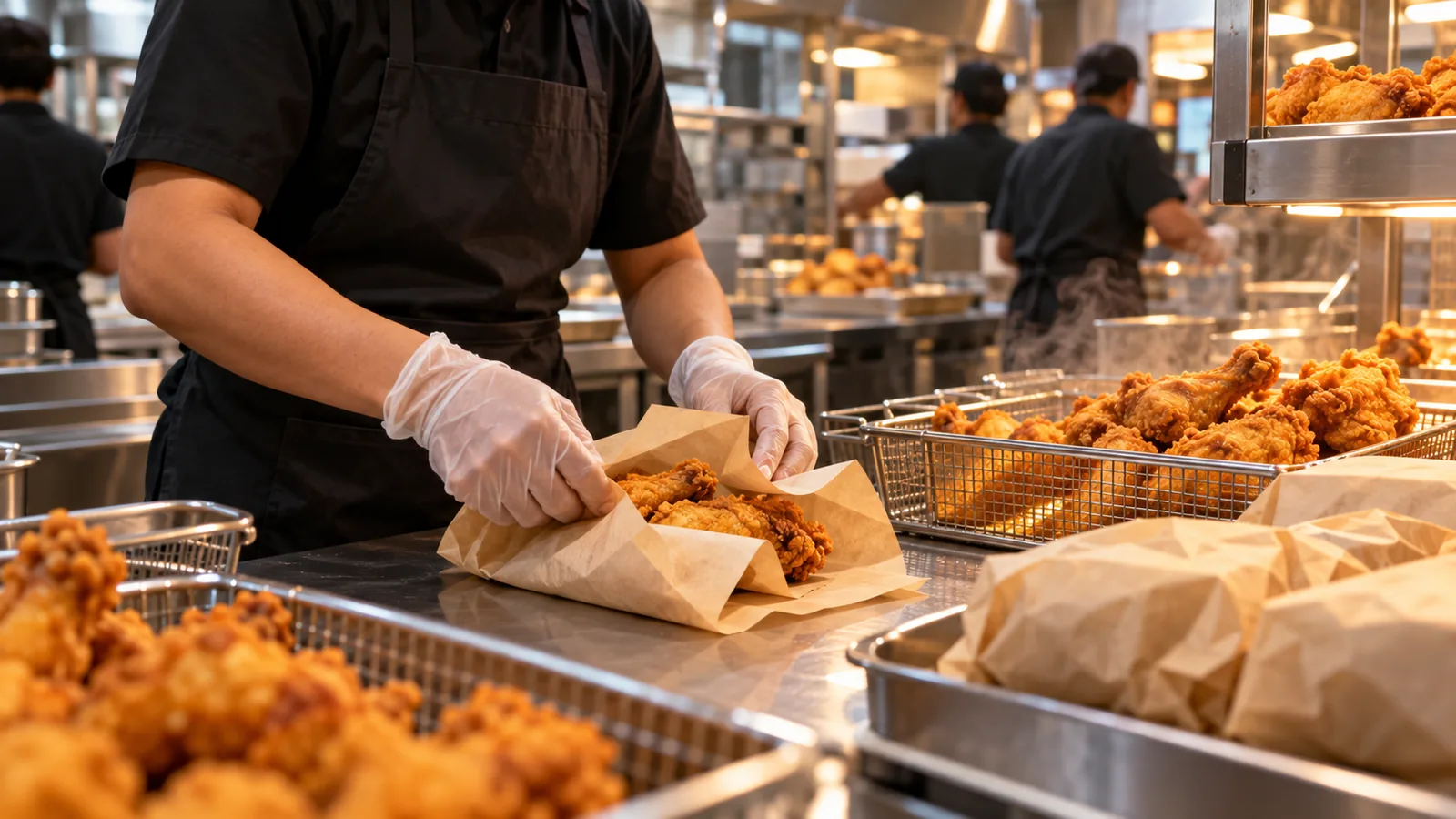
Fried food is the harshest environment a paper product will meet in foodservice. Product leaves the fryer at high temperature, carries surface oil for its entire hold time, sits in warming cabinets where heat keeps the fat mobile, and is often finished with sauces that keep working after the wrap is closed. A wrap that handles a bakery pastry fails visibly on fried chicken: grease stains, sheet delamination, torn corners, and printed logos that turn into blotches within minutes. This is a specification exercise, not a catalog pick. This guide covers how grease resistance is measured, which KIT levels match which applications, how to choose among wrap, basket liner and interfolded sheet formats, and a checklist that keeps quotations comparable. Buyers comparing these specifications can review our silicone-coated parchment sheets and rolls programme, where coating weight, base grammage and release values are documented per construction. Burger programmes that need a printed, chain-specific wrap rather than a generic sheet are quoted separately on the burger wrapping paper page.
1. Why Fried Food Punishes the Wrong Paper
Three stress factors stack in fried food service:
- Oil load and temperature. Freshly fried items carry free surface oil at temperatures that keep it fluid, and fluid oil wicks through paper pores far faster than solid fats — a sheet rated for sandwich duty can stain through in minutes on fried chicken.
- Hold time. QSR items sit wrapped for minutes in cabinets and delivery bags. Grease penetration is a time phenomenon: a sheet that looks dry at thirty seconds can be saturated at ten. Specify for the longest realistic hold, including delivery.
- Mechanical handling. Wraps are folded and pressed; basket liners are grabbed and dragged. A sheet whose resistance depends on a fragile surface treatment can fail mechanically even when its barrier holds.
The consequences are not cosmetic. Grease strike-through drives glove changes, counter cleaning and guest complaints — recurring costs that dwarf the price difference between a correct and an underspecified sheet. For production volumes, the same construction logic applies to our food-grade die-cut parchment rounds line, quoted per roll, sheet or die-cut format.
2. Specifying Grease Resistance: the KIT Rating
Grease resistance in refined greaseproof paper is measured with the KIT test (TAPPI T559), in which progressively more aggressive oil mixtures are applied until one penetrates. The KIT number is the only grease-resistance figure to accept in a quotation. Working levels for foodservice:
- KIT 6–8: pastry wraps and moderate-contact use with limited hold time.
- KIT 10: standard burger and fried food wraps for typical counter turnover.
- KIT 12: maximum common resistance for high-fat, long-hold programs — fried chicken, sauced items, basket and bucket liners.
Two buyer rules make the number meaningful. First, match the KIT level to the fattiest product and longest hold in the program, not the average item. Second, require the KIT value per production lot on the certificate of analysis, not a brochure claim. The manufacturing logic behind refined greaseproof is detailed in the greaseproof vs parchment comparison.
3. Format Selection: Wraps, Basket Liners, Bucket Liners, Sheets
The same paper family ships in formats that behave very differently in service:
- Square and rectangular wraps (roughly 10.5"–15"): the workhorse for burgers and fried chicken. Choose 35–45 gsm at KIT 10+; heavier weights fold cleaner creases and resist tearing on sauced items.
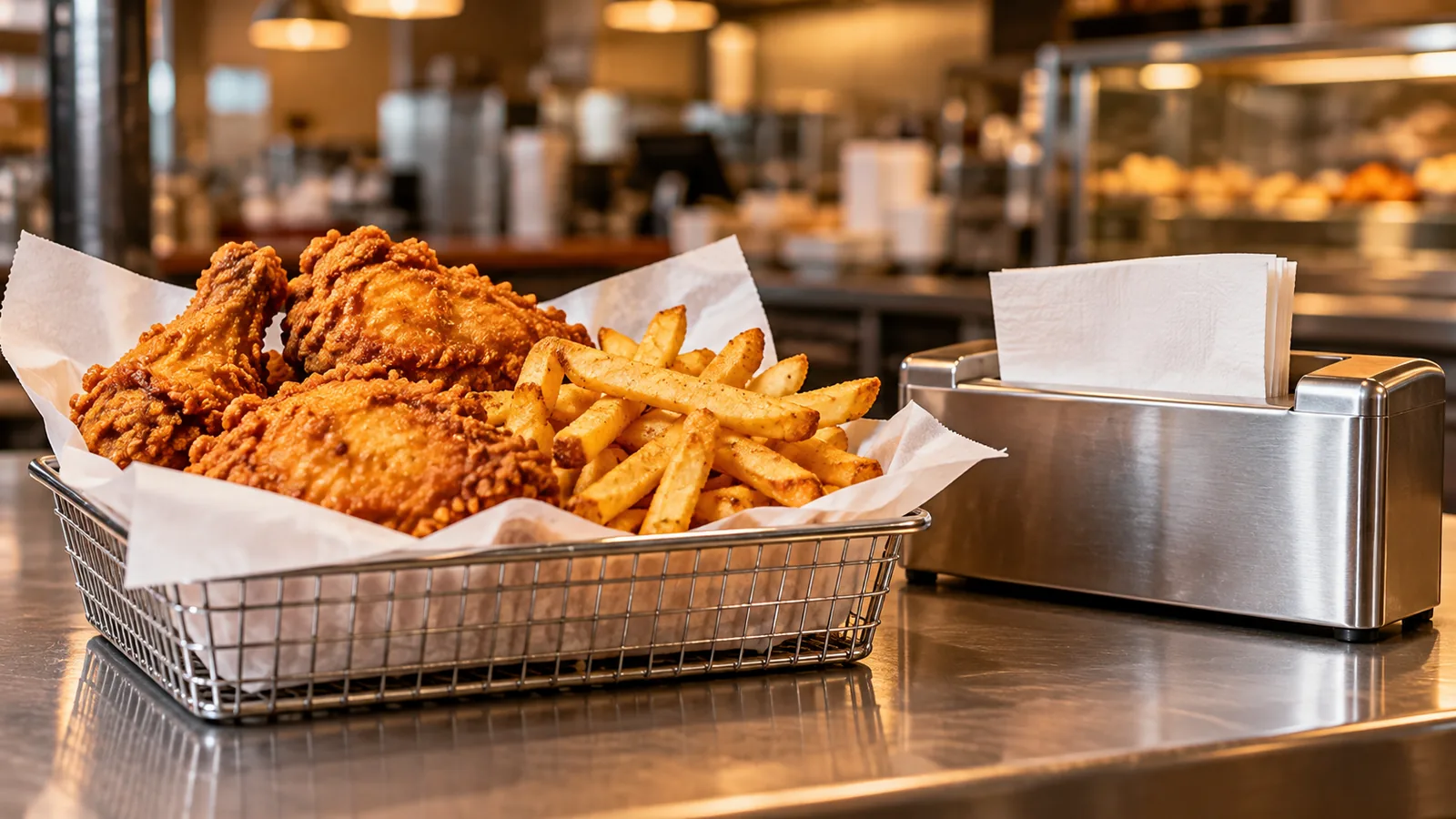
- Basket and tray liners: pre-cut sheets under loaded servings. Oil pools under fried items, so KIT 12 and 40 gsm or heavier are the safe default; opacity matters because a stained liner reads as dirty.
- Bucket and box liners: formed liners for family buckets and sharing boxes. Specify crease lines and a size that folds without stretching.
- Interfolded sheets: pop-up dispenser packs for counter and prep use. Interfolding must be consistent or dispensers double-feed; test with real dispensers.
Perforated variants exist where steam escape matters — fried items held under wraps soften unless vapor can vent. For delivery programs, pair the wrap with vented outer packaging rather than expecting the paper alone to manage steam.
4. Line Speed, Dispensers and Kitchen Reality
Paper that performs in a lab can still slow a kitchen. Verify on the line:
- Dispenser compatibility: interfolded sheets must feed one-at-a-time at speed; test the actual pack in the actual dispenser.
- Stiffness at kitchen humidity: a sheet that gains moisture in a hot kitchen softens and folds poorly. Evaluate fold crispness at the end of a rush, not the start.
- Cut-down and waste: pre-cut liner sizes should match your basket and tray fleet exactly; oversize multiplies across tens of thousands of servings.
- One-hand usability: sheets that cling, curl or stick to gloves cost seconds per order.
These operational details decide whether a supplier stays on the program after the first quarter — price rarely does.
5. Custom Print and Brand Visibility on Greaseproof Paper
The wrap is the cheapest advertising surface a QSR owns, and greaseproof accepts food-safe flexo printing well, with rules:
- Coverage and food contact: agree coverage limits and which side prints; saturated prints on the food-contact face raise ink migration and odor questions.
- Ink specification: require food-safe inks with statements covering odor and transfer.
- Artwork discipline: logos print differently on an uncoated fibrous surface; run printed production trials on the exact grade before approving artwork. The custom printed greaseproof paper guide covers the proofing workflow.
Print also carries a sustainability point worth stating in bids: refined greaseproof achieves its barrier through fiber structure, not fluorochemical treatments — aligned with the PFAS-free expectations in chain supplier codes.
6. Cost per Use and an RFQ Checklist
Compare quotations on cost per usable sheet at your exact size, weight and KIT level — never per tonne, which hides waste and packing differences. Then score suppliers on:
- Barrier data: KIT value per lot with certificates, matched to your fattest, longest-hold item.
- Format accuracy: tolerances on pre-cut liners and interfold consistency on dispenser packs.
- Compliance package: food-contact declarations for destination markets (FDA and EU 1935/2004 frameworks as applicable) and ink statements for printed items.
- Program reliability: lead times for seasonal spikes, change-notification terms, and reference accounts in fried food service.
A sheet a tenth of a cent cheaper that generates an extra glove-and-counter cycle per hundred orders is the more expensive sheet.
FAQ
What KIT rating do I need for fried chicken wraps?
Specify KIT 12 for fried chicken and other high-fat, long-hold items, especially where oil pools on basket or bucket liners. KIT 10 suits standard burger wraps with shorter hold times; KIT 6–8 suffices only for pastries and moderate-contact use.
Is greaseproof paper oven safe?
Uncoated greaseproof is not designed for oven baking — without a silicone coating it sticks to dough and scorches at baking temperatures. Use it for wrapping and lining hot, fried and greasy foods; use silicone-coated parchment for ovens.
Does greaseproof paper contain PFAS?
Properly refined greaseproof achieves grease resistance through intensive fiber refining rather than fluorochemical treatments. Confirm with the supplier's declaration of composition, and use KIT data to show the barrier is structural.
What grammage should basket liners be?
Use 40 gsm or heavier for basket and tray liners under fried foods, paired with KIT 12 resistance. Lighter sheets stain through under pooled oil.
Conclusion
Fried food programs fail paper at the intersection of heat, oil, time and speed — and the suppliers who win them quote KIT levels per lot, hold interfold tolerances and prove compliance for printed wraps. Specify by KIT rating, gram weight and verified hold-time performance, compare bids on cost per usable sheet, and the paper becomes part of the product experience. Our custom silicone-coated baking parchment paper programme publishes the test data behind each grade so specifications can be verified before ordering. The factory and certificate library lists the third-party audits and test reports behind these claims.
CTA
Send LANGMAI your menu's fattest item, your hold and delivery times, and your basket and wrap dimensions. The team will recommend greaseproof grades and formats with per-lot KIT data, food-contact documentation and custom print options — plus samples for a live line trial.
Get a Fried Food Paper Program Quote
Sources
- TAPPI, T559 grease resistance test (KIT test) and paper testing standards
- U.S. eCFR, 21 CFR 176.170: Components of paper and paperboard in contact with aqueous and fatty foods
- EUR-Lex, Regulation (EC) No 1935/2004 on materials and articles intended to come into contact with food
- U.S. FDA, Food Contact Substances program
- EFSA, Scientific opinions on food contact materials