
Introduction
Sugar is the most adhesive ingredient a bakery liner will ever touch. A paper that releases shortbread cleanly can leave half a macaron shell behind, tear the bottom crust off a honey cake, and trap caramelized syrup in its own fibers. The reason is chemistry, not bad luck: as batters rich in sugar, honey, glucose or syrups bake, their moisture evaporates, the sugar concentration climbs past the point where it stays dissolved, and the surface begins to caramelize and bond mechanically with whatever it touches. If that surface is a liner with an uneven or under-weight silicone coating, the product and the paper fail together. This guide explains why sticky, high-sugar applications punish standard paper, which specification points actually predict release performance, how to test before you commit a production run, and what to put in the RFQ so quotations are comparable. Buyers comparing these specifications can review our custom silicone-coated baking parchment paper programme, where coating weight, base grammage and release values are documented per construction.
1. Why Sugar Defeats Standard Release Surfaces
Three mechanisms work against the liner:
- Concentrated sugar syrup bonds on contact. During baking, sugar migrates to the batter surface and the product interface. A thin film of concentrated syrup between dough and paper acts as an adhesive — and the hotter the oven section, the more aggressive the bond becomes as caramelization sets in.
- Moisture leaves, adhesion arrives. Early in the bake, steam keeps the interface lubricated. As the product dries, that lubrication disappears; the same sheet that released at minute ten can grip at minute twenty-five. Long, slow bakes — honey cakes, sticky toffee puddings, fruit bars — hold the product against the paper exactly when the syrup is at its stickiest.
- Porous fibers trap syrup. Any uncoated fiber exposed at the surface wicks sugar solution into the sheet. Once caramelized sugar is inside the paper, it does not release — the product tears and the liner goes to waste.
This is why release performance on sticky products is decided by coating quality and coverage, not by base paper weight alone. For production volumes, the same construction logic applies to our wholesale parchment paper rolls and sheets line, quoted per roll, sheet or die-cut format.
2. Products Where the Spec Must Move Up
Treat these as high-demand categories that justify upgraded paper and testing:
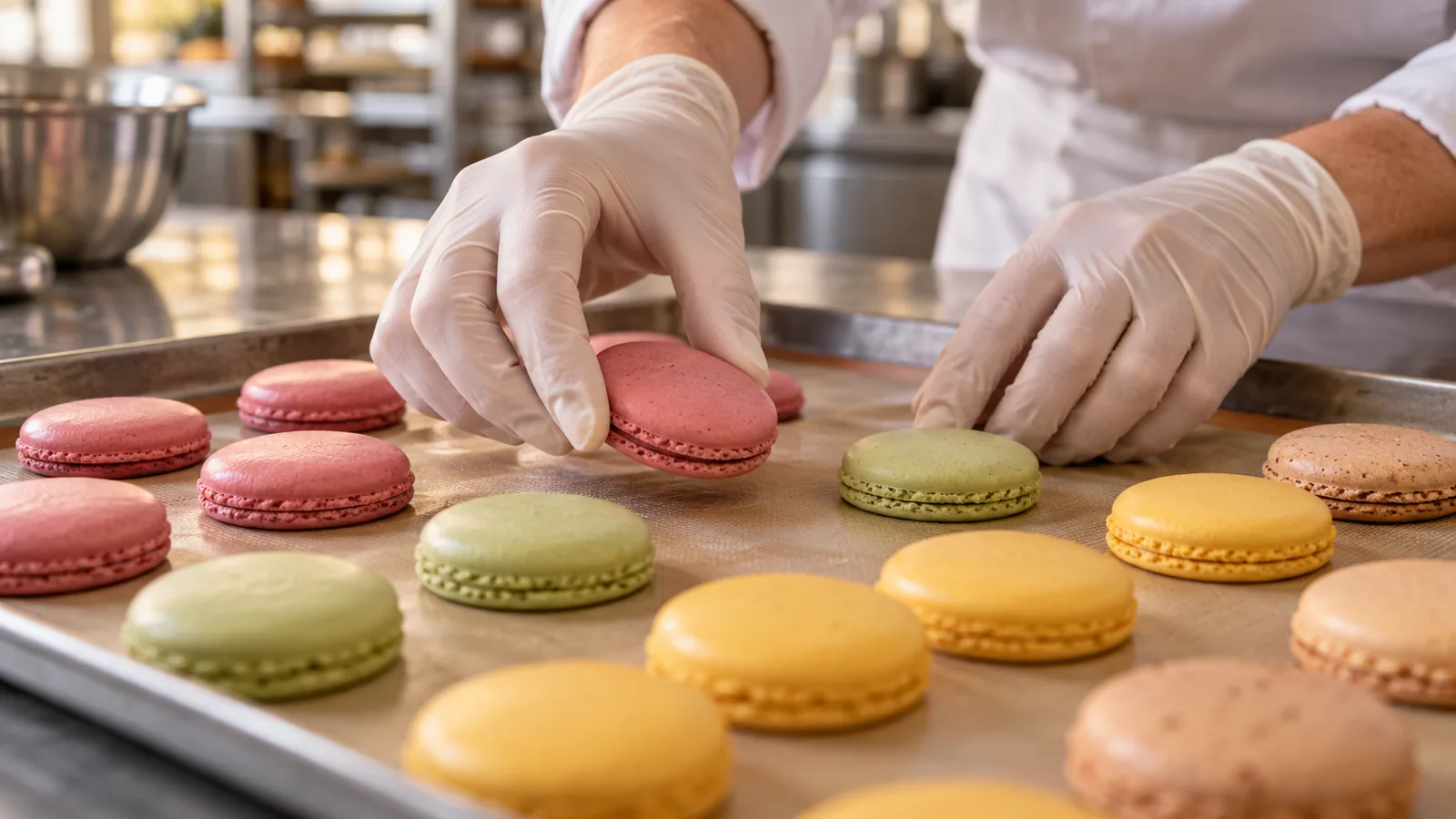
- Macarons and meringue-based shells: low-moisture, high-sugar surfaces bond almost instantly; release must be near-total or yields collapse.
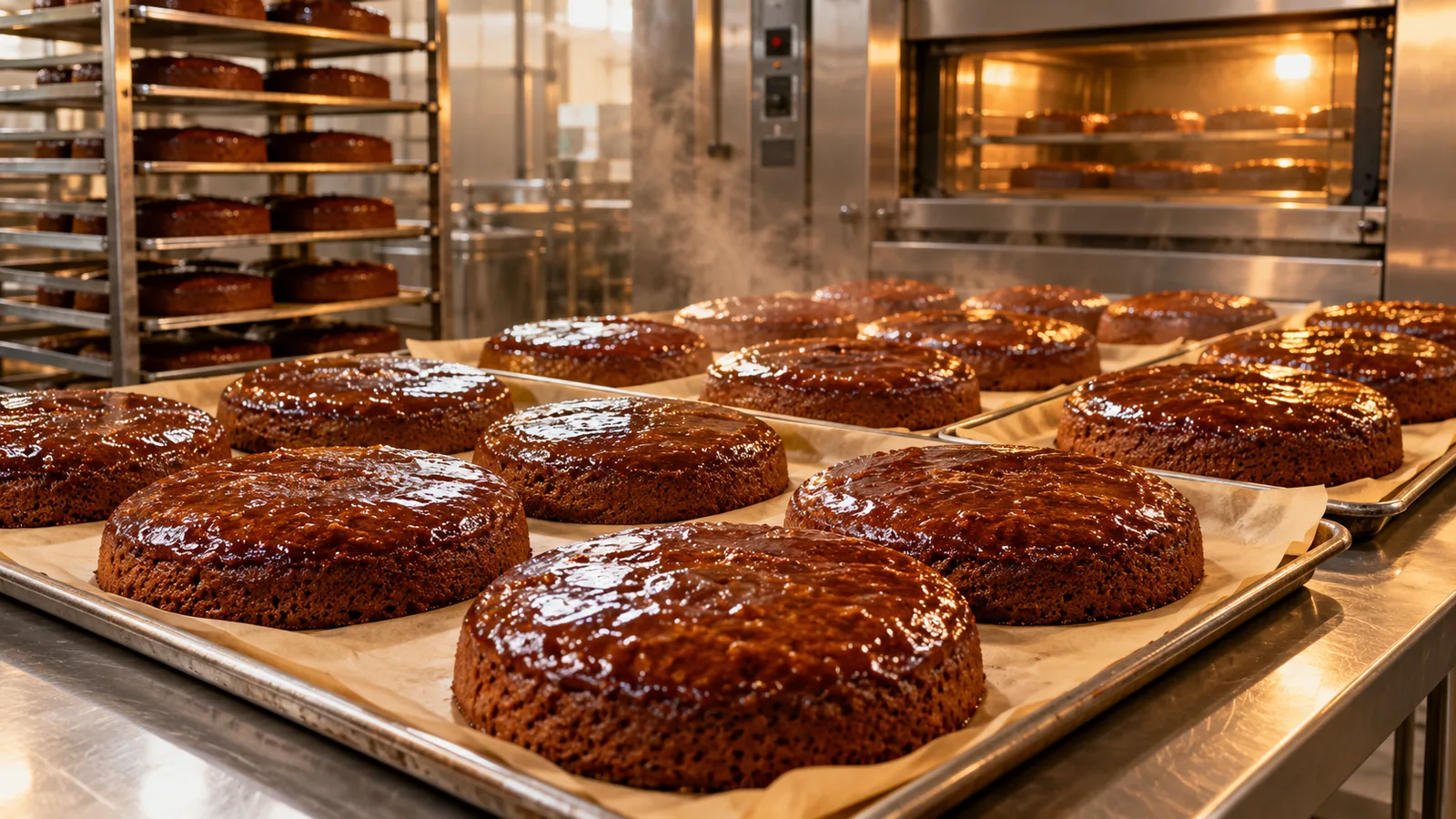
- Honey, molasses and brown sugar cakes: long bake times with syrup-rich batters that keep working through the hold.
- Caramel, toffee and brittle work: syrups cooked well past 150 °C will carbonize onto under-specified paper.
- Granola bars and fruit pastes: compressed, sticky masses baked or dried on sheets, then cut in place.
- Sticky rice and mochi-type products: gelatinized starches behave like warm glue.
The right question in an RFQ is not "is your paper non-stick?" but "what is your release performance on a batter with X % sugar at Y °C for Z minutes?"
3. Silicone Coating Quality: What Actually Predicts Release
Silicone-coated parchment releases because a cured silicone layer interposes between sugar and fiber. The specification details that matter:
- Double-sided coating for products baked on both contact faces, or for sheets reused across turns. The trade-off between single- and double-sided coating is explained in the single vs double-sided silicone coating guide.
- Coating weight within a declared range. Under-coating saves cost and loses release on the first sticky product; ask for the grams-per-square-meter figure, not just "silicone coated."
- Cure quality. Properly cured silicone does not transfer or off-gas odor; a sticky or faintly odorous sheet signals under-curing, which shows up first on sugary products.
- Coverage uniformity. Pinholes and thin spots concentrate failures — one bare fiber in the center of a macaron sheet costs a whole tray.
4. Testing Before You Commit: the Bake-Trial Protocol
Brochure claims will not survive a honey cake. Run a structured trial before approving a supplier:
- Reproduce your worst case: your fattest, sweetest, longest-bake product at your real oven temperature and time — not a generic sponge.
- Bake multiple cycles per sheet if your operation turns or reuses liners, and score release after every cycle; the multi-bake release testing guide describes the scoring method.
- Inspect the interface: look for torn crumb on the paper, sugar residue and any silicone transfer or odor.
- Check dimensional behavior: sticky batters spread; the liner must stay flat and not curl at edges as it heats.
- Score yields, not impressions: count intact units per tray across the trial. A one-percent yield difference on macarons dwarfs any paper price gap.
Require the same protocol from any challenger supplier so trial results stay comparable.
5. Format Choices for Sticky Product Lines
- Pre-cut sheets: the default for trays and pans in sticky applications; consistent placement removes the wrinkles where syrup pools. The pre-cut sheets buying guide covers sizing to your fleet.
- Rounds: for cake tins and high-sugar batters that spread to the pan wall; a correctly sized round eliminates corner adhesion entirely.
- Rolls: for irregular trays and hand-lined artisan production; cut tolerance matters because an oversize edge folds back under the product and bonds.
- Pan-liner programs: for repeated high-sugar bakes, specify slightly heavier grammage — the sheet must survive the release pull without tearing.
6. Cost of Failure and the RFQ Checklist
Price the liner against the waste it prevents. Stuck product means scrapped units, pan cleaning cycles, lost tray turns and unreliable yields. Score quotations on:
- Release evidence: coating weight, double- or single-sided construction, and trial results on your product at your bake parameters.
- Compliance package: food-contact declarations for your markets (FDA and EU 1935/2004 frameworks as applicable).
- Consistency: per-lot certification of coating weight and grammage, and change-notification terms.
- Total cost per tray: sheet price multiplied by expected reuses, divided by intact units — not price per tonne.
FAQ
What is the best baking paper for macarons?
A double-sided silicone-coated parchment with proven release on low-moisture, high-sugar shells. Run a bake trial on your exact macaron recipe and oven; if shells release cleanly with intact feet and no torn bases, the grade is right. Avoid uncoated or lightly coated papers — they bond almost immediately.
Can baking paper be reused for sticky batters?
Only if the coating survives the first release intact. For high-sugar products, plan on single use or limited turns, and verify with a multi-cycle test: score release after each bake and retire the sheet when any tearing or residue appears. Reusing a compromised sheet transfers sugar and coating failure to the next batch.
Does more silicone coating always mean better release?
Up to the point of proper cure and uniform coverage, yes — coating weight and coverage uniformity drive release on sticky products. But an under-cured heavy coating can transfer or trap odor, so ask for cure quality and food-contact statements, not just a higher coating number.
Will caramelized sugar damage the paper or the oven?
Caramel above roughly 160 °C carbonizes onto the liner and ruins it for reuse, and heavy overflow can reach the pan. Use heavier grammage liners sized to the pan for syrup-rich products, and treat the liner as consumable in caramel and toffee work.
Conclusion
Sticky, high-sugar products are the strictest release test a baking paper will face, and they expose weak coatings that mild bakes never reveal. Specify by silicone coating weight, coverage and cure quality, qualify suppliers with a bake trial on your worst-case product, and compare quotations on cost per intact unit — the liner that protects your yields is always the cheaper sheet. Our baking parchment paper manufacturing programme programme publishes the test data behind each grade so specifications can be verified before ordering.
CTA
Send LANGMAI your stickiest product, its sugar content and your bake temperature and time. The team will recommend silicone-coated grades with coating-weight data and food-contact documentation, plus pre-cut samples sized to your pans for a bake trial.
Get a Sticky-Product Baking Paper Quote
Sources
- TAPPI, paper testing standards including silicone coating and grease-resistance methods
- U.S. eCFR, 21 CFR 176.170: Components of paper and paperboard in contact with aqueous and fatty foods
- EUR-Lex, Regulation (EC) No 1935/2004 on materials and articles intended to come into contact with food
- U.S. FDA, Food Contact Substances program
- EFSA, Scientific opinions on food contact materials