
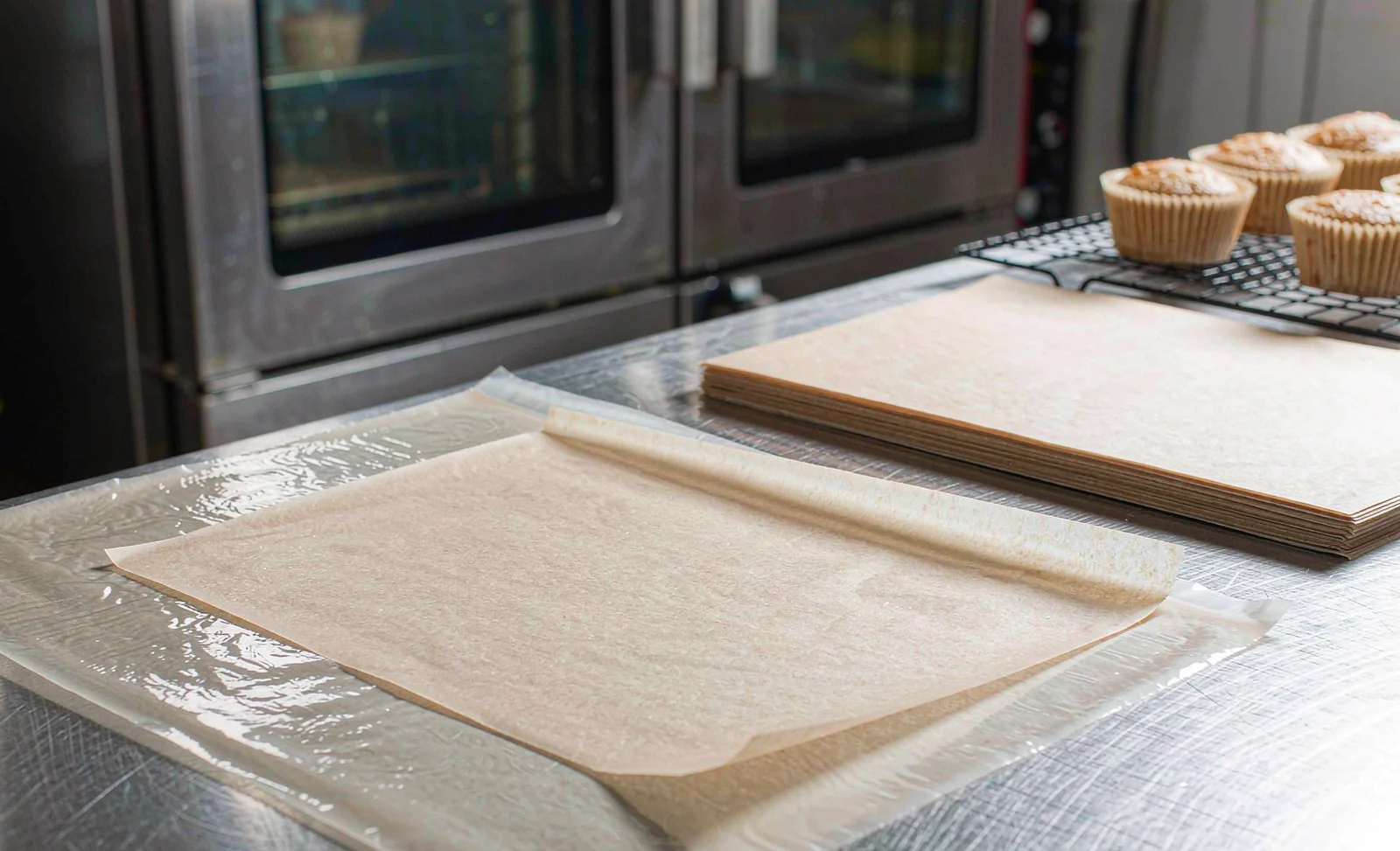
Introduction
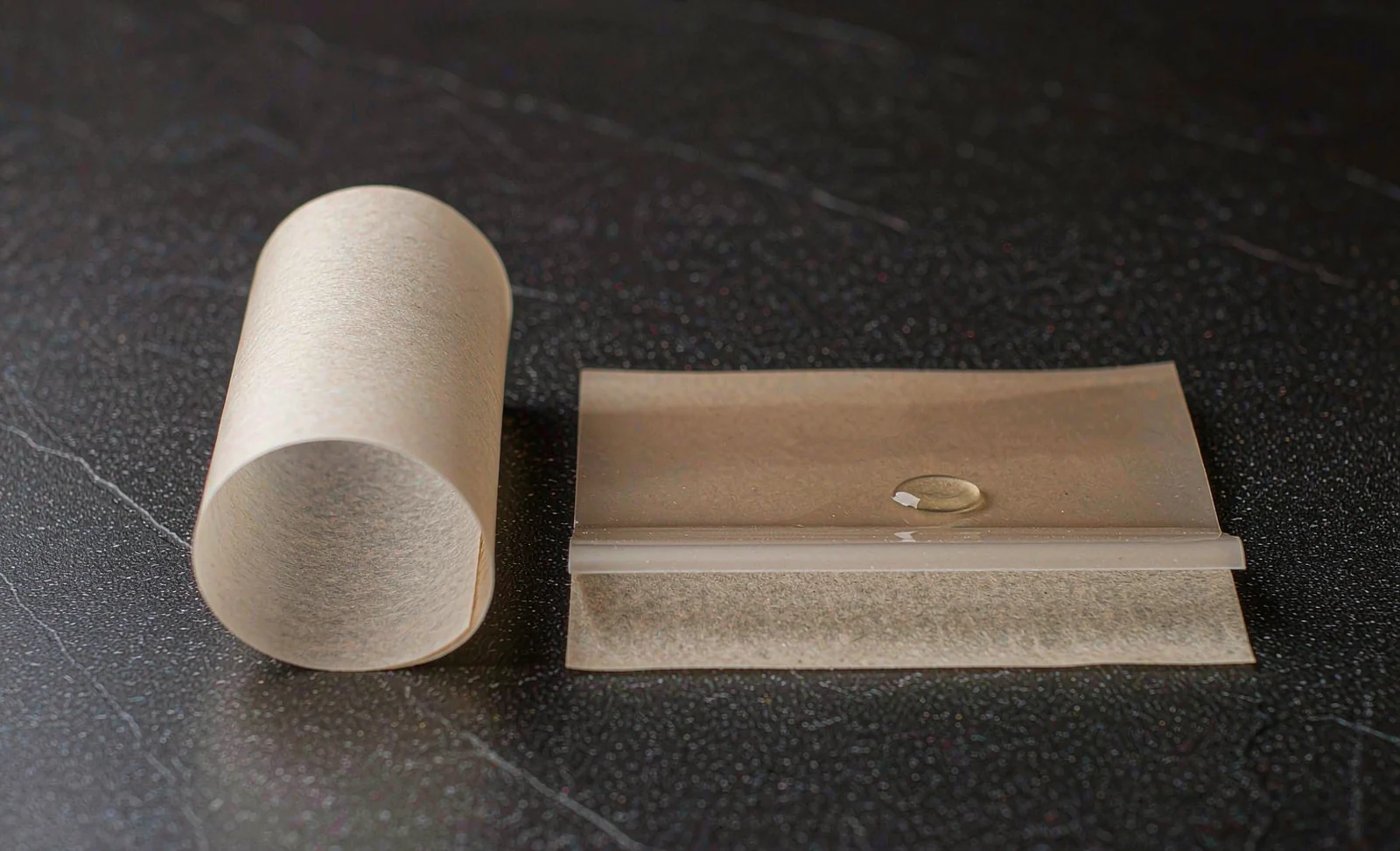
Should a wholesale program specify single-sided or double-sided silicone coated baking paper? The answer depends on which surfaces actually touch food, how the sheet or liner moves through production, and what the finished product has to do after baking. Buyers often default to double-sided stock because it sounds safer, then discover they are paying for release capacity the application never uses. Buyers comparing these specifications can review our baking parchment paper manufacturing programme programme, where coating weight, base grammage and release values are documented per construction.
A practical sourcing rule is to buy release only where the food touches. If batter sits on one face of a muffin liner and nothing touches the other, single-sided construction delivers the same release for less coating weight. If a sheet wraps cheese, interleaves frozen dough discs, or is handled on both faces during production, double-sided coating usually reduces waste and rework enough to justify the higher unit cost. Buyers verifying these specifications can review the certificate library alongside supplier documentation requests.
This guide is for importers, bakery groups, supermarket private-label teams, foodservice distributors and industrial converters comparing suppliers for EU, US and other regulated markets.
1. What Single-Sided and Double-Sided Coating Actually Mean
Both products start from a greaseproof or glassine base made from highly refined pulp, typically 32 to 60 GSM for baking applications, then receive a thin layer of food-contact silicone before curing. For production volumes, the same construction logic applies to our private-label parchment paper supplier line, quoted per roll, sheet or die-cut format.
Single-sided paper is coated on one face. The reverse stays as base paper: it absorbs a little moisture, accepts glue and print more readily, and costs less per square metre. Double-sided paper is coated on both faces, so both surfaces release and repel grease and water to a similar degree. The factory and certificate library lists the third-party audits and test reports behind these claims.
Coating is priced by weight and coverage, and typical coat weights sit in a low single-digit grams-per-square-metre band. Going from one side to two roughly doubles the silicone applied, and silicone is among the most expensive inputs per kilogram. That is the core driver of the price gap.
2. Release Performance in Real Production Conditions
Release performance is usually measured with a peel or release-force test, but buyers rarely need the laboratory number. What matters is failure behaviour on the line.
For dry or low-fat applications such as bread, laminated pastry and plain biscuits, single-sided paper performs essentially the same as double-sided when the coated face is correctly oriented. The product lifts cleanly and no paper residue remains.
The picture changes with high-fat, high-sugar or high-moisture products. Cheesecake bases, sticky buns, caramel toppings, sugary glazes and wet batters create strong adhesion. Double-sided construction helps here, not because the second face improves peeling directly, but because it keeps the paper dimensionally stable. When one face is uncoated and absorbs moisture, the sheet can cockle, curl or shrink unevenly in the oven, and that distortion causes tearing at release even when the coated face is working well.
Orientation errors are the second practical issue. With single-sided stock, a mis-oriented sheet on a manual line means sticking, waste and rework. Buyers running manual packing lines, seasonal staff or high-turnover labour should price that risk honestly. Double-sided paper removes orientation failure, which is often the strongest operational argument for the upgrade.
3. Application Map: Which Side Do You Actually Need?
Flat baking sheets for tray-lined bread, pastry and cookies usually need release on one face only. With both faces coated, sheets can slide or shift during tray loading, which operators either value for turning product or dislike for stability.
Interleaving sheets for stacked frozen dough discs, burger patties, cheese slices, confectionery slabs and marinated protein need double-sided release. Food contacts both faces of every sheet, so single-sided stock guarantees failure at every other interface.
Muffin and cupcake liners generally use single-sided coating, with silicone on the interior face. The exterior stays as printable greaseproof base paper that accepts pleat-forming cleanly. Double-sided liners exist for premium releases but complicate printing adhesion and add cost with little benefit.
Air-fryer and steam liners should usually be double-sided. They are handled wet, can be folded, and food contacts both faces during cooking and serving.
Wrapping applications such as butter and cheese wraps typically specify single-sided or uncoated greaseproof paper, because the requirement is grease resistance rather than release.
4. Cost Analysis Beyond Unit Price
Comparing price per square metre is misleading when constructions differ. Buyers should normalise on cost per usable unit delivered to the line.
The obvious saving with single-sided stock comes from lower silicone consumption. Typical market pricing puts double-sided sheets meaningfully above single-sided equivalents at the same grammage, and the gap widens when the specification also calls for higher coat weight or heavier base paper.
Hidden costs run the other way. Orientation waste, product loss from sticking on high-sugar recipes and complaint handling can each exceed the coating premium. For high-value goods — premium pastries, frozen entrees, branded bakery kits — paper is a small share of unit cost, so reliability outweighs a marginal saving.
Freight differences are negligible because coating adds little weight. Storage matters more: single-sided papers can be more humidity-sensitive, causing edge curl in unrefrigerated warehouses in humid climates.
5. Specification and RFQ Checklist
A quote-ready RFQ for either construction should state the following, so suppliers compare equivalent offers:
- base paper type and grammage in GSM, with tolerance;
- number of coated faces and silicone coat weight per side;
- grease resistance level or kit value;
- maximum continuous use temperature and dwell time;
- format — roll width, sheet size, die-cut shape or formed cup dimensions;
- print requirement and whether print sits on a coated or uncoated face;
- food type, fat and sugar content, and contact time;
- downstream steps including freezing, thawing or baking;
- destination market and food-contact documentation required;
- packaging configuration, carton count and pallet pattern.
Ask for the coated-face count in writing and ask how the supplier verifies it. A contact-angle or dyne test, or differential water absorption between faces, distinguishes the two quickly during incoming inspection.
6. Compliance, Documentation and Common Pitfalls
Whichever construction is chosen, the article must meet destination food-contact rules. In the EU materials fall under the Framework Regulation and good manufacturing practice rules; in the US components need an applicable FDA authorisation. Recognised national recommendations such as the German BfR recommendations provide further assessment criteria.
Request a declaration of compliance for the exact SKU with supporting evidence appropriate to the food type and contact conditions. Watch three pitfalls: assuming "food grade silicone" alone suffices, since base paper, inks and process aids each need evidence; approving a hand-sheet instead of a production-representative sample; and silent specification drift.
Independent laboratory verification supports incoming acceptance for larger programs where retail channels impose audit requirements.
Conclusion
Choose single-sided coating where only one face contacts food, the line controls orientation reliably, the formulation carries low to moderate fat and sugar, and the saving matters at the buyer's volume. Choose double-sided where both faces contact product, where the sheet must survive interleaving or wrapping, where sugary or fatty recipes adhere strongly, where labour turnover makes orientation errors likely, or where paper cost is small relative to finished value. Then lock the decision into a written specification stating coated-face count, coat weight, grammage, heat limit and evidence file. Our pre-cut parchment paper sheets and rounds programme publishes the test data behind each grade so specifications can be verified before ordering.
What is the main difference between single-sided and double-sided silicone baking paper?
Single-sided paper has food-contact silicone on one face only, leaving a base-paper reverse. Double-sided paper is coated on both faces, so both surfaces release and resist grease. The choice affects price, orientation control, dimensional stability under moisture, and suitability for interleaving or wrapping.
Is double-sided silicone paper always better for release?
Not always. Release quality depends mainly on coat weight, cure quality and base paper rather than the number of coated faces. Double-sided paper is better where both faces touch food, where moisture would curl single-sided stock, or where operators cannot track orientation. For standard tray-lined cookies or loaves, correctly oriented single-sided paper usually releases as well for less cost.
How much more does double-sided silicone baking paper cost?
Double-sided generally costs more per square metre at the same grammage, because twice the silicone is applied and silicone is a high-cost input. The gap depends on coat weight, base grade, volume and format. Compare landed cost per usable unit including waste rather than headline unit price.
Which side should be coated for muffin and cupcake liners?
The interior face, which contacts batter, should carry the silicone. The exterior normally stays as greaseproof base paper so it can be printed and pleat-formed reliably. Double-sided liners exist for very sticky formulations but add cost and complicate printing adhesion.
Can either construction go from freezer to oven?
Both can, provided the specification states the maximum continuous temperature and the paper stays within it. For freezer-to-oven work, double-sided paper generally performs better because the second coated face resists frost and condensate that bare paper would absorb, reducing tearing and sticking after thawing.
What documents should wholesale buyers request?
Request a declaration of compliance for the exact SKU referencing the destination framework, supported by composition or migration evidence appropriate to the food type, contact temperature and time. Also require the stated coated-face count, coat weight, base grammage, heat limit, lot coding and change-control commitment so repeat orders can be verified.
CTA
Send LANGMAI your product format, food type, oven profile, volume and destination market. The team can propose single-sided or double-sided silicone constructions, prepare production-representative samples and return a quote-ready specification for comparison.