
Introduction
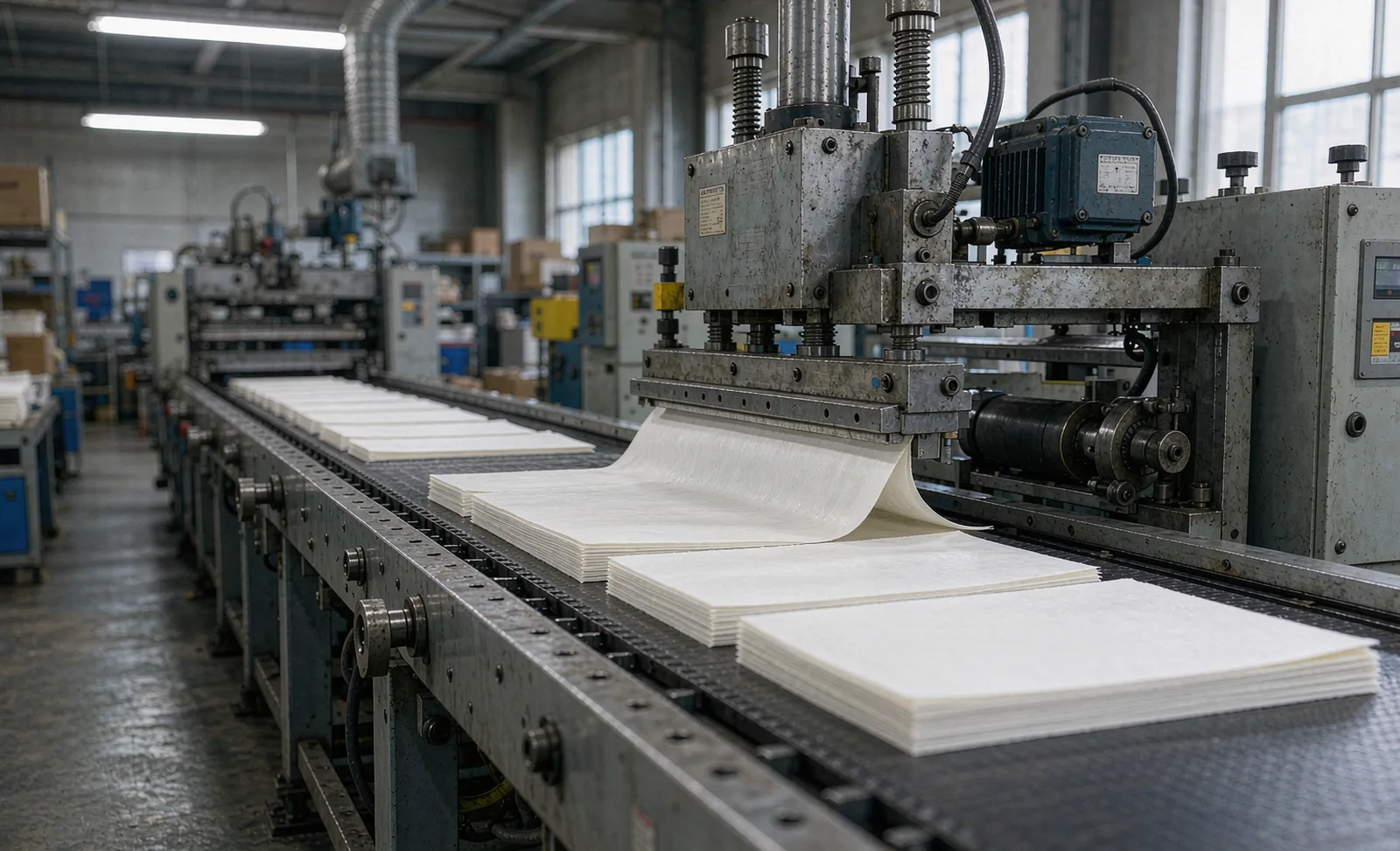
When wholesale buyers compare baking paper quotations, the unit price per tonne usually gets all the attention. But the number that actually lands on your cost sheet is cost per usable sheet, and the biggest lever behind it is rarely discussed: roll width selection and die-cutting utilization. Two bakeries buying identical silicone-coated parchment at the same tonne price can end up paying dramatically different costs per sheet simply because one specified widths that fit their cutting layout and the other did not. Every millimetre of trim that falls off the slitter, and every edge scrap that never becomes a saleable sheet, is parchment you paid full price for. Buyers comparing these specifications can review our pre-cut parchment paper sheets and rounds programme, where coating weight, base grammage and release values are documented per construction.
This guide explains how roll width decisions ripple through converting, what utilization really means, and how to specify widths — or negotiate them with your supplier — so that waste shrinks before the paper ever reaches your production floor. It is written for industrial bakeries, converters, distributors, and foodservice groups buying baking paper in jumbo rolls or slit sizes. Buyers verifying these specifications can review the certificate library alongside supplier documentation requests.
Why Roll Width Is a Yield Decision, Not Just a Specification
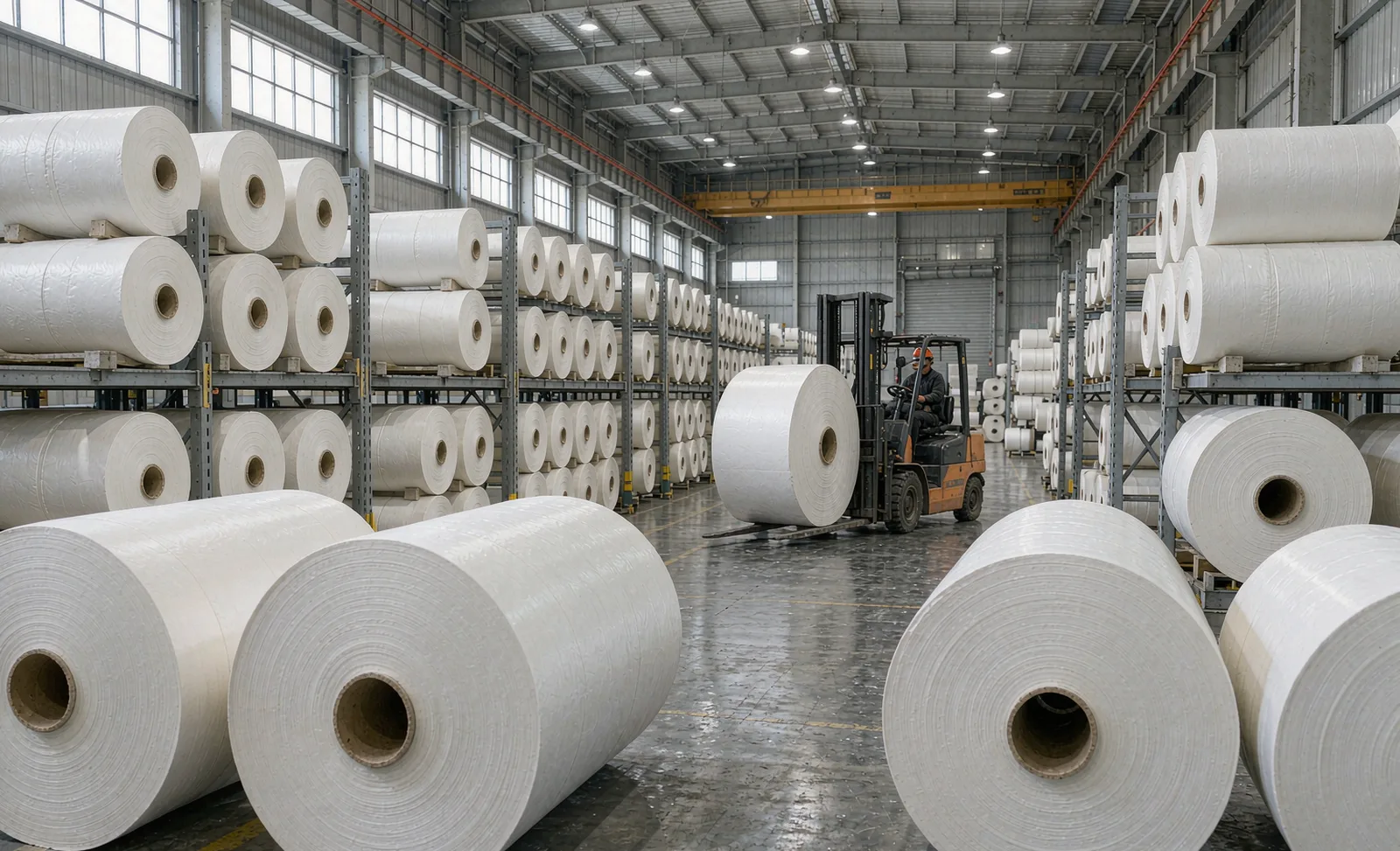
Baking paper is manufactured on jumbo reels typically one metre or wider, then slit down into the widths customers order. The manufacturer's own yield on that first slitting pass is high, but your yield depends on how the widths you buy relate to the products you cut. If you die-cut 300 mm squares from a 1,000 mm roll, you get three squares per pass with 100 mm left over — 10% of the web becomes edge trim before counting matrix waste between cuts. A 900 mm roll yields three squares with zero trim, or a 1,200 mm roll gives four squares at 100% edge utilization. For production volumes, the same construction logic applies to our custom printed baking parchment paper line, quoted per roll, sheet or die-cut format.
The arithmetic sounds trivial, but in practice buyers inherit widths from historical specs, sample the supplier happened to send, or standardize on one width for convenience across products that have different optimal layouts. Multiply a 5–10% trim loss across annual tonnage and the hidden cost frequently exceeds any discount a purchasing team would celebrate. The factory and certificate library lists the third-party audits and test reports behind these claims.
Calculating Utilization Before You Order
The Basic Layout Math
Start with the cutting die or sheet size, then work backwards. For rotary die-cutting of a round parchment circle of diameter D from a web of width W, count how many circles fit across the web, remembering that adjacent circles need a small gap for the web and any scrim. A 250 mm lid circle on a 760 mm web gives three across (750 mm of used width) with minimal trim; on an 800 mm web it still gives three across but throws away 50 mm on every linear metre of roll.
Repeat the exercise along the length: nesting and stagger patterns can raise utilization further. The output is a simple ratio — usable area divided by web area. Anything below 90% for straightforward rectangular cutting, or below 85% for circular cutting, deserves a second look at the width spec.
Factoring in the Full Converting Loss Stack
Trim is only one loss. Add setup waste at each roll change, start-up scrap while registration is dialed in, web breaks, and quality holds. The rule of thumb among converters is that each additional slitting pass adds a small but compounding loss, so buying a width that requires an extra offcut pass to reach your final size quietly erodes yield. Ask suppliers for the jumbo reel widths they convert from, because ordering a width that sits one slitting pass closer to the parent reel reduces both their waste and your price.
Sizing Decisions for Common Applications
Sheet Pans and Bakery Trays
Full-size sheet pans (approximately 600 × 400 mm in Europe, 457 × 660 mm in North America) set natural width targets. A 1,000 mm web allows a fold or double-sheet layout; a 620 mm web fits European trays single-wide with a tight edge. Buyers serving both markets should check whether one parent width can slit into both tray formats without an orphan offcut — suppliers can often propose a combined slitting plan that uses the whole web across two customers' specifications.
Interfolded and Pop-Up Sheets
Interfolded dispensing sheets add a length-direction constraint: the sheet length must suit the fold machinery, and the web width sets the sheet width. Here the cost of a wrong width is doubled, because misfit shows up both as trim and as slower folding speeds. Foodservice distributors should confirm the folding line's preferred web widths before locking a spec.
Die-Cut Circles, Liners, and Cake Bases
Round products are where utilization swings hardest, since circles waste the corners. Staggered two-row layouts, nesting smaller diameters in the gaps between larger ones, and ordering slightly wider webs to enable a third-across layout are the standard remedies. If your volumes justify it, ask the supplier to quote die-cut circles delivered ready-made instead of rolls — the mill's nesting layouts usually beat what a bakery can achieve in-house.
Negotiating Width with Your Supplier
Suppliers can slit almost any width, but minimum order quantities per width are the practical constraint. Three negotiation paths work in practice. First, consolidate: reduce the number of distinct widths across your product range so each width clears MOQ with better utilization per width. Second, share a slitting plan: mills often slit multi-width patterns from a single jumbo reel, so your 380 mm and your sister plant's 610 mm may combine into one parent width at a better yield for both. Third, trade flexibility for price: accept the supplier's "efficient" widths — the ones their cutting pattern favors — in exchange for improved pricing, provided your own utilization at those widths checks out.
Always verify the tolerance, too. A width quoted as ±2 mm can shift your layout assumptions at the slitter; tighter width tolerance costs slightly more but protects a finely optimized cutting plan.
Quality Considerations That Interact with Width
Wider webs are not automatically equivalent to narrower ones. Tension control across a wide web, coating uniformity from edge to edge, and curl behavior after slitting all vary with width, and problems concentrate at the outer edges of the parent reel. Buyers running high-speed automated lines should request edge-to-edge silicone distribution and thickness data for the specific width ordered, not just the parent reel datasheet. Camber — the tendency of a slit web to wander — matters more on narrow slit rolls and can cause tracking problems on bakery machines even when the paper itself is compliant.
A Practical Implementation Sequence
- Audit your current cutting layouts and calculate real utilization per SKU, including setup and changeover waste.
- List candidate widths per SKU and the utilization at each; shortlist layouts above your threshold.
- Ask suppliers which widths align with their parent reels and slitting patterns, and request quotes for at least two alternatives per SKU.
- Pilot the top candidate on your line, measuring actual yield, machine speed, and any quality deviation.
- Lock the specification with width tolerance, and revisit annually as product mix changes.
FAQ
How much trim waste is acceptable when cutting baking paper sheets from rolls?
For simple rectangular sheet cutting, utilization above 92–95% is achievable with a well-chosen width. Circular die-cutting typically runs lower because of corner waste; 85–90% is a reasonable target before nesting or staggering patterns. If your figure is well below these bands, revisit the roll width before blaming the die.
Is it better to buy pre-cut sheets or rolls for a commercial bakery?
Rolls give the lowest price per sheet and flexibility on length, and suit operations with their own cutters or dispensing equipment. Pre-cut sheets eliminate your converting labor and scrap but carry the supplier's yield in the price. High-volume bakeries with stable sheet sizes usually win on rolls; mixed-product kitchens with small formats often prefer pre-cut.
Can suppliers slit custom roll widths without huge minimum orders?
Many mills run multi-width slitting patterns that share a jumbo reel across several customer specs, which lowers the MOQ for unusual widths. The practical routes are consolidating your own width list, coordinating with sister plants, or accepting a supplier-recommended width with equivalent utilization.
Does a wider roll cost less per square metre?
Slightly, because fewer slitting passes and less handling are involved, and some pricing schedules favor parent-reel widths. But the discount is small compared with the yield loss from a badly matched width — optimize utilization first, then negotiate price.
Conclusion
Roll width looks like a minor line item on a specification sheet, yet it quietly decides how much of every tonne you buy actually becomes sellable product. Work the layout math before ordering, think in terms of the whole converting loss stack rather than trim alone, and treat the supplier as a partner in the slitting plan — their parent reel widths and multi-width patterns are tools most buyers never ask about. A bakery that lifts utilization from 88% to 96% has effectively negotiated a 9% material discount without changing suppliers, and with no quality risk attached. Our silicone-coated parchment sheets and rolls programme publishes the test data behind each grade so specifications can be verified before ordering.
Call to Action
LANGMAI supplies silicone-coated baking paper in jumbo reels and custom slit widths, with converting advice and slitting plans tailored to bakery lines, converters, and foodservice distributors across Europe, North America, and the Middle East. Send us your sheet or die dimensions and we will return a utilization-optimized width quotation at https://www.lmcakecup.com.
Sources
- TAPPI — Technical Association of the Pulp and Paper Industry (paper testing and converting standards): https://www.tappi.org
- International Organization for Standardization — Paper and board standards (ISO/TC 6): https://www.iso.org
- U.S. Food and Drug Administration — Food Contact Substances: https://www.fda.gov/food/food-ingredients-packaging/food-contact-substances