
Introduction
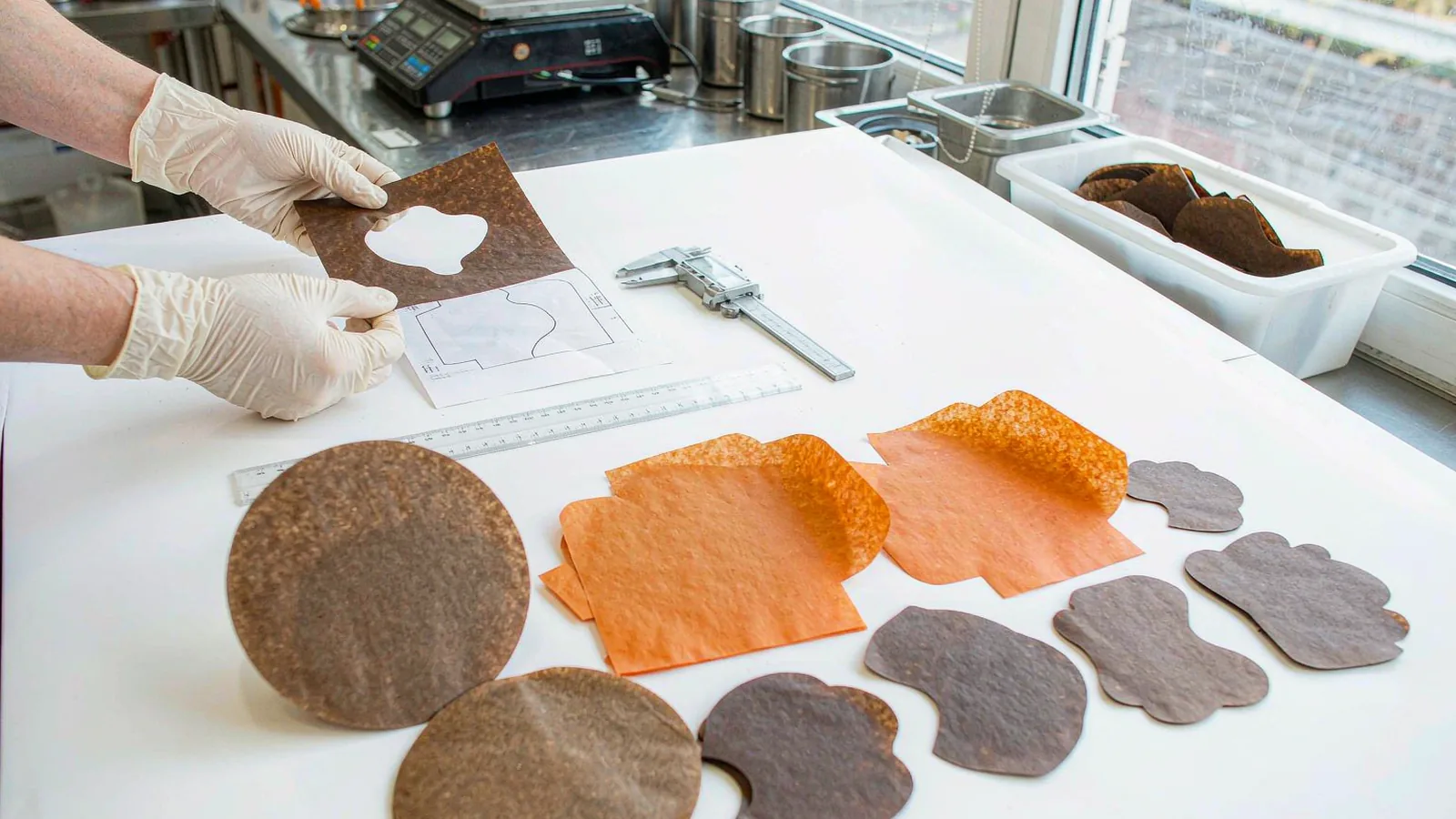
A standard circle is the cheapest shape a converting line can produce. The moment your brand needs a scalloped liner, a tray-shaped insert, a square sheet with rounded corners or a liner with lifting tabs, you enter the world of die cutting — and with it, tooling fees, minimum order quantities, tolerance discussions and a sampling cycle that most first-time buyers underestimate. None of this is a problem if you plan for it; all of it is a problem if you discover it after signing. This guide walks through how die cutting actually works for baking paper and greaseproof formats, what drives MOQ and cost, which tolerances are realistic on a production line, and how to structure the specification and sampling process so your tenth order matches your first. Buyers comparing these specifications can review our private-label parchment paper supplier programme, where coating weight, base grammage and release values are documented per construction.
1. How Die Cutting Works for Baking Paper Formats
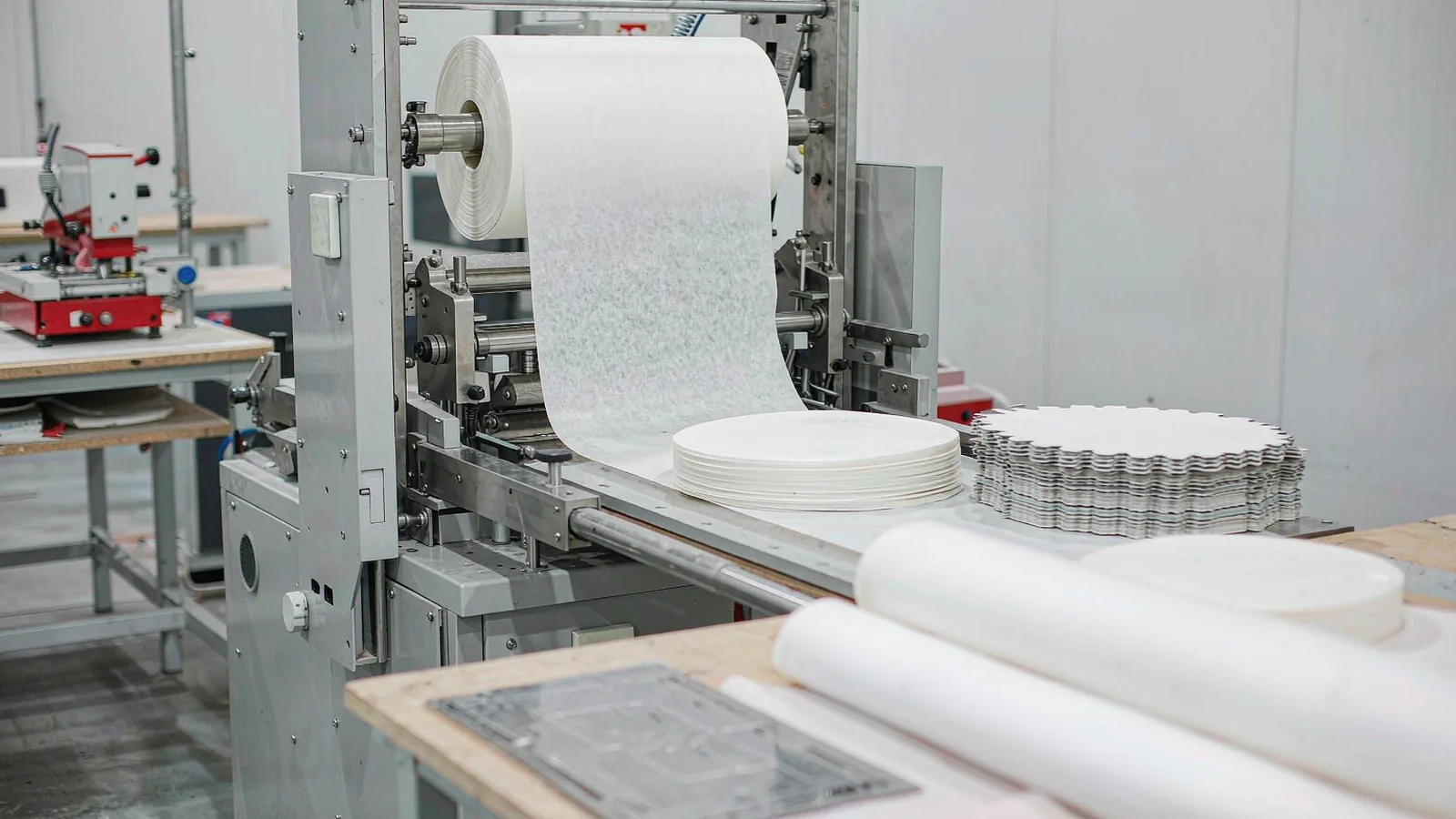
Die cutting stamps shapes from wide reels or pre-cut sheets using a steel-rule die — a plywood board set with shaped cutting blades. For baking paper, the process has two defining characteristics: For production volumes, the same construction logic applies to our pre-cut parchment paper sheets and rounds line, quoted per roll, sheet or die-cut format.
- The web moves. Most high-volume production runs die cut in-line or in a rotary press from master reels, so the shape must nest efficiently on the web width. An awkward shape wastes material, and material is the largest cost component.
- Silicone coating comes before cutting. The paper is coated and cured as a reel, then cut. Cutting edges are therefore unsealed cut silicone-coated edges — normal for the industry, but worth confirming when your application involves wet doughs.
Understanding this sequence explains most constraints: shape efficiency drives price, web width drives maximum dimensions, and the die itself is a physical tool with a lead time. The wider economics of roll usage are covered in the roll width and yield optimization guide. The factory and certificate library lists the third-party audits and test reports behind these claims.
2. Tooling: Die Fees, Ownership and Lead Times
The die is the biggest upfront difference between standard and custom formats:
- One-time die fee. Simple shapes (circles, squares) often use standard or inexpensive dies; complex outlines, tabs and scallops require a custom steel-rule die. Fees vary with size and complexity — expect the supplier to quote it as a separate line item.
- Ownership terms matter. Ask who owns the die after payment. Reputable suppliers store your tool and reuse it on repeat orders at no additional fee; if ownership is unclear, a supplier change becomes expensive. Get the answer in writing on the order confirmation.
- Lead time. Custom dies typically add one to three weeks before production can begin. Factor this into launch schedules, especially for seasonal programs.
- Design iterations cost real money. Each significant shape revision may require a new die. This is the strongest argument for getting the drawing right before tooling starts.
Buyers running multi-site programs should also decide early whether one die serves all sites or each region holds its own — the answer affects cost and consistency.
3. MOQ Logic for Custom Shapes
Custom format MOQs are higher than standard products, and the reasons are structural rather than arbitrary:
- Make-ready waste. Every setup consumes material while the line reaches running speed and registration. Short runs spread that waste across fewer pieces, raising unit cost.
- Efficient nesting. The shape must be laid out to use the web width sensibly. A shape that nests poorly may force a higher MOQ or a higher price — sometimes both.
- Coating minimums. If your custom format requires a specific base paper, grammage or coating weight, the coated reel minimum applies before cutting even starts; the MOQ and lead time planning guide covers how production minimums stack.
Practical ways to manage MOQ: choose shapes that nest well (circles and near-squares are efficient), allow the supplier to propose a size adjustment of a few millimeters if it dramatically improves yield, and consolidate shapes across your product range into a single production campaign.
4. Tolerances: What Is Realistic on a Production Line
Buyers accustomed to rigid packaging sometimes expect paper tolerances the material cannot hold. Realistic expectations:
- Cut dimensions. Well-maintained tooling on a modern press typically holds ±1.0–2.0 mm on cut dimensions, tighter on small shapes. Paper also moves: humidity swells fibers between production and use, so the tolerance you measure on arrival may differ from the tolerance at cutting.
- Registration (printed shapes). If the die cuts relative to print, registration adds tolerance in both directions. Discuss printed-then-cut versus cut-then-printed sequences early.
- Shape consistency. Scallops, tabs and radii reproduce faithfully from a steel-rule die — the risk is edge quality, not shape. Ask about the supplier's die inspection and replacement practice; a worn blade crushes fibers and leaves fuzzy edges that shed into dough.
- Flatness and curl. Coated papers can curl, especially after long storage in low humidity. Specify storage conditions in the contract and verify flatness at pre-production sampling.
Write tolerances into the specification with a measurement method (number of pieces, measuring tool, sampling plan) rather than a bare number — this aligns with the specification structure in the paper packaging specification approval guide.
5. The Sampling Workflow That Prevents Expensive Mistakes
A disciplined custom-format project runs a fixed sequence:
- Dimensional drawing approved. Provide a dimensioned drawing with tolerances, corner radii and any tab positions — not just a photograph.
- Hand-cut or plotter sample. The supplier confirms shape feasibility and nesting on the intended web width. Cheap and fast; catch layout problems here.
- Die-cut pre-production sample on production material. The critical step: the sample must come from the actual base paper, coating weight and press setup that volume production will use.
- Application test on your line. Bake, freeze or wrap with the samples on your own equipment — release behavior, grease holdout and handling all differ by application, as covered in the pre-production sample approval checklist.
- Signed golden sample retained by both parties. Reference it on every incoming inspection and every repeat order.
Skipping step 3 is the classic failure: a hand-cut prototype approved, then a production run that cuts differently. Insist on die-cut samples before the tooling cost becomes non-refundable.
FAQ
What is a typical MOQ for custom die-cut baking paper?
It depends on shape efficiency and base paper, but custom formats commonly start in the same range as other custom-coated products — often several times higher than stock-size sheets. The driver is the coated reel minimum plus make-ready waste, not the cutting itself. Suppliers can usually lower unit cost even if the MOQ floor is fixed.
Do I pay the die fee again on repeat orders?
If the die is stored and reused, no — the fee is one-time and the tool is held for your program. Confirm ownership and storage terms in writing, and ask what happens if the die wears out: responsible suppliers refurbish or replace worn tooling as part of the program.
How tight can baking paper dimensional tolerances be?
Plan around ±1.0–2.0 mm on cut dimensions for a well-maintained die, and expect humidity-driven movement of the paper itself. Specifying sub-millimeter tolerances on paper formats usually leads to rejected good material or ignored specifications — neither helps quality.
Can I combine several shapes in one production run?
Often yes, if the shapes share the same base paper and coating and nest efficiently on the same web width. Combining shapes into one campaign reduces make-ready waste and can help you reach economic quantities — ask the supplier to quote the combined layout before finalizing shape sizes.
Conclusion
Custom die-cut baking paper is entirely routine for a capable converter — the risks come from unclear drawings, unconfirmed tooling ownership, impossible tolerances and skipped pre-production sampling. Write the specification with tolerances and a measurement method, treat the die fee as an owned asset, approve samples only from production-representative material, and lock a golden sample before the first full run. Buyers who follow that sequence get shapes that fit their trays, tabs that lift cleanly and repeat orders that match the first. Our custom printed baking parchment paper programme publishes the test data behind each grade so specifications can be verified before ordering.
CTA
Send LANGMAI your shape drawing or even a sketch with target dimensions. The team will assess nesting efficiency, quote the die tooling fee and MOQ, and supply die-cut pre-production samples on your chosen base paper before any volume commitment.
Sources
- TAPPI, Paper and board converting and testing standards
- ISO, ISO 217: Paper — Untrimmed sizes
- ISO, ISO 187: Paper, board and pulps — Standard atmosphere for conditioning and testing
- European Paper Packaging Association, Paper converting and sustainability resources