
Introduction
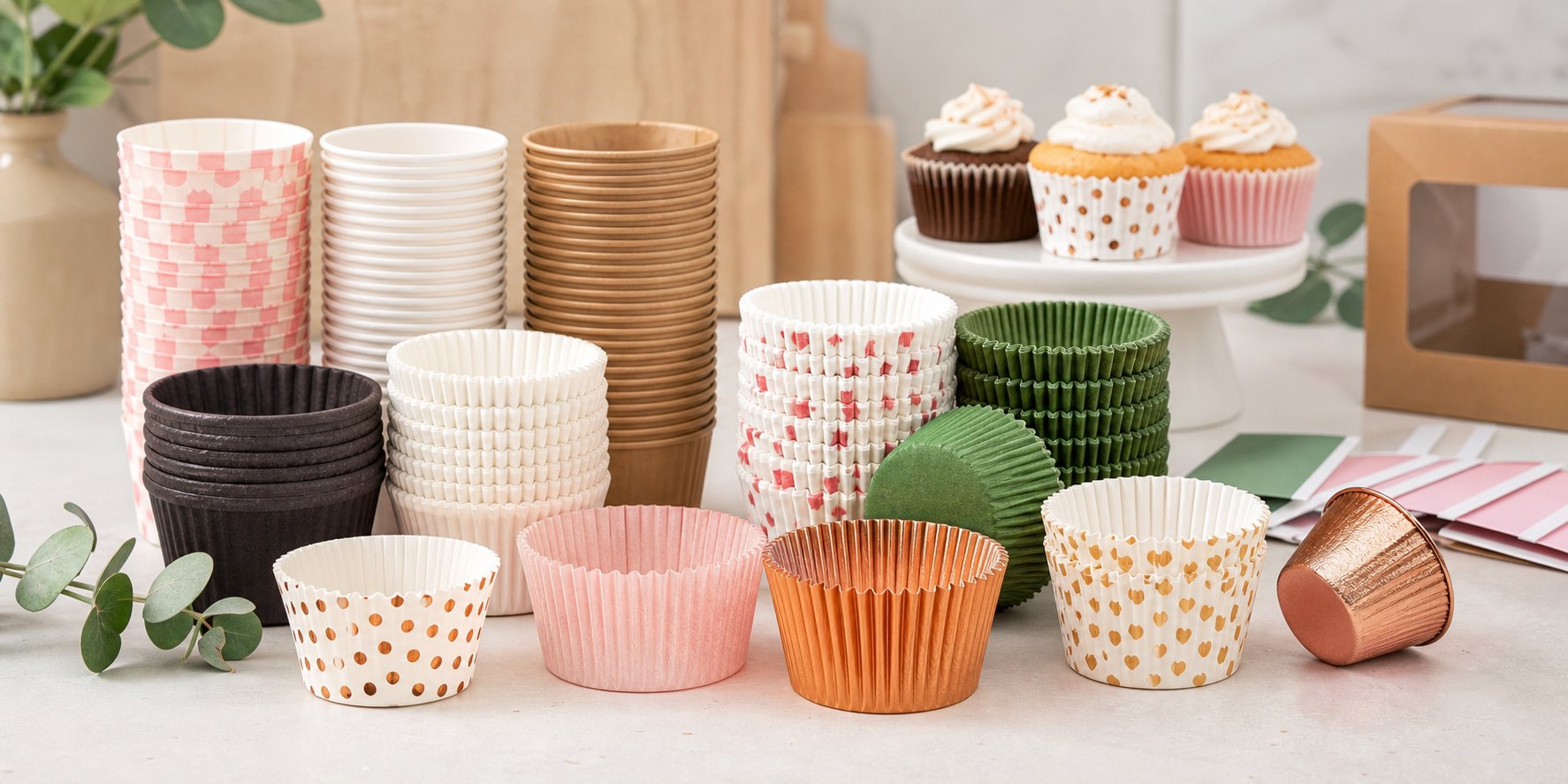
Tulip baking cups and standard muffin liners can both be suitable for muffins and cupcakes, but they solve different commercial problems. A standard fluted liner is usually the practical choice for familiar portion sizes, efficient nesting and cost-controlled bakery production. A tulip cup is often selected when a buyer wants a taller product, more visual height, a premium bakery-counter presentation or extra paper above the pan rim.
The direct answer is to choose by finished-product geometry and sales channel, not by appearance alone. Confirm the pan cavity, target batter weight, finished muffin height, grease resistance, release, denesting, retail display and packaging before approving either format. A cup that looks attractive in a catalogue may still buckle in the pan, interfere with depositing equipment or require a larger carton than expected.
This guide compares the two formats from a wholesale buyer's perspective and explains what to test before placing a bulk order.
1. What Is a Standard Muffin Liner?
A standard muffin liner is generally a round, pleated paper cup designed to sit inside a muffin or cupcake pan cavity. It normally has a defined bottom diameter, top opening and wall height. The pleats allow a flat paper blank to form a tapered cup and help stacks nest efficiently.
Standard liners are widely used because buyers can source many sizes, colours and printed designs. They can also be packed in compact stacks for bakery, foodservice or retail channels. However, the word "standard" is only a market description. Pan dimensions differ, so buyers should still approve an actual drawing and fit sample.
For a detailed measurement workflow, use LANGMAI's cupcake liner size guide.
2. What Is a Tulip Baking Cup?
A tulip baking cup has pointed paper panels that rise above the pan rim. The alternating peaks and valleys create the familiar tulip profile. This shape gives the finished muffin more vertical presentation and can help frame toppings or an irregular bakery-style crown.
Tulip cups require more dimensional information than a simple round liner. Buyers should define the base diameter, valley height, peak height, opening behaviour and paper orientation. The flat blank and folding geometry influence how the cup opens in the pan and how evenly the peaks appear around the finished product.
The taller paper also changes packaging. A stack can occupy more height, the points may bend during transport, and the final muffin may need a taller retail box or display tray.
3. Quick Comparison
| Buying factor | Standard muffin liner | Tulip baking cup |
|---|---|---|
| Typical visual effect | Familiar, compact and uniform | Taller, premium and bakery-style |
| Pan requirement | Match cavity bottom, top and depth | Match cavity plus peak and valley geometry |
| Batter visibility | More visible above a lower wall | Partly framed by taller paper points |
| Denesting | Often efficient when pleats and compression are controlled | Needs testing because folded points can catch or deform |
| Packaging density | Usually compact | Often requires more protective volume |
| Retail presentation | Everyday and themed packs | Premium or artisan ranges |
| Main risk | Incorrect diameter can buckle or flare | Incorrect geometry can twist or collapse |
Neither format is automatically better. The correct format is the one that performs consistently in the buyer's pan, recipe, process and sales pack.
4. Start with the Pan and Finished Product
Measure several pan cavities rather than relying on a nominal pan name. Record the cavity bottom diameter, top diameter, depth and taper. Worn commercial pans can differ from drawings, and pans sold under the same description may not share identical dimensions.
Then define the intended finished product:
- Batter weight and viscosity.
- Expected muffin or cupcake height.
- Flat, domed or high-crowned finish.
- Toppings, inclusions or icing added before sale.
- Baking temperature and time used by the buyer.
- Cooling, freezing or reheating steps.
- Whether the product is sold loose, in a tray or in a retail box.
A high-crowned muffin can suit a tulip cup visually, but the cup must not obstruct filling or damage the finished crown during packing. A standard liner may be more efficient for decorated cupcakes placed in a fitted insert.
5. Compare Paper and Grease Performance
Cup shape does not determine paper performance. Both formats can use different paper grades, colours, barriers and print systems. The supplier should match the paper construction to the food, baking conditions and destination-market requirements.
Ask how the proposed paper is expected to handle fat and moisture, release after cooling, visible grease staining, shape retention, odour, print rub and appearance on pleated or folded areas. Do not approve a format from an empty-cup photo. Run a controlled bake with the intended recipe and record the pan, batter weight, baking profile, cooling time and observations.
Buyers comparing paper routes can also review greaseproof paper vs PET-coated paper for baking cups.
6. Filling and Bakery-Line Handling
Manual bakeries may place cups into pans by hand, while larger operations may use denesting or cup-placement equipment. A format that works in hand trials may behave differently at production speed.
For standard liners, check whether nested cups separate cleanly without doubles, tearing or excessive static. Review pleat consistency and stack compression. For tulip cups, check whether the peaks catch on guides, whether the cup opens consistently and whether orientation matters to the filling station.
During filling, taller tulip points can reduce access around the opening. Confirm that depositing nozzles, scoops or manual piping tools can reach the intended position without smearing batter onto visible paper. Test enough samples to represent multiple stacks and pan cycles.
7. Presentation and Sales Channel
Standard liners are versatile for supermarket multipacks, home-baking ranges, bakery service packs and seasonal collections. Their compact shape can simplify shelf-space and carton planning.
Tulip cups can support a premium visual position in cafes, hotels, bakery displays and artisan-style retail products. The taller paper creates a stronger silhouette, but the buyer should evaluate whether customers can still see the baked product and whether the format suits the intended price point.
Use a physical mock display. Review the product from shopper eye level in the real tray or box. Check whether the printed area remains visible after baking and whether grease marks affect the intended appearance.
8. Packaging and Shipping Differences
Packaging should protect cup geometry without crushing the stack. Standard liners usually nest densely, but excessive compression can make cups difficult to separate. Tulip cups need protection for their peaks and folds, which can increase inner-pack and carton volume.
Confirm pieces per stack, consumer-pack dimensions, moisture and crush protection, carton quantity, carton dimensions, gross weight, shipping marks and pallet pattern. Compare total packed volume, not only price per thousand cups. A taller format can affect freight, warehouse slots and shelf configuration.
9. Artwork and Colour Approval
Printed standard liners and tulip cups display artwork differently. Pleats compress parts of a design on a standard liner. Tulip folds divide the visible surface into panels, and the peaks may make pattern alignment more noticeable.
Provide vector artwork, colour references, print area and an approved version number. Review the design on the actual formed cup, not only on a flat proof. Check registration, repeated motifs, text position, colour over folds and appearance after baking.
LANGMAI's customization workflow explains the sequence from requirements and artwork through sampling, production and packing confirmation.
10. Sample Approval Plan
Use the same controlled sequence for both formats:
- Confirm a technical drawing with dimensions and units.
- Check empty cups in multiple pan cavities.
- Test manual or automated placement and denesting.
- Bake the intended recipe at defined conditions.
- Review release, grease resistance, colour, odour and shape.
- Cool and pack the product in its real tray or box.
- Approve the cup, artwork and packaging as linked references.
- Define production and pre-shipment checks before the order.
If the buyer tests more than one construction, use coded samples so observations remain connected to the correct cup.
Ready to compare both formats? Send LANGMAI your pan dimensions, batter weight, product photo, desired presentation, packaging route and annual quantity through the inquiry form.
11. Quote-Ready RFQ Checklist
Include the following information:
- Standard liner or tulip cup, plus reference photos.
- Bottom diameter, top diameter and wall, peak or valley height.
- Pan drawing or measured cavity dimensions.
- Paper colour, grease performance and print requirements.
- Food type, baking profile and intended application.
- Pieces per service or retail pack.
- Inner and carton configuration.
- Destination market and document requirements.
- First-order quantity and forecast by SKU.
- Sample, artwork and inspection approval owners.
Ask suppliers to identify assumptions. A quotation based only on a photo may not include the size, paper, printing or packaging expected by the buyer.
FAQ
Are tulip baking cups larger than standard muffin liners?
They are usually taller because of their peaks, but the base can fit the same pan cavity as another muffin liner. Compare exact base, opening, valley and peak dimensions rather than format names.
Can tulip cups run on an automatic bakery line?
Possibly, but buyers should test the exact cup with their denester, guides and depositor. Folded points and orientation can affect separation and placement.
Which format uses less packaging space?
Standard fluted liners commonly nest more compactly. Tulip cups may need additional space and protection for their peaks. Confirm actual pack-out and carton dimensions with production samples.
Which cup is better for premium muffins?
Tulip cups often create a taller bakery-style presentation, but premium positioning also depends on recipe, print, pack and retail environment. A well-specified standard liner may be the better operational choice for some products.
Can the same paper be used for both formats?
Sometimes, but forming behaviour, stiffness, grease performance, printing and baking use must be assessed for each construction. Approval of one formed cup should not automatically be extended to another.
What should buyers inspect before shipment?
Check SKU and drawing, dimensions, paper and print, stack count, denesting, workmanship, packaging quantity, carton marks and agreed document references against approved samples.
Conclusion
The tulip-versus-standard decision should connect bakery performance with commercial presentation. Standard muffin liners usually offer familiar geometry, compact nesting and efficient packaging. Tulip cups offer visual height and a distinctive premium format, but demand closer attention to fold geometry, line handling and shipping protection.
Measure the pan, define the finished product, test the real recipe and approve the final pack before placing a wholesale order. That process helps buyers compare total operational cost instead of choosing from appearance alone.
CTA
Send LANGMAI your pan dimensions, cup reference, batter application, print design, pack count and order quantity. The team can discuss suitable standard and tulip formats, sampling and quotation scope.
Send Your Baking Cup Requirements