Introduction
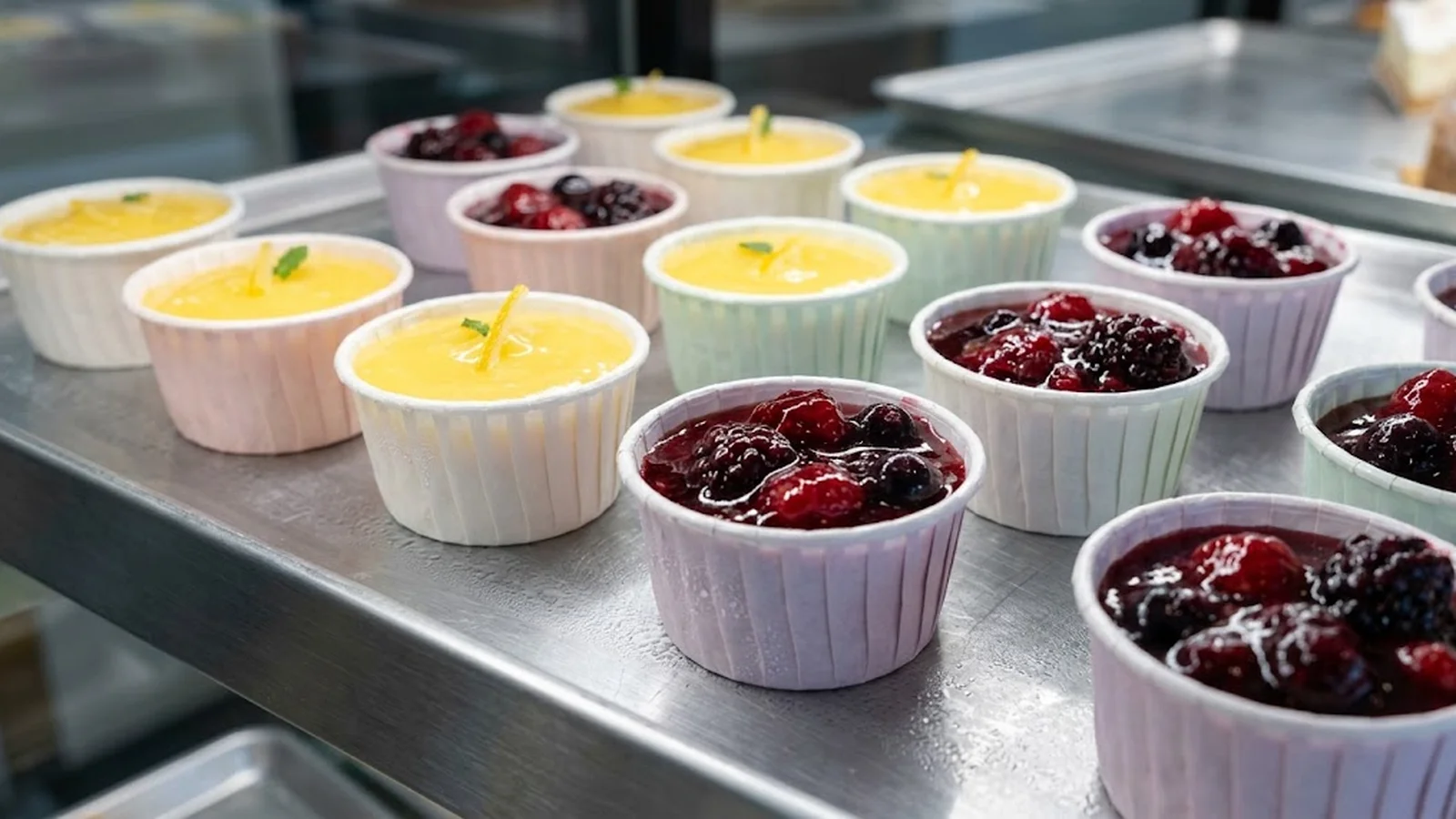
Ask a dessert manufacturer what kills a paper cake cup and most will name fat first. In practice, acid is the quieter failure mode. Lemon curd cups, berry compote desserts, citrus-glazed cakes, yogurt and vinegar-based fillings all sit at pH levels that plain paper does not tolerate well: the cup softens, the color bleeds, the printed surface dulls, and in the worst cases the structural wall fails on the retail shelf hours after filling — long after the defect passed incoming inspection with clean results on the standard grease test. Cup programmes usually ship alongside pan lining; our custom silicone-coated baking parchment paper specs cover the sheets and rolls that pair with them.
The gap is common because most cake cup specifications are written around grease resistance (Kit ratings, fluorine-free barrier systems) and never state an acid requirement. A cup that performs perfectly with a buttercream filling can fail in weeks of development time when the same product line launches a lemon variant. This guide explains what acid does to paper cups, which construction choices hold up, how to test before committing, and what to write into the specification so the second production batch behaves like the first. Buyers verifying these specifications can review the certificate library alongside supplier documentation requests.
1. What Acid Does to Paper Cake Cups
Acidic fillings attack a cup through three mechanisms, often at once: Where a bakery lines trays and moulds product in the same run, our wholesale parchment paper rolls and sheets are quoted with the cup programme for a single documentation package.
- Fiber hydrolysis and weakening. Acidic aqueous contact weakens the hydrogen bonding between cellulose fibers. A cup wall that carries a dense buttercream can visibly soften where lemon curd touches it, losing stiffness long before any leak appears.
- Dye and color bleed. Water-based colorants in colored cups — the growing majority of the market — are vulnerable to acidic migration. A red cup holding strawberry compote can bleed pink rings onto the outer surface and packaging; a pastel shade can shift entirely. Color fastness in acid is a different test from color fastness in fat.
- Barrier degradation. Where the cup relies on a barrier coating, the coating's behavior in acid matters as much as its grease performance. Some sizing and barrier systems hold Kit 8 against butter but degrade under prolonged acidic aqueous contact, and printed surfaces can dull or transfer where the ink system was chosen without acid in mind.
The failure is also time-dependent. A dessert that is baked in the cup and consumed the same day stresses the paper differently from a chilled no-bake dessert that sits filled for days in humid refrigerated display — the second scenario is where acid failures concentrate, and it maps to the growing chilled dessert category. The factory and certificate library lists the third-party audits and test reports behind these claims.
2. Construction Choices That Hold Up in Acid
Suppliers have several levers; buyers should know which ones are being pulled in their program:
- Base paper selection. Higher wet-strength base papers — often built with wet-strength resins — hold structural integrity longer under acidic aqueous contact. For fill-and-chill applications, wet strength is usually the parameter that decides survival, and it should be specified numerically (see related guidance on tensile and wet strength testing).
- Barrier strategy. For direct, prolonged acid contact, a food-compatible barrier system designed for aqueous-acidic resistance outperforms grease-only sizing. The buyer should ask explicitly what the barrier is engineered for, because "greaseproof" alone answers the wrong question for a lemon curd cup.
- Colorant and ink systems. Colored and printed cups for acidic applications should use pigment or acid-stable dye systems with documented color fastness against acidic simulants — not just against water or oil.
- Coating coverage and forming quality. Acid exploits weak points: pinholes, thin coating at the base seam, insufficient overlap in the side seam. Cups destined for wet acidic fillings need tighter forming quality control than dry-bake cups, and the seam area deserves specific attention in the specification.
- Geometry. A shallower fill line, a wider base and a slightly heavier grammage all buy margin in fill-and-chill programs. This interacts with wall height selection for deep-fill desserts, but the acid requirement should drive the decision, not just volume.
3. Testing Acid Resistance Before Committing
Standard grease testing will not predict acid performance, so the development protocol needs acid-specific steps:
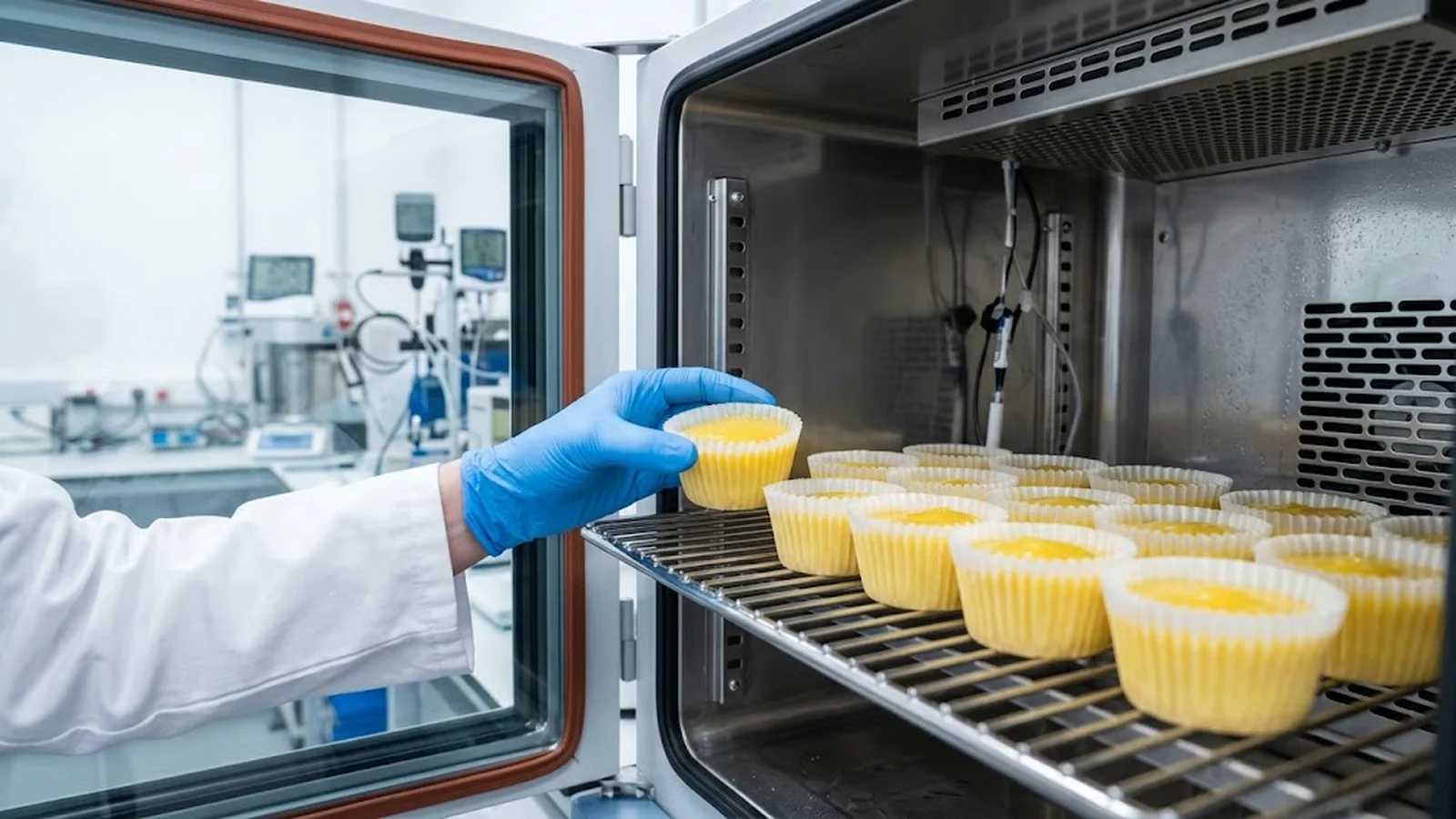
- pH-defined challenge testing. Fill finished cups with a simulant or actual filling at the product's measured pH, hold at the real distribution temperature (typically refrigerated for chilled desserts) and inspect at defined intervals: 4, 24, 48 and 72 hours, then at the product's declared shelf life.
- Structural checks over time. Measure wall stiffness or a simple compression/crush figure on filled-and-held cups, not just fresh ones. The number that matters is the value after the holding period.
- Color fastness assessment. For colored cups, hold filled samples and grade bleed and shade change visually under standard lighting, or measure where the program uses numeric color tolerance.
- Organoleptic screening. Acidic contact can accentuate paper and coating taste transfer. A trained tasting panel on filled product at end of holding catches off-flavor issues before customers do.
- Compliance re-check. Acidic foods are an aggressive food category for migration purposes; the food contact test reports for the cup should reflect acidic simulants where the end use is a low-pH food, not only neutral or fatty ones.
A practical approach is a bake trial or fill trial run at the supplier with your actual filling recipe — the same discipline used for release-performance trials on baking paper, applied to filled cups.
4. Writing the Specification for Acidic Aplicações
The specification should state, explicitly:
- The food category and pH range of the intended filling — "lemon curd, pH 3.6–3.9, filled chilled, held 7 days" is a specification; "dessert cup" is not.
- Wet strength and stiffness requirements measured after defined acidic contact conditions, not only as-received.
- Color fastness requirements against acidic simulant for colored cups, with the grading method named.
- Barrier and seam requirements, including base seam integrity under wet conditions.
- Compliance basis naming the destination-market food contact regulations and acidic-simulant coverage in test reports.
Buyers launching multiple dessert variants should consider whether one cup construction can be qualified across the range or whether the acidic line needs its own article — qualifying a single "hero" construction for everything often means it is over-engineered for most products and still marginal on the acid one.
FAQ
My cups pass the grease resistance test. Will they handle lemon curd?
Not necessarily. Grease resistance and acid resistance are different properties; a barrier system can hold Kit-level performance against fats while degrading under prolonged acidic aqueous contact. If the filling is a low-pH, wet product, ask for acid challenge testing with your actual filling — pH, hold time and temperature matching real distribution.
Are colored or printed cups safe for acidic fillings?
They can be, if the colorant and ink systems are acid-stable and the migration test reports cover acidic simulants. The practical risks are color bleed onto packaging and, in unqualified systems, colorant migration into the food. Require color fastness testing against acidic conditions and current food contact documentation for the specific construction.
What is the most common specification mistake for acidic dessert cups?
Specifying grease resistance only. Buyers copy a buttercream-program specification to a lemon curd program and discover softening and bleed at shelf. The acid requirement — pH range of the filling, holding conditions and post-hold structural minimums — needs its own line items in the specification.
How long should a cup survive contact with an acidic filling?
Longer than the filled product's commercial life. If the dessert is filled chilled and displayed for five days, the cup should show no structural weakening, bleed or off-flavor beyond that window with margin — validate to the declared shelf life plus a safety interval under realistic refrigerated conditions, and log the results.
Conclusion
High-acid fillings change the qualification question for cake cups: the properties that matter are wet strength under acid, acid-stable colorants, barrier integrity at seams and migration compliance for acidic simulants — none of which are covered by a grease test alone. Buyers who name the filling's pH and holding conditions in the specification, run acid challenge trials with the real recipe, and verify structural and color performance after holding will get cups that look and hold like the sample on day seven, not just day one. Buyers standardising on one paper supplier can review our baking parchment paper manufacturing programme next to their cup specifications.
CTA
LANGMAI manufactures cake cups with construction options for acidic and chilled dessert applications: wet-strength base papers, acid-stable colorant systems and barrier structures validated with fill trials using your actual recipes. Contato our wholesale team with your filling profile and shelf-life requirements for qualified samples and a specification-ready quotation.
Sources
- EU Regulation 1935/2004 — Materials and articles intended to come into contact with food
- FDA — 21 CFR Part 176 Indirect Food Additives: Paper and Paperboard Components
- ISO 21751 — Paper and board — Determination of wet tensile strength
- TAPPI — Technical Association of the Pulp and Paper Industry test methods
- EFSA — Food contact materials scientific guidance