
Introduction
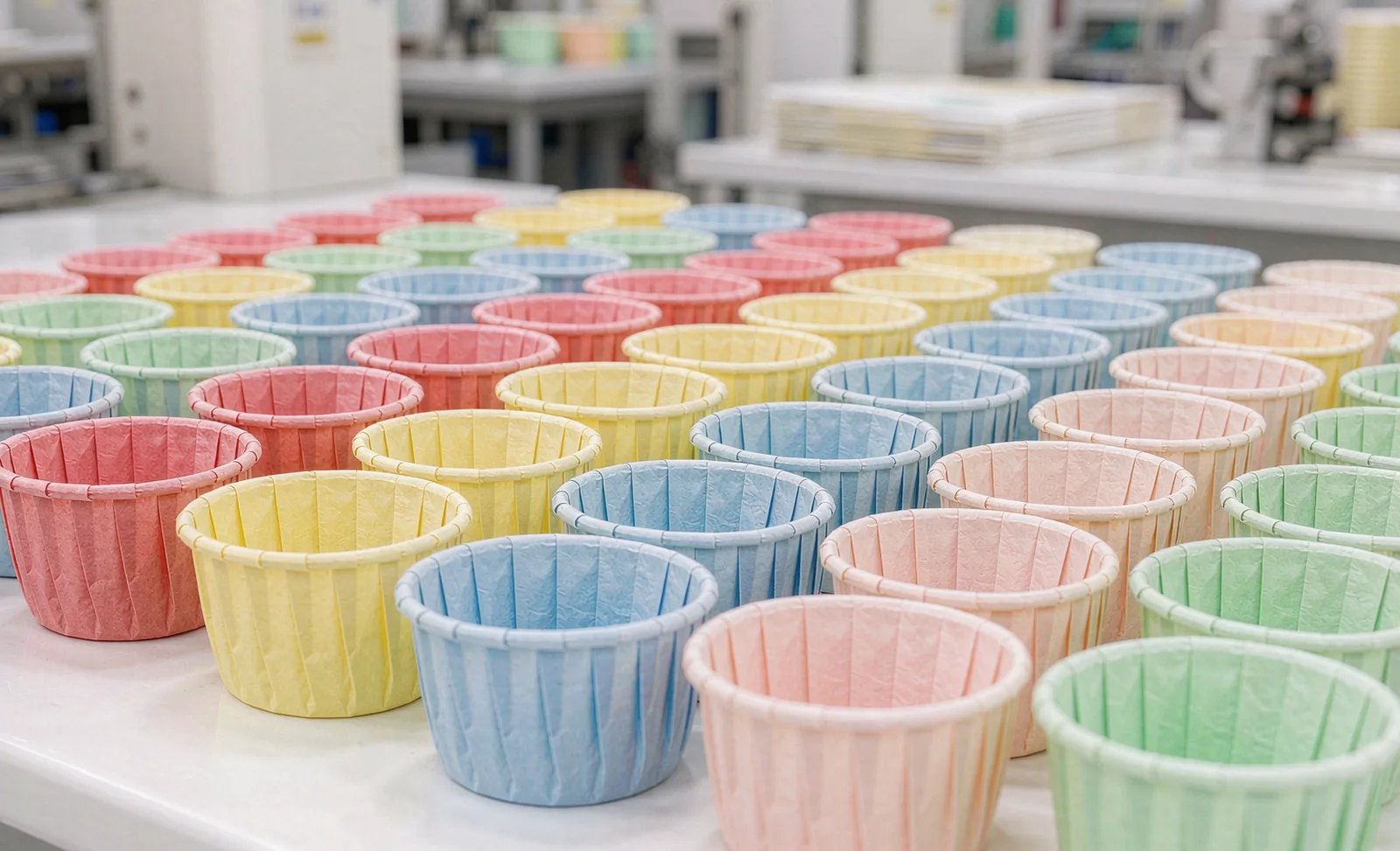
Color sells cake cups. In retail bakery ranges, seasonal collections, and event packaging, the shade of a muffin cup or the vibrancy of a printed design is often the first thing a shopper notices — and the first thing they notice when it fades. For wholesale buyers, that makes color fastness a genuine purchasing specification, not a cosmetic detail. A cake cup that bleeds color into batter, fades on a supermarket shelf under lighting, or transfers dye onto a gift box will generate complaints, rejections, and chargebacks regardless of how good the paper stock is. Cup programmes usually ship alongside pan lining; our custom silicone-coated baking parchment paper specs cover the sheets and rolls that pair with them.
The problem is that color fastness is invisible at the moment of delivery. Incoming cartons look perfect; the failures appear weeks later in the oven, in a refrigerated display case, or in the hands of an unhappy consumer. This guide explains what color fastness means for paper-based cake cups, which tests actually predict real-world performance, what acceptance criteria to write into your purchase specifications, and what documentation a professional supplier should be able to provide. The goal is simple: never approve a colored or printed cake cup order on appearance alone. Buyers verifying these specifications can review the certificate library alongside supplier documentation requests.
What Color Fastness Means for Paper Cake Cups
Color fastness describes a colored material's resistance to losing or transferring its color under physical and environmental stress. For paper cake cups, the stresses that matter in real use are: Where a bakery lines trays and moulds product in the same run, our wholesale parchment paper rolls and sheets are quoted with the cup programme for a single documentation package.
- Wet contact with food: high-moisture batters, oil-based creams, and frozen fillings touching the printed or dyed surface.
- Heat: baking temperatures that accelerate dye migration, particularly in water-based ink systems.
- Abrasion: cups rubbing against each other in cartons, on conveyors, and during automated denesting.
- Light: retail display cases with strong fluorescent or LED lighting that fade surface colors over weeks.
- Rub-off onto skin: decorators and consumers handling cups with moist or oily fingers.
A cup can pass one of these stresses and fail others. Wet crocking (color transfer under moisture) is the most common failure mode for cheaply printed cups, and the most damaging, because transferred color reaches the food. The factory and certificate library lists the third-party audits and test reports behind these claims.
The Tests That Matter: Crocking, Migration, and Light
Buyers do not need a laboratory to specify color fastness intelligently, but they do need to know which standard test methods exist and what each one predicts.
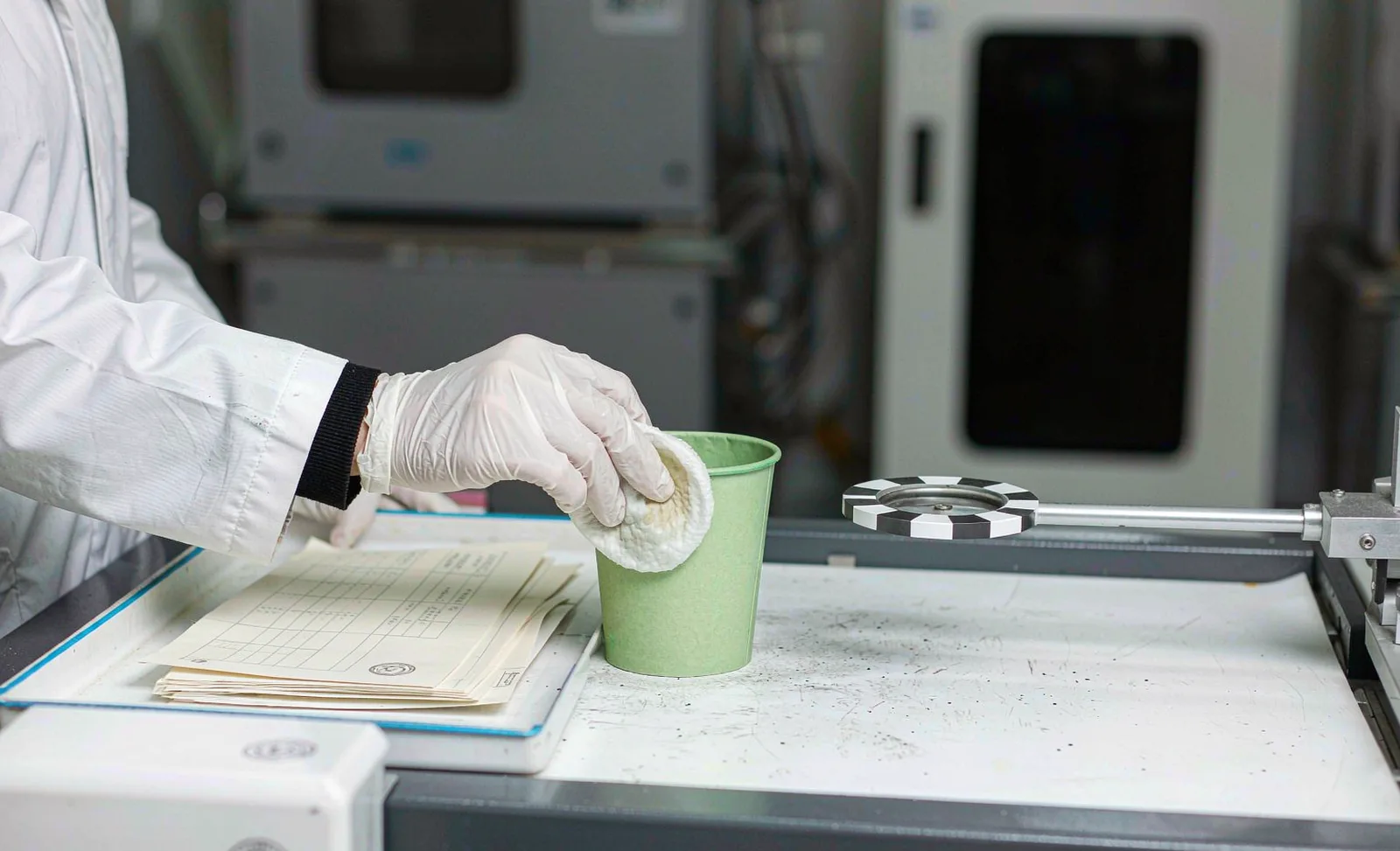
Rub (crock) testing is the foundational test. Packaging labs rub the colored surface with a dry and a moistened white cotton pad under standardized pressure and stroke count — the same principle behind the textile ISO 105-X12 and AATCC 8 methods — then grade the staining of the pad and any fading of the specimen against a grey scale from 1 to 5. For cake cups, wet crocking resistance of grade 4 or better is a reasonable acceptance line for non-food-contact surfaces; anything below 3 signals visible transfer risk. Ask suppliers to state which method their printed cups achieve, wet and dry.
Migration testing addresses the food-contact question directly. If inks or dyes are on a surface that touches food, or on a surface that can transfer to food through contact or through the paper wall, the relevant evidence is a migration test report showing compliance with applicable food-contact requirements — in the US, FDA food-contact provisions for paper and coatings under 21 CFR; in the EU, framework regulation with supporting national measures and Council of Europe resolutions on paper and board. The key buyer rule: color that meets a crocking standard is not automatically food-safe, and food-safe ink is not automatically crock-fast. You need both claims, documented.
Light fastness predicts shelf performance. Testing exposes printed specimens to a standardized light source (ISO 105-B02 style methodology, or blue-wool scale references) and grades fading. For cups destined for illuminated bakery cabinets or long retail dwell times, request light fastness data on the specific ink set used for your design — reds and oranges are typically the weakest.
Accelerated practical tests are worth adding to your incoming QC routine: a simple bake test with a high-moisture batter at your normal oven temperature, and a refrigerated contact test with an oil-based cream, observed for color transfer. These cost almost nothing and catch failures that paper certificates miss.
Writing Color Fastness into Your Specification
A color fastness clause is only useful if it is specific. When specifying colored or printed cake cups, include:
- The printing process and ink system (water-based, UV-cured, or flexographic), and whether printing is on the exterior wall only or extends into the base interior.
- Required crocking performance: method, wet and dry, and minimum grey-scale grade (for example, grade 4 wet, grade 4–5 dry, for non-food-contact surfaces; stricter or exclusion rules for food-contact surfaces).
- A statement of which surfaces are intended food contact, and migration documentation for those surfaces.
- Light fastness requirements where the packaging will be retail-displayed for extended periods.
- Color standard references: a retained approved sample or a Pantone reference plus a signed color approval card, since "fastness" is meaningless without a defined target color to stay fast to.
The color approval card deserves emphasis. Professional suppliers run a first-article color approval before bulk production; both parties sign reference cards, and retained samples are archived against the production batch. Without a signed standard, any color dispute devolves into opinion.
What to Ask Your Supplier
A capable cake cup manufacturer should answer the following without hesitation:
- Which crocking test method do you use, and what grades do your standard ink systems achieve, wet and dry?
- Are your inks food-contact compliant for the surfaces they are printed on, and can you provide declarations and migration test reports?
- What is your color approval process — do you provide signed reference cards and retained samples per batch?
- What is your batch traceability, and can you link a delivered carton back to its ink lot and production run?
- Have your colors been tested under bake conditions and for chilled display?
Vague answers to any of these are a signal to request samples and run your own tests before committing volume — especially when moving production between suppliers or when a supplier changes ink vendors, a change that should trigger re-approval, not just a visual comparison.
FAQ
What is a crocking test and why does it matter for cake cups?
Crocking testing rubs the colored surface with dry and moist white pads under controlled pressure, then grades color transfer on a 1–5 grey scale. For cake cups it predicts whether color rubs off onto food, fingers, or neighboring cups during handling — the most common visible failure of poorly printed cups.
What grade of color fastness should wholesale buyers accept?
For exterior, non-food-contact surfaces, grade 4 or better under wet crocking is a common acceptance line; grade 3 or below indicates visible transfer risk. For surfaces intended to touch food, color transfer should be effectively nil and backed by migration testing — discuss acceptance levels explicitly with your supplier.
Does color fastness testing guarantee the ink is food safe?
No. Fastness and food-contact compliance are separate properties. A color can hold fast under crocking while its ink system is not approved for food contact, and vice versa. Wholesale buyers should require both crocking performance and food-contact migration documentation for the relevant surfaces.
Why do some colored cake cups fade after baking?
Heat accelerates dye and ink degradation, particularly in water-based systems and in saturated shades like red and orange. Cups printed with inks not qualified for bake temperatures will fade or shift shade in the oven. Request bake-condition testing for your temperature range.
How can I check color quality on incoming shipments without a lab?
Retain the signed color approval card and compare delivered cartons against it under consistent lighting. Then run two low-cost practical checks: a bake test with a moist batter at normal oven temperature and a chilled contact test with an oil-based cream, observing for color transfer. Failures justify a formal lab test and a corrective action request.
Conclusion
Color fastness is where cheap cake cups quietly fail. The fix is procedural, not expensive: define the target color with signed approval cards, specify crocking grades wet and dry, demand food-contact migration documentation for any surface that touches food, and add light fastness data for retail-displayed products. Back the paperwork with two inexpensive practical tests — a moist bake test and a chilled oil contact test — and incoming QC catches the failures that only appear after delivery. Buyers who specify this way get shelves that look as good in week eight as on day one, and suppliers who meet the specification honestly earn repeat orders. Buyers standardising on one paper supplier can review our baking parchment paper manufacturing programme next to their cup specifications.
Call to Action
LANGMAI manufactures colored and printed cake cups for wholesale buyers, with food-contact documentation, signed color approval cards, and batch traceability on every production run. Request samples and test reports for your next range at https://www.lmcakecup.com.
Sources
- U.S. Food and Drug Administration — Food Contato Substances: https://www.fda.gov/food/food-ingredients-packaging/food-contact-substances
- European Commission — Food Safety, Food Contato Materials: https://food.ec.europa.eu/food-safety/food-contact-materials_en