Introduction
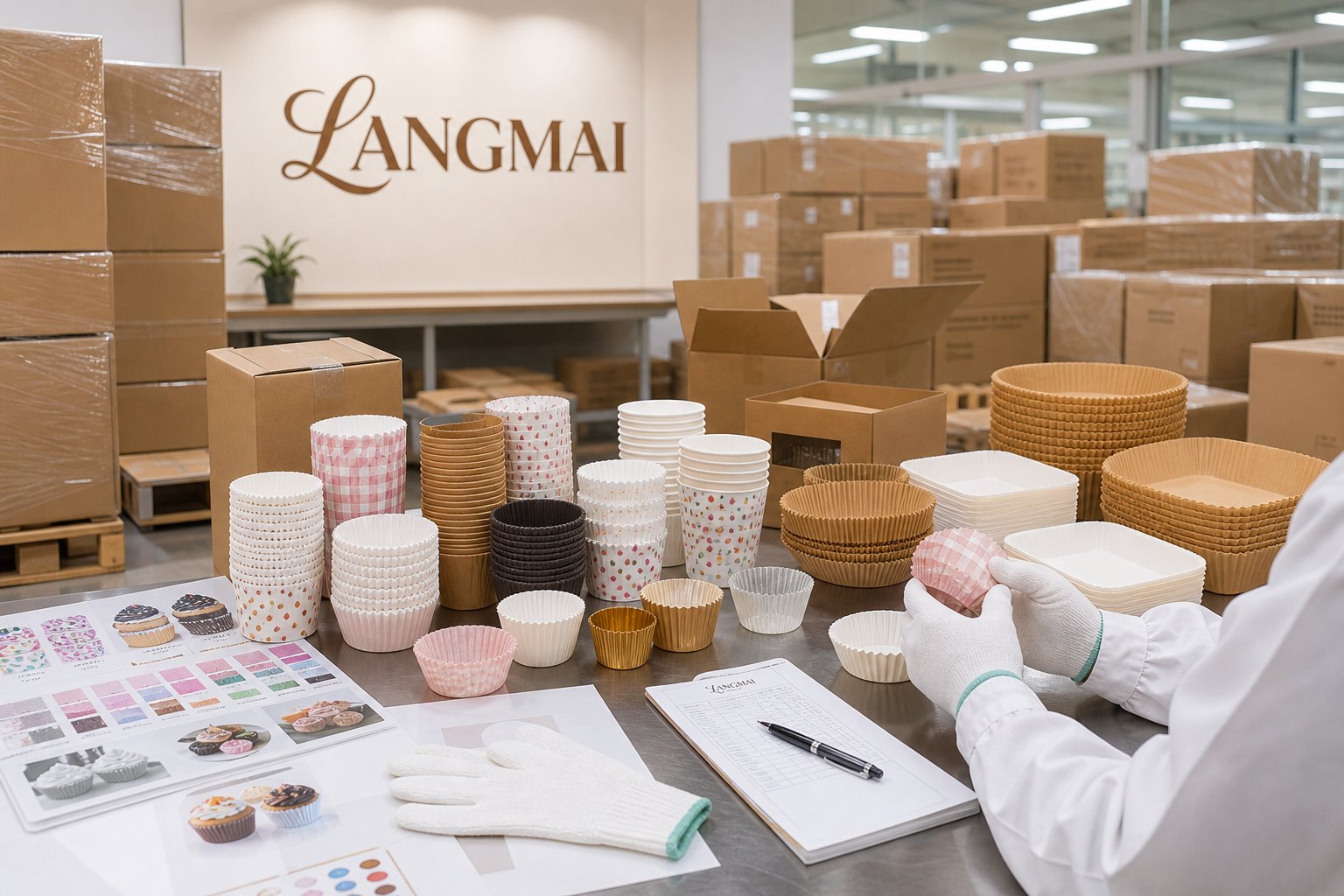
Custom cupcake liners look simple, but for wholesale buyers they can affect product appearance, baking performance, shelf presentation, carton efficiency and repeat order stability. A bakery chain may care most about grease resistance and color consistency. A supermarket buyer may focus on retail packaging, barcode labels and reliable shipment inspection. An importer may need mixed designs, carton marks, food contact documents and a supplier who can keep the same specification across repeat orders.
At LANGMAI, the most useful inquiries usually include a target cup size, expected quantity, custom print requirement, destination market and packaging preference. When those details are clear, the factory can recommend a practical liner type instead of guessing. This guide explains how overseas buyers can choose cupcake liners for wholesale orders with fewer sample mistakes and better production control.
1. Start With the Application, Not the Pattern
Many buyers start by asking for a beautiful pattern. Design matters, but application should come first. A liner used by a bakery to bake fresh cupcakes every morning has different requirements from a decorative liner packed into a party kit. A cafe may need greaseproof liners that look clean after baking. A retail brand may need liners that are easy to count, stack and pack into printed boxes. A party supply distributor may need colors and seasonal patterns more than high-temperature performance.
Before requesting a sample, define the use case:
- Direct baking in ovens
- Display after baking
- Retail sale in small packs
- Event and party decoration
- Private-label food packaging
- Mixed product kits with toppers, straws or party accessories
This first step helps the supplier recommend the right material, height, base diameter and packaging method.
2. Confirm the Size With Real Product Testing
Cupcake liners are usually discussed by base diameter, top diameter and height. A small difference can affect how the liner fits a mold, how the batter rises and how the finished cupcake looks. For wholesale orders, buyers should not rely only on catalog photos. A sample should be checked in the actual baking mold or display tray.
Common checks include:
- Does the base sit flat in the baking mold?
- Does the wall height match the target batter volume?
- Does the liner keep its shape after filling?
- Does the finished cupcake release cleanly?
- Does the liner color still look acceptable after baking?
- Does the carton quantity match storage and retail requirements?
For custom printed cupcake liners, size testing should happen before artwork approval. If the size changes after artwork is made, the print layout may need to be adjusted.
3. Choose the Right Material
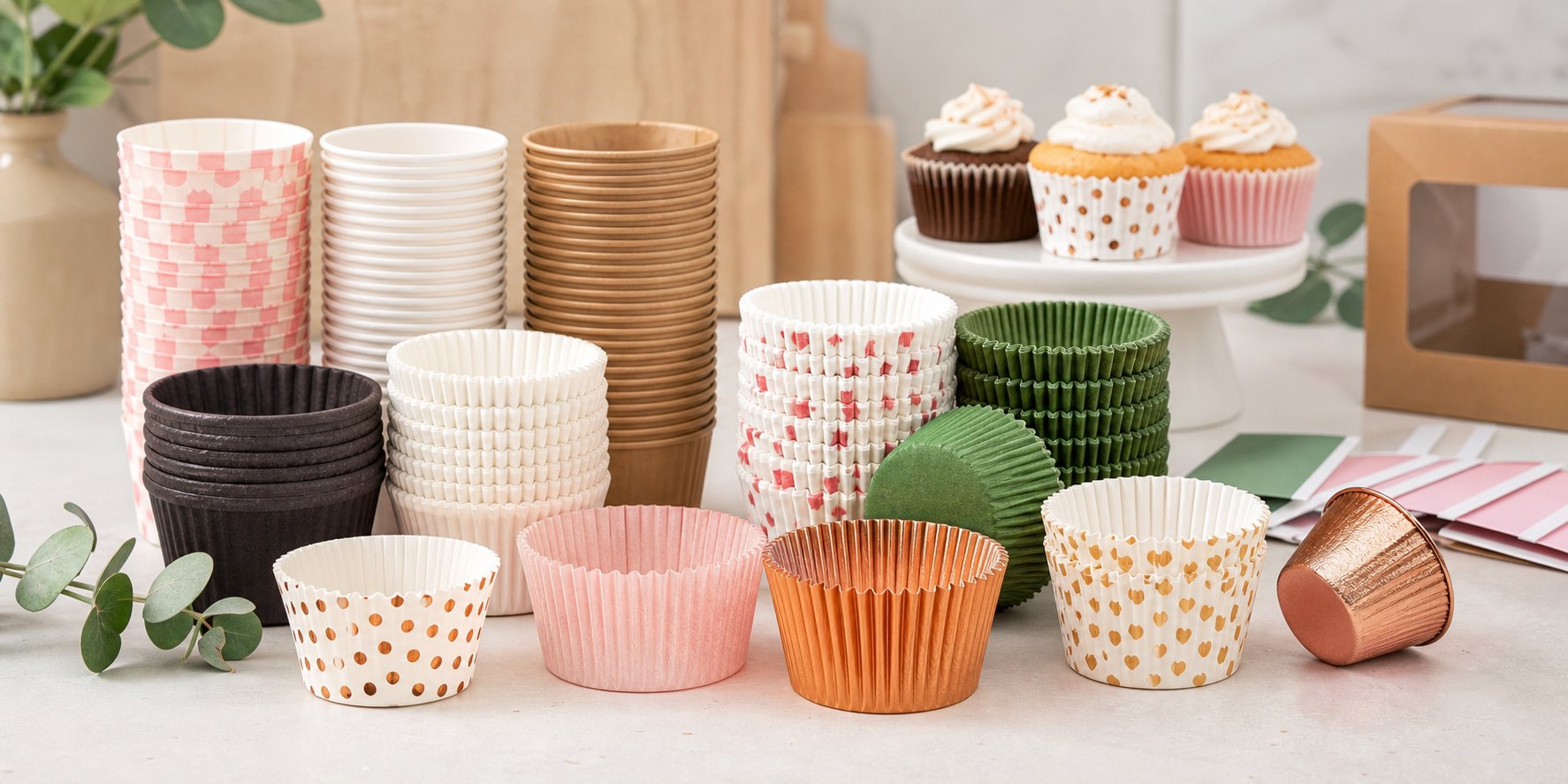
Most B2B cupcake liner inquiries involve food grade paper, greaseproof paper, PET coated paper or foil-style decorative paper. The right choice depends on baking temperature, oil content, display time and budget.
Greaseproof paper is widely used for cupcake liners because it helps reduce oil staining and keeps the liner looking cleaner after baking. It is suitable for many bakery and cafe applications. PET coated paper can provide stronger water and oil resistance and better structure for some molded baking cups or muffin cups. Decorative foil finishes are often selected for premium presentation, seasonal products or gift packaging.
The buyer should ask:
- What is the recommended baking temperature range?
- Is the product intended for direct food contact?
- Is the paper greaseproof, coated or decorative?
- Can the supplier provide food contact documentation for the target market?
- Will the same material be available for repeat orders?
Reliable material selection is more important than choosing the cheapest option. A low-cost liner that stains badly or collapses during use can create customer complaints and damage the buyer’s brand.
4. Review Print Requirements Early
Custom printed cupcake liners can help bakeries, food brands and party suppliers create a consistent visual identity. However, print work needs clear artwork preparation. Buyers should confirm color count, pattern direction, repeat size, ink expectations and whether the supplier can support food-safe printing.
When preparing artwork, include:
- Vector artwork or high-resolution print files
- Pantone or reference color information when possible
- Pattern direction and repeat requirement
- Logo placement rules if applicable
- Outer packaging artwork if the product will be retail packed
Factory testing should include a color proof or sample approval step. Because paper texture and coating can affect color appearance, the final print may not look exactly like a digital screen preview. A practical buyer approves the physical sample before mass production.
5. Think À propos Packaging Before Production
Packaging is often where wholesale orders become complicated. A distributor may need bulk bags inside master cartons. A supermarket buyer may need retail boxes or polybags with labels. An ecommerce seller may prefer smaller packs that are easy to ship. Packaging affects cost, carton size, shipping volume and shelf presentation.
Useful packaging questions include:
- How many pieces per bag or inner box?
- How many bags per carton?
- Is retail packaging required?
- Does the destination market require barcode labels or warning statements?
- Should carton marks include PO number, item number and destination?
- Is mixed design packing needed?
For repeat orders, keep a confirmed specification sheet. The sheet should include product size, material, print design, packing quantity, carton dimensions and inspection requirements.
6. Ask for Sample Testing and Shipment Inspection
A professional supplier should support sample review before production and inspection before shipment. Sample testing is not only about appearance. Buyers should check stack consistency, edge shape, odor, grease resistance, mold fit and packaging. For custom orders, the buyer should also check logo clarity, pattern registration and color consistency.
Before shipment, inspection can include:
- Product size measurement
- Random carton opening
- Print and color check
- Packing quantity check
- Carton mark verification
- Product cleanliness check
- Photo report before loading
This process is especially useful for importers and distributors who need to reduce after-sale risk.
7. Compare Suppliers by Process, Not Only Unit Price
Unit price matters, but it should not be the only decision factor. A reliable cupcake liner manufacturer should understand the product application, provide realistic lead time, support sample testing, document the confirmed specification and communicate clearly before shipment. If the supplier cannot explain material differences, packaging details or sample approval steps, the buyer may face problems later.
Better supplier questions:
- What material do you recommend for my application?
- Can you confirm the base diameter, height and packing method?
- Can you make custom printed cupcake liners?
- What sample can you provide before bulk production?
- What documents can be shared for food paper packaging buyers?
- How do you check goods before shipment?
FAQ
What is the best material for cupcake liners?
For most bakery wholesale orders, greaseproof paper is a practical choice because it helps reduce oil staining and supports a clean product appearance. PET coated paper may be selected for stronger structure or higher oil and moisture resistance.
Can cupcake liners be custom printed?
Yes. Custom printed cupcake liners can use brand colors, seasonal patterns, logos or private-label designs. Buyers should provide artwork and approve a physical sample before mass production.
What information should I send for a quote?
Send the product type, base diameter, height, material preference, quantity, print requirement, packaging method, destination country, email and phone or WhatsApp.
Should I test samples before ordering?
Yes. Sample testing helps confirm mold fit, grease resistance, shape stability, color appearance and packaging before mass production.
CTA
Send your cupcake liner size, target quantity and custom print requirement to LANGMAI. Our team can recommend a suitable paper type, packaging method and sample route for your market.
Conclusion
Choosing custom cupcake liners for wholesale orders is a practical procurement decision. The best result comes from matching application, size, material, print and packaging before production begins. Buyers who test samples and confirm specifications early usually reduce rework, shipment risk and communication delays.