Introduction
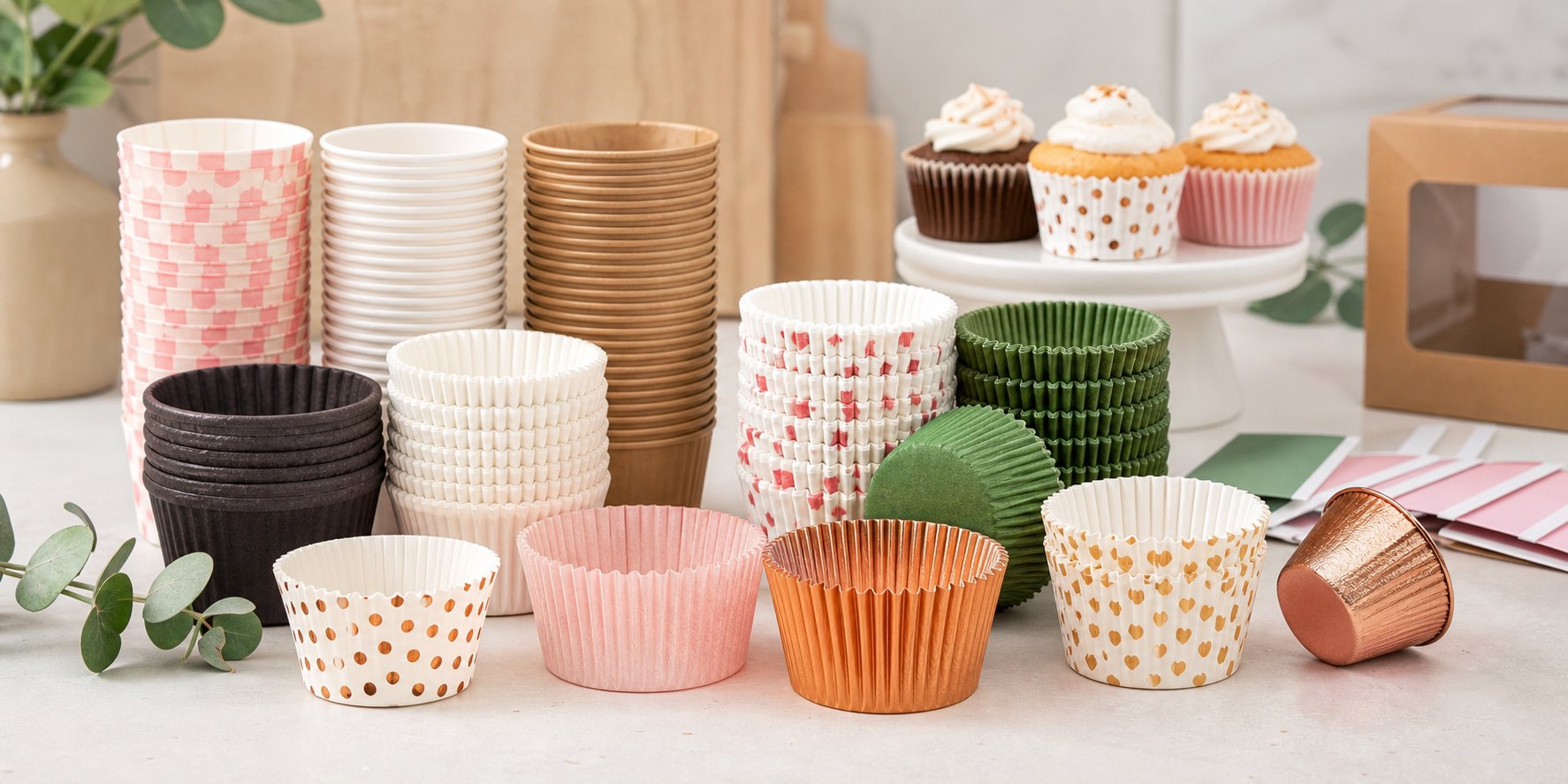
Colored cupcake liners can make a bakery range easier to merchandise, help seasonal retail packs look coordinated and give foodservice buyers a faster way to separate flavors or event themes. They can also create purchasing risk when the buyer approves a color swatch but does not test the finished liner with real batter, heat, grease, storage and packing conditions.
The direct answer: buy colored cupcake liners wholesale by approving a production-style finished liner, not only a color name. Specify the cup dimensions, paper construction, shade target, print or dyed-paper method, food-contact use conditions, oven and storage conditions, color-rub limits, grease appearance, odor limits, packaging format, lot traceability and inspection method. Then test samples with the buyer's real recipe, pan, oven, cooling time and final retail or foodservice pack before releasing a bulk order.
This guide is written for importers, distributors, bakery groups, supermarket private-label teams, foodservice packaging buyers and party-paper wholesalers comparing bulk colored cupcake liners from global suppliers. It focuses on color selection, sample approval, baking trials, document review, packing protection and pre-shipment inspection.
1. Decide Why the Color Matters
Color is not only decoration. In a wholesale order, it may affect shelf blocking, seasonal planning, flavor coding, bakery display, party range architecture, private-label pack value and repeat-order consistency. A red liner for Valentine's Day, a pastel set for spring retail packs and a black liner for premium chocolate cupcakes are different projects even if the nominal cup size is the same.
Start by defining the commercial reason for the color: bakery counter presentation, retail multipack assortment, seasonal range, flavor coding, private-label brand color, party-supply assortment, ecommerce photography or contract bakery production control.
The reason matters because it changes the approval standard. A party-supply wholesaler may need a coordinated color family across liners, napkins and straws. A bakery chain may care more about how the liner looks after baking with an oil-rich recipe. A supermarket private-label team may need repeatable color across retail packs. If size selection is still open, use LANGMAI's cupcake liner size guide before asking suppliers to match colors.
2. Specify the Finished Liner, Not Just the Shade
Terms such as "pink," "natural," "gold," "kraft," "rainbow" or "assorted color" are not enough for B2B sourcing. A supplier needs to know whether the buyer wants colored base paper, printed outside surfaces, printed patterns, solid color, metallic-looking visual effects, white inner surfaces, greaseproof performance, self-supporting shape or standard fluted cupcake liners for pans.
Use a quote-ready specification that includes top diameter, base diameter, wall height, cup style, target paper weight or approved sample code, color reference, inside or outside color requirement, print coverage, food type, baking condition, storage condition, pack count, destination market, documents, shade tolerance and inspection method.
Do not approve a flat printed sheet as a substitute for a formed cup. Pleating changes how color is seen, and baking, grease pickup and pack compression can change the finished appearance. For printed or branded work, pair this guide with LANGMAI's custom cupcake liner artwork checklist before final artwork lock.
3. Compare Color Options by Use Case
Different color approaches create different buying questions. The table below gives a practical comparison for procurement teams.
| Colored liner option | Best-fit buying situation | Main risk to test | Documents to request |
|---|---|---|---|
| Solid color liners | Seasonal bakery and party assortments | Shade drift, rub and grease darkening | Food-contact statement, material declaration, production lot traceability |
| White inside, colored outside | Retail cupcakes where food view should stay clean | Color show-through, outside scuffing and pack consistency | Finished-article test scope and print or colorant declaration |
| Printed pattern liners | Private-label and event collections | Ink odor, registration, nesting and artwork repeat | Artwork approval record, GMP controls and food-contact support |
| Natural/kraft color liners | Rustic bakery or eco-positioned ranges | Unsupported sustainability assumptions and grease marks | Paper origin claims only if documented, food-contact evidence |
| Dark liners | Chocolate, premium or event products | Batter staining visibility, heat appearance and color transfer | Colorfastness review, intended-use statement and retained sample |
| Assorted color packs | Retail and party shelves | Count mix errors and color-family inconsistency | Pack specification, color count plan and inspection checklist |
Buyers should avoid unsupported claims. A color does not make a liner compostable, PFAS-free, plastic-free, recyclable, oven-safe for all conditions or suitable for every market. Each claim needs evidence for the exact finished article and intended use. If release performance is the main issue, compare samples against the non-stick cupcake liners wholesale guide.
4. Build a Real Application Test
Colored liners should be tested with the food and process that will actually be used. A sample that looks perfect in an empty stack may look dull, patchy or greasy after baking. Some colors also make oil marks more visible than others, while dark shades may hide minor grease marks but show scuffs or paper dust.
Use a structured application test:
- Label each sample by supplier, color, size, material, lot code and pack position.
- Photograph empty liners under stable lighting against a neutral background.
- Place liners in the buyer's actual pan or tray and check fit before filling.
- Fill with the real recipe, including the target fat level, inclusions and filling weight.
- Bake at the normal setting and the highest planned setting.
- Cool for the normal production time before judging release and color appearance.
- Place finished products into the real retail box, clamshell, tray or display pack.
- Recheck color, odor, grease marks and deformation after the expected storage period.
- Keep approved and rejected samples with photographs and written limits.
For bakery groups and contract manufacturers, repeat the trial after a short storage simulation. Liners that look acceptable immediately after cooling may show different grease shadows after overnight storage. For retail packs, test the liner inside the whole consumer pack because windows, boxes and inner bags can change shelf appearance.
5. Review Food-Contacto Evidence Before Bulk Approval
Colored cupcake liners are still food-contact articles. The color, print, coating, paper and any treatment must be reviewed in the context of the finished product and intended use. For EU buyers, the European Commission explains that Regulation (EC) No 1935/2004 sets the general safety and inertness framework for food contact materials, and EUR-Lex publishes the regulation text. Commission Regulation (EC) No 2023/2006 covers good manufacturing practice for food-contact materials. For US buyers, FDA guidance says the regulatory status of a food-contact material depends on the status of each substance that makes up the article, and eCFR 21 CFR 176.170 covers components of paper and paperboard for aqueous and fatty food contact. BfR Recommendation XXXVI is also commonly reviewed by buyers of paper and board for food contact, especially when baking-paper uses are involved.
Ask suppliers for documents that match the finished colored liner, not a generic paper roll: product and material declaration, relevant test or compliance support for the destination market, print or color construction, intended temperature and food-type assumptions, confirmation that the scope covers the ordered color, lot traceability, pack description and change-control process.
Do not use the phrase "food grade" as the only evidence. A credible file should connect the finished colored liner to the buyer's intended use conditions. If the supplier cannot explain whether the test report covers the actual color, print side, construction and baking use, pause approval and request clarification. LANGMAI's food-contact testing guide gives a more detailed checklist.
6. Control Shade Approval and Repeat Orders
Color disputes often happen after the second or third order, not during the first sample stage. The buyer remembers the approved sample, the supplier matches a new production batch, and the retail team rejects the shipment because the shade no longer sits well with packaging artwork or other party-paper items.
Set a practical shade-control process before mass production: approve a physical master sample, define viewing conditions, state whether minor post-bake variation is acceptable, keep a signed production sample from each order, require notice for material or color-input changes, photograph first bulk packs and check colors from different cartons.
For assorted color packs, specify the count of each color per retail unit and per carton. If one pack should contain 25 red, 25 blue, 25 yellow and 25 green liners, that mix should be in the purchase order and inspection plan. Without a color-count rule, a shipment may meet the total unit count while failing the shelf promise.
7. Inspect Rub, Odor and Grease Appearance
Colored liners need sensory and handling checks as well as dimensional checks. Buyers should not create fixed acceptance numbers without their own risk review, but they can define clear practical observations.
Pre-shipment inspection checklist:
- Confirm carton marks, item code, color name, size and pack count.
- Pull samples from multiple cartons and inner packs.
- Measure base diameter, top diameter and wall height against the approved specification.
- Compare color with the signed master sample under agreed lighting.
- Rub the colored surface with clean dry tissue and record visible transfer.
- Check whether nested cups separate cleanly without tearing or crushed pleats.
- Smell empty liners after opening the inner pack and after short airing.
- Inspect for dust, scuffs, stains, mixed colors and foreign material.
- Confirm retail packs have the correct color mix, barcode and label.
- Keep retained samples from inspected cartons.
For application-sensitive projects, buyers should also bake a retained sample from the shipment before release. This is useful for dark colors, high-fat batters, delicate sponge recipes and products packed behind clear windows.
8. Protect Color During Packing and Transit
Packing is part of the product specification. Colored liners can be damaged by compression, moisture, rough carton handling, mixed-item packing and uncontrolled exposure to strong odors. Even if the liner itself is acceptable, crushed stacks or dusty inner bags can make a retail or bakery buyer reject the shipment.
A strong packing specification should cover inner bag count, stack height, retail box or sleeve material, carton strength, color separation, carton labeling, pallet plan, humidity and odor protection, retained samples and traceability expectations.
Private-label buyers should review the retail pack alongside the liner. A color that looks premium in a loose sample can look dull behind a cloudy bag or clash with printed box artwork. If the order is part of a broader retail SKU, align the liner specification with the private-label cupcake liner packaging guide.
9. Supplier Questions for Colored Cupcake liners
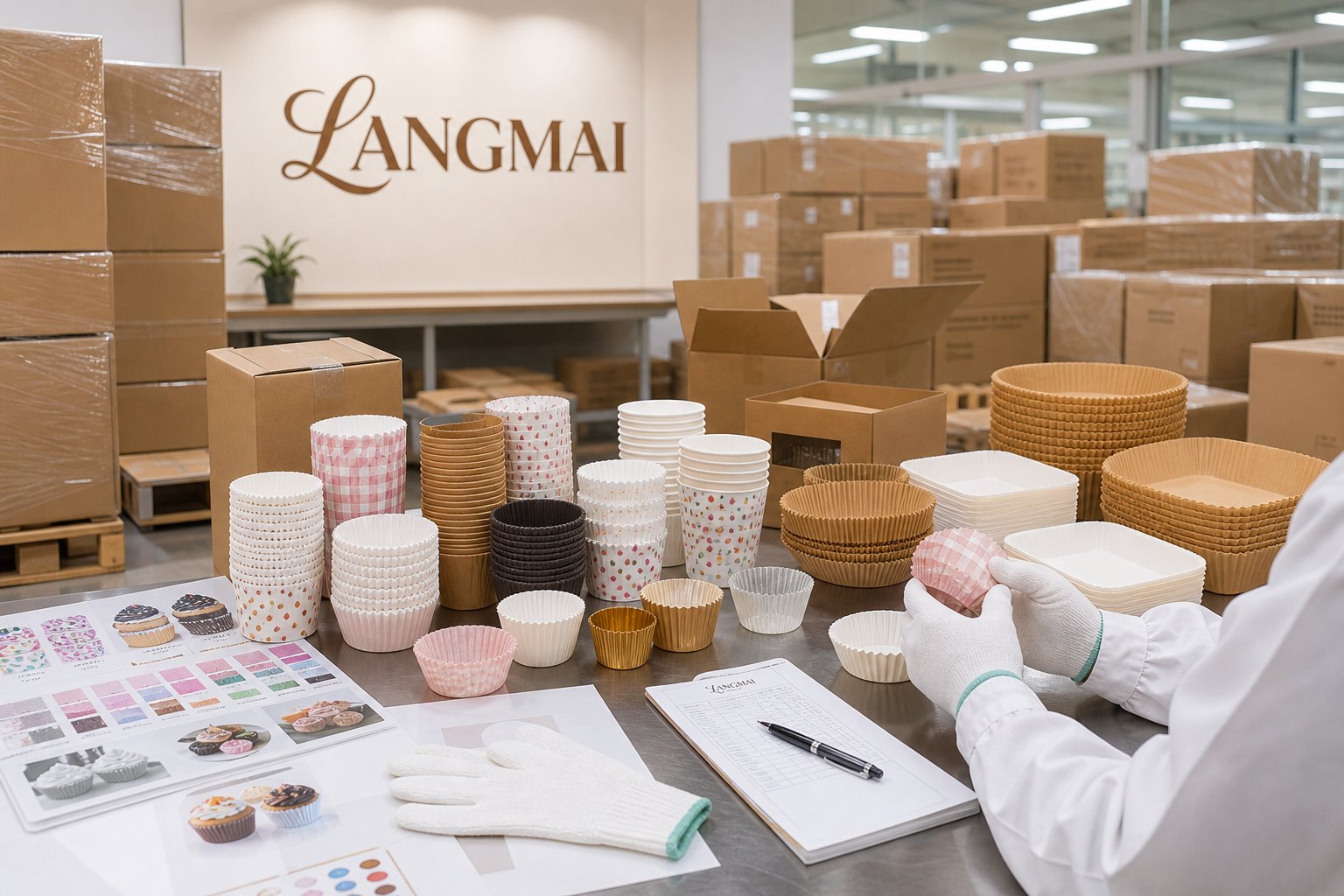
Use supplier answers to separate real production capability from catalogue selling. A credible supplier should be able to discuss color matching, sample limitations, document scope, lot control and packing protection.
Ask these questions before issuing a purchase order:
- Do you recommend colored paper, outside printing or another construction for this application?
- Can the same color be repeated across future orders, and what tolerance applies?
- Does the food-contact file cover the exact color or print construction?
- What baking conditions and food types are assumed in the document file?
- Can you provide production-style samples in the final size and pack format?
- How do you prevent mixed colors in assorted packs?
- What happens if a shade change is needed after first sample approval?
- How are production lots identified on inner packs and cartons?
- Which inspection photos and retained samples can be provided before shipment?
- What change-control notice will the buyer receive if material or color inputs change?
The best supplier conversation is specific. "Can you make blue cupcake liners?" is too broad. "Can you make a 50 mm base, 32 mm wall-height blue liner for oil-rich cupcakes, packed 100 pieces per retail tube for EU bakery retail, with documents covering the final color?" is easier to quote and verify.
10. Mid-Article Buyer CTA
If you are comparing bulk colored cupcake liners for bakery, party, foodservice or private-label programs, send LANGMAI your target size, color reference, recipe type, baking condition, pack format and destination market. Our team can review the specification and suggest samples for application testing before you approve a bulk order.
Request colored cupcake liner samples
11. Common Mistakes to Avoid
The most common mistake is approving color in isolation. A buyer may like a photo, receive a swatch and move straight to price comparison. That skips the real risks: fit, grease appearance, release, odor, color transfer, pack deformation, document scope and repeat-order consistency.
Avoid these purchasing shortcuts:
- approving a digital image without a physical sample;
- using one loose sample instead of a production-style stack;
- assuming all colors share the same document scope;
- approving the liner before the retail pack is checked;
- ignoring how batter fat level changes color appearance;
- skipping retained samples for repeat orders;
- mixing sizes, colors and pack counts in one vague purchase order;
- requesting unsupported claims that the supplier cannot document.
Colored cupcake liners are not difficult to buy when the specification is complete. The risk comes from treating color as a marketing choice only. Procurement, QA, packaging and bakery teams should approve the same sample and written limits.
FAQ
Are colored cupcake liners safe for baking?
They can be suitable for baking when the finished liner, color or print construction and intended use are supported by appropriate food-contact evidence and application testing. Buyers should review documents for the exact product and test samples with the real recipe and baking profile.
Should I choose dyed paper or printed cupcake liners?
It depends on the appearance, food-contact file, minimum order, color repeatability and pack design. Dyed paper can be useful for solid color ranges, while printing may suit patterns or brand colors. Both still need finished-product review.
Can colored liners change shade after baking?
Yes. Heat, grease, moisture, batter color and storage can change how the liner looks. That is why buyers should judge color before baking, after cooling and after the expected packed storage period.
What documents should I request from a colored baking cup supplier?
Request a finished-product declaration or compliance statement, relevant food-contact test support, intended-use conditions, material or print description, lot traceability process and change-control confirmation. The file should match the color and construction ordered.
How do I inspect assorted color cupcake liner packs?
Define the color count per retail unit, inner pack and carton. During inspection, pull packs from multiple cartons, count each color, compare shade against the master sample and check for mixed, missing, scuffed or crushed liners.
Are colored cupcake liners the same as custom printed cupcake liners?
Not always. A colored liner may use colored paper or a solid outside color, while a custom printed liner usually includes artwork, patterns, logos or brand graphics. Printed projects need artwork approval in addition to color and food-contact review.
CTA
Authoritative Sources Reviewed
- European Commission, Food Contacto Materials legislation
- EUR-Lex, Regulation (EC) No 1935/2004
- EUR-Lex, Commission Regulation (EC) No 2023/2006
- FDA, Determining the Regulatory Status of Components of a Food Contacto Material
- eCFR, 21 CFR 176.170
- BfR, Recommendation XXXVI: Paper and board for food contact
- ISO, ISO 186:2002 Paper and board sampling
Conclusion
Colored cupcake liners wholesale should be sourced with the same discipline as any other food-paper packaging item. The buyer needs a real size specification, a stable color target, finished-product samples, baking and storage tests, document review, packing controls and repeat-order inspection. Color should improve the bakery or retail offer without creating hidden risk in food-contact scope, release performance, grease appearance or shipment quality.
For a stronger RFQ, send the supplier the color reference, cup dimensions, recipe type, oven profile, pack format, destination market and inspection expectations at the beginning. Then approve a production-style sample and keep retained samples for future orders.
LANGMAI supports global B2B buyers with cupcake liners, paper baking cups, cake cups and custom food-paper packaging for bakery, foodservice, retail and party ranges. To source colored cupcake liners for your next program, share your target specification and request samples before bulk approval.