Introduction

When a wholesale buyer qualifies a baking paper or baking cup factory, a certificate on the wall is not the deliverable. The deliverable is evidence that the plant can control every material and process that touches the food-contact surface of the paper. The BRCGS Packaging Materials standard is one of the most widely recognized frameworks for exactly that, and understanding what it actually requires helps buyers audit suppliers faster and with fewer arguments. Every document in our compliance library is tied to a specific construction; see how the silicone-coated parchment sheets and rolls programme aligns test reports with the exact grade supplied.
This guide explains what the standard covers for a baking paper or paper baking cup producer, how it relates to ISO 22000 and FSSC 22000, and what evidence a buyer should request during a desktop review, a remote audit or an on-site visit. The goal is practical: a checklist you can send before the audit, so audit day is spent verifying rather than hunting for documents. Buyers verifying these specifications can review the certificate library alongside supplier documentation requests.
1. What BRCGS Packaging Materials Actually Covers
The BRCGS standard for packaging and packaging materials applies to manufacturers of food-contact and non-food-contact packaging, which includes converted paper products such as baking paper, greaseproof sheets, baking cups and muffin liners. For a converted-paper factory, the main areas a buyer should expect to see are: Documentation scope is confirmed per SKU and destination market, as outlined on our food-grade die-cut parchment rounds page.
- Senior management commitment and hazard and risk management. A documented HACCP or equivalent risk assessment specific to paper converting, not a generic template borrowed from food production.
- Product safety and quality plan. Control points covering incoming paper reels, silicone coatings, release agents, inks, adhesives and corrugated outer packaging.
- Food contact controls. Documented specifications for every food-contact substance, including the confirmed suitability for the intended food type and temperature of use.
- Site and production standards. Layout, foreign-body controls, glass and brittle plastic registers, knife and blade control, and hygiene around converting machines.
- Product and process control. Batch records, process parameters for coating or forming, and control of rework or off-grade material.
- Traceability and recall. Mass-balance traceability tests from reel to finished carton and back, with defined timelines.
- Personnel. Training records, hygiene rules and contractor control.
The BRCGS packaging materials standard is published and maintained by BRCGS; buyers should confirm the audit scope explicitly names converted paper products, because a certificate for a different scope does not transfer to baking paper lines. The factory and certificate library lists the third-party audits and test reports behind these claims.
2. How BRCGS Relates to ISO 22000 and FSSC 22000
Buyers frequently see three different certificates from the same factory and ask which one matters. They are not interchangeable:
| Framework | What it certifies | Typical fit for a paper converter |
|---|---|---|
| BRCGS Packaging Materials | Full product safety and quality management for packaging manufacture, including food-contact requirements | Strongest fit; designed for packaging plants |
| ISO 22000 | Food safety management system requirements; can be applied across the chain | Valid system certificate, but lighter on packaging-specific product safety controls |
| FSSC 22000 | ISO 22000 plus sector-specific prerequisite programs (FSSC packaging module exists) | Also relevant; a FSSC packaging certificate is a serious alternative |
In simplified terms, ISO 22000 describes the management system, while BRCGS and FSSC add detailed prerequisite and product-safety requirements that are specific to the packaging sector. A baking paper plant holding BRCGS Packaging Materials certification has normally already built the ISO 22000-style system underneath it. For the buyer, the practical rule is: read the scope, the grade range and the validity dates on every certificate, and do not assume one implies the other.
3. Buyer Audit Evidence Checklist
Send this list before the audit. A supplier that genuinely operates the standard can produce these items quickly; a supplier that bought a certificate cannot.
| Area | Evidence to request |
|---|---|
| Certificate and scope | Valid BRCGS Packaging Materials certificate, audit report summary, scope naming paper converting, grade range covered |
| HACCP | Hazard analysis for paper converting, including chemical, physical and allergen-type hazards for the product mix |
| Food-contact documentation | Composition or regulatory statements for the base paper, silicone treatment, inks and any coatings, matching the sold grades |
| Supplier approval | Approved supplier list, evaluation records for the paper mill and chemical suppliers |
| Traceability | One completed traceability exercise with mass balance within the required timeframe |
| Foreign body | Glass and brittle plastic register, blade and needle control log, metal detection or sieving evidence where used |
| Process control | Batch records linking reel lot, coating parameters and finished goods lot |
| Complaints and recall | Complaint trend, one mock recall report, corrective action examples |
| Training | Operator training matrix and hygiene rules |
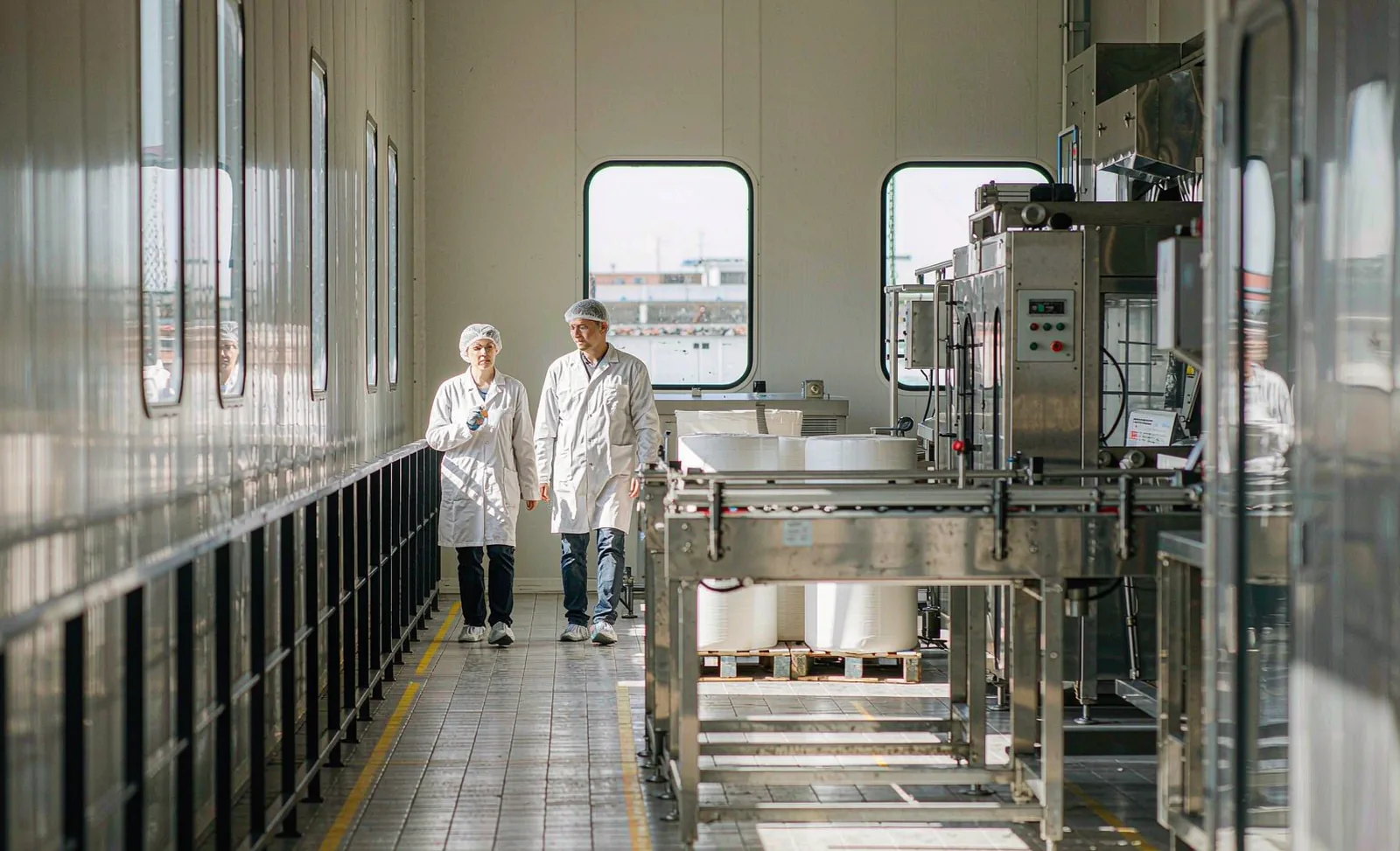
During the walkthrough, the highest-value minutes are spent at the converting machines: check how blades are changed, how silicone or ink containers are handled, whether product is protected during roll changes, and how off-cuts are identified.
4. Food-Contacto Controls: Inks, Silicones and Release Agents
For baking paper, the critical chemical controls sit in the food-contact layers. The audit should confirm that the factory holds, for each sold construction, documentation that identifies the base paper grade, the silicone or release treatment and any printed decoration, together with the intended conditions of use.
The FDA food types and conditions of use tables distinguish bakery products by surface fat content and cover high-temperature use, which is why a generic "food grade paper" statement is never sufficient for a double-sided silicone baking sheet destined for oily pastry. In the EU, Regulation (EC) No 1935/2004 requires materials to be safe under intended use and traceable, and industry guidance for paper and board adds specific expectations for food-contact paper. Ask how the supplier re-verifies these documents when a mill, coating or ink supplier changes, and whether the same evidence exists for printed baking cups.
5. Reading Certificates in a Wholesale Quotation
When comparing quotations, put the certification columns side by side:
| Quotation line | What to verify |
|---|---|
| Certificate holder | Is it the converting factory that ships to you, a sister plant or a trading company? |
| Scope and site address | Does the address match the production site you are buying from? |
| Grade range | Are the exact product codes quoted included in the audited scope? |
| Grade number | Which audit grade was achieved, and were there any critical findings? |
| Validity | Expiry date relative to your contract period and next surveillance audit |
A factory can be excellent and still be in transition, for example after moving to a new site. In that case, ask for the audit plan and consider a pre-approval desktop review of the checklist above.
6. Making the Audit Efficient
Practical steps that save both sides a full day:
- Agree the product scope and sample grades in advance.
- Request the evidence pack one to two weeks before the audit and review it remotely.
- Reserve audit time for the shop floor and the traceability test, not for reading documents.
- Run one traceability exercise live, from a finished carton back to the reel lot.
- Close with a written list of findings, owners and dates rather than a verbal summary.
For the wider material specification that supports this audit, see the baking paper grammage buyer guide and the quality-control inspection guide.
FAQ
Is a BRCGS Packaging Materials certificate enough on its own to approve a supplier?
No. It is strong evidence a system exists, but buyers should still verify scope, grades, food-contact documentation for the specific constructions quoted and performance in the intended application.
Does BRCGS certification replace food-contact compliance documents?
No. The standard requires the factory to control food contact, but the underlying composition or regulatory statements for paper, silicone and inks remain the compliance evidence for your market.
Can a factory be BRCGS certified for baking paper but not for baking cups?
Yes. Certification applies to defined product categories and sites. Confirm that formed and printed cups are inside the audited scope if that is what you are buying.
How does FSSC 22000 compare to BRCGS for packaging?
Both are GFSI-recognized schemes with a packaging route. FSSC 22000 builds on ISO 22000 with sector prerequisite programs; BRCGS is a packaging-specific standard. Either can be acceptable; compare scope and audit reports rather than names.
How often should a wholesale buyer re-audit a certified supplier?
Annually as a minimum is common practice, timed after the supplier's surveillance audit. A triggered review is also appropriate after any site move, major process change or quality complaint.
Conclusion
A BRCGS Packaging Materials certificate tells you where to look, not what you will find. Use the standard's structure to build a focused evidence request, verify that the scope covers the exact grades you buy, confirm food-contact documentation for silicone treatments and inks, and test traceability live. A supplier that passes this review is easier to work with year after year, because the discipline behind the certificate shows up in batch records, complaint handling and change control. Our custom silicone-coated baking parchment paper programme is audited against the same standards referenced in this guide.
CTA
LANGMAI supplies baking paper, baking cups and food packaging papers from a certified converting operation and can provide a complete audit evidence pack: certificates with scope, food-contact documentation, traceability records and sample reports. Send LANGMAI your audit checklist and target grades to arrange a desktop review, remote audit or factory visit.
Sources
- BRCGS — Packaging Materials Standard overview: https://www.brcgs.com/
- FDA — Food Types and Conditions of Use for Food Contacto Substances: https://www.fda.gov/food/packaging-food-contact-substances-fcs/food-types-conditions-use-food-contact-substances
- European Commission / EUR-Lex — Regulation (EC) No 1935/2004 on food contact materials: https://eur-lex.europa.eu/eli/reg/2004/1935/oj
- ISO — ISO 22000 Food safety management systems: https://www.iso.org/standard/71726.html
- FSSC 22000 — Certification Scheme for Packaging Materials: https://www.fssc22000.com/