
Introduction
A baking paper sheet can be perfectly compliant, perfectly non-stick and perfectly the wrong size. Half a millimeter too wide and it buckles in the tray lip; a few millimeters short and batter reaches the pan where the paper was supposed to protect it; a drifting diameter makes the same die-cut lid fit one pallet and reject the next. Tolerances are the quiet clause in every baking paper specification — usually absent, always missed when they fail. Buyers comparing these specifications can review our wholesale parchment paper rolls and sheets programme, where coating weight, base grammage and release values are documented per construction.
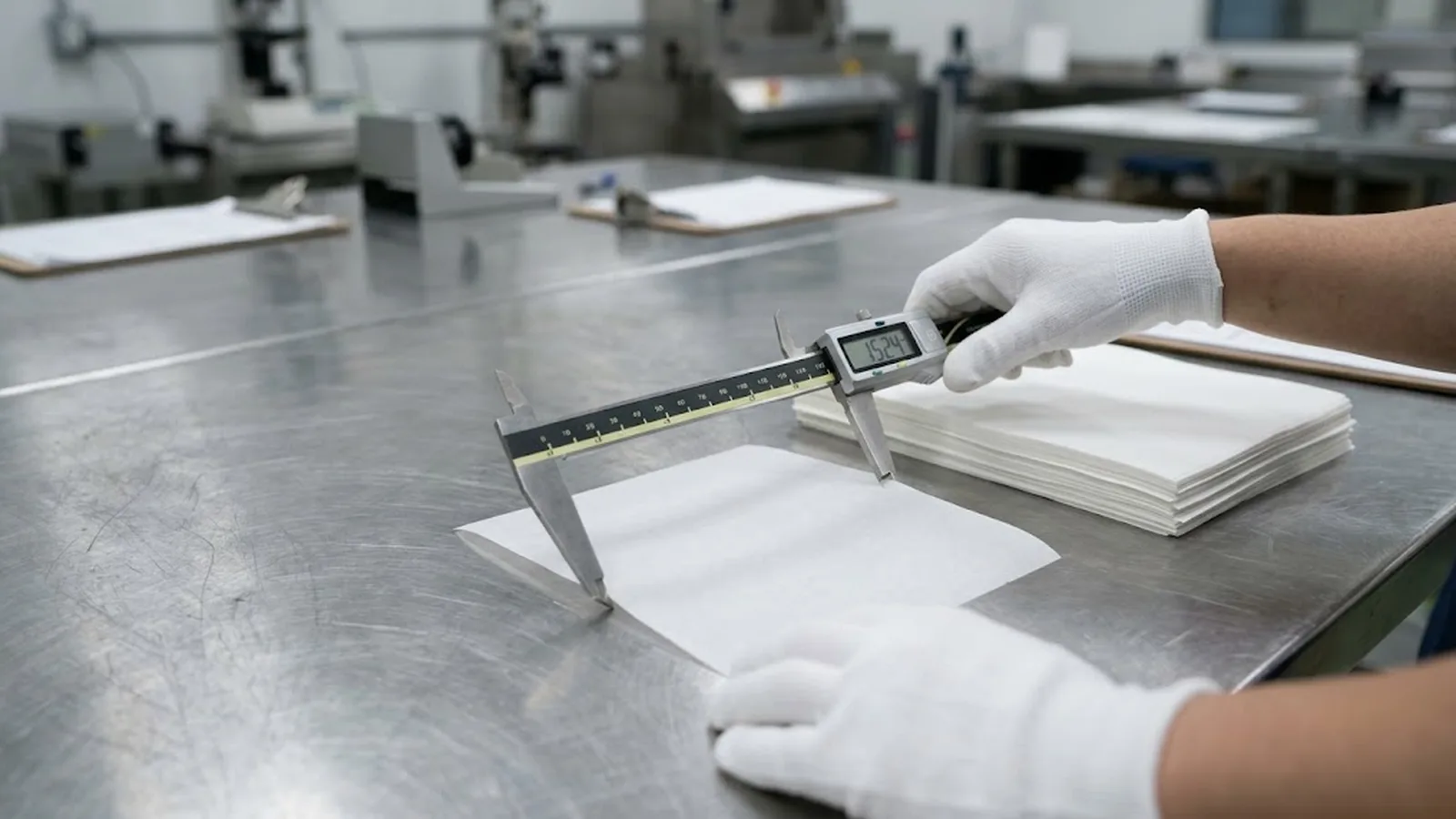
Yet tolerance is one of the easiest properties to specify and verify. It needs no laboratory, no migration testing and no third party: a ruler, a scale and a defined sampling routine will hold a supplier accountable for years. This guide explains which dimensions matter, what tolerance bands are realistic in industrial converting, how suppliers hold those numbers, and how to write them into the specification and the incoming inspection that follows. Buyers verifying these specifications can review the certificate library alongside supplier documentation requests.
1. Which Dimensions Matter in Baking Paper Purchasing
Not every dimension deserves a tolerance; the ones that interact with equipment or food do. Buyers should separate the paper into four groups: For production volumes, the same construction logic applies to our baking parchment paper manufacturing programme line, quoted per roll, sheet or die-cut format.
- Sheet formats. Length and width drive tray fit, dispenser feeding and presentation. A sheet specified for a 600 × 400 mm Gastronorm tray needs to sit at or slightly over the tray rim without curling over it. Sheets cut long interfere with stacking and lids; sheets cut short expose bare pan.
- Round formats. Diameter controls pan lining and cake tin release. A round cut 3 mm oversize sits cleanly up the pan wall; the same 3 mm undersize leaves a grease track on the tin and an extra cleaning cycle per bake.
- Roll formats. Width is the critical number because slitting error compounds at the customer's dispensing stage; core inner diameter, roll length and winding squareness matter for dispensers and automated unwinding.
- Weight and thickness. Grammage (GSM) affects stiffness, moisture behavior and cost per bake; thickness (caliper) matters where paper feeds through rollers or sensors.
A useful discipline: ask, dimension by dimension, what fails if this number moves. Nothing, leave it general; a jammed feeder, a leaking tray or a misfit lid, write the tolerance explicitly. The factory and certificate library lists the third-party audits and test reports behind these claims.
2. What Tolerance Bands Are Realistic
Industrial sheet converting on a sheeter with online length control holds dimensions tightly; small workshops with manual cutters do not. The bands below reflect what a competent converting plant should offer, and are reasonable starting points for negotiation rather than fixed industry law:
- Sheet length and width: ±1.5 mm is routine for machine-cut sheets; ±3 mm is acceptable for smaller converting operations; anything wider than ±5 mm will be visible in tray fit. Rectangularity (right-angle error) should be held so that the diagonal difference between the two diagonals of a sheet stays within a few millimeters — skew is the hidden cause of sheets that "fit the sample but not the shipment."
- Rounds: ±2 mm on diameter is standard for die-cut circles; demand tighter only where an automated placer or an exact lid fit requires it, because every tightening raises converting waste and price.
- Roll width: ±1 mm on slit width is normal for well-maintained slitters. Roll length is usually quoted as minimum meters per roll, and buyers should accept a slight positive overage rather than an exact figure, since under-length is the failure that actually costs production hours.
- Grammage: a ±5% band around the nominal GSM is standard paper industry practice; ±4% is achievable and worth asking for on high-volume programs because grammage drift shows up directly in cost per bake and in stiffness-dependent behavior such as pop-up feeding.
- Count per carton: sheets per pack are counted quantities, not tolerances. Specify exact counts and verify by weighing cartons against a target weight; short-count is among the most preventable supply discrepancies.
Where a supplier quotes looser bands, the question is whether a tighter commitment survives peak season — tolerances promised in March and missed in November are worse than honest, wider ones.
3. How Suppliers Hold Tolerances — and How to Verify
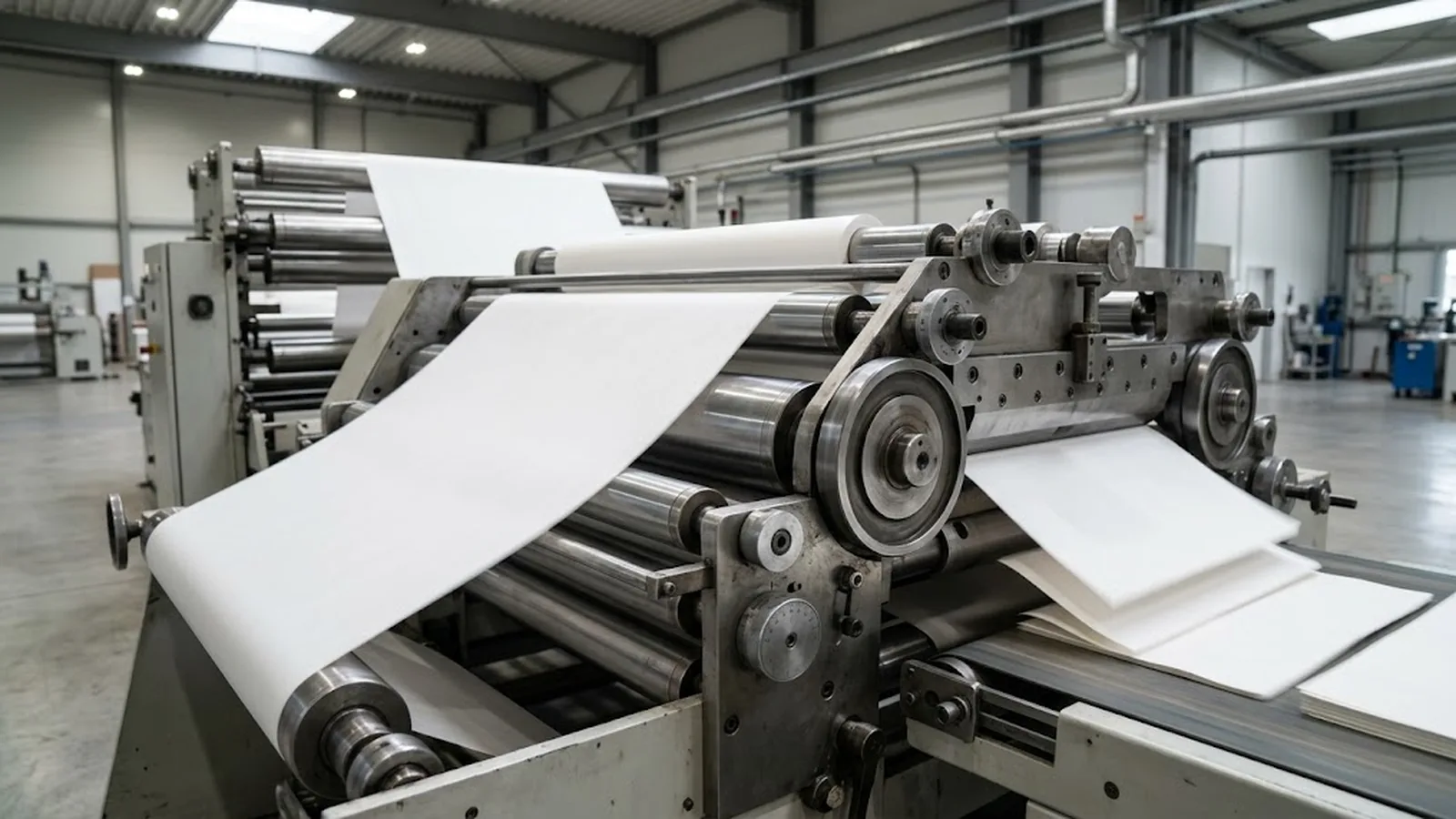
Tolerance capability comes from the converting stage, not the paper machine. A sheeter with registered length control and online skew correction produces sheets that stay within a millimeter or two over a full production run; a slitter with automatic edge guidance keeps roll width true; die-cutting of rounds holds diameter as long as dies are maintained. When qualifying a supplier, buyers should ask three questions: which machine converts this format, what is the in-process measurement frequency, and what happens when a dimension drifts mid-run.
Verification needs no trust at all. A practical incoming inspection takes ten minutes per shipment:
- Sample randomly — pull sheets from the top, middle and bottom of different cartons, since skew and length errors often vary through a pallet.
- Measure five sheets per carton with a rule or caliper: length, width (or diameter), and both diagonals for rectangles. Record the extremes, not the average — the extreme sheet jams the feeder.
- Weigh ten sheets on a 0.1 g scale to estimate grammage against nominal, and weigh full cartons against the count-based target weight.
- Log results per shipment. One shipment proves little; a trend line across months reveals which suppliers drift and gives both sides objective data before a complaint becomes a dispute.
For pop-up and dispenser formats, add the functional check: the stack must present one sheet at a time. A stack within tolerance can still fail if squareness or coating orientation is off — the machine is the only honest judge.
4. Writing Tolerances into the Specification
A tolerance clause earns its keep when it names the format, the dimension, the band and the measurement conditions. Effective wording looks like: "Sheets 600 × 400 mm, tolerance ±2 mm on each dimension; diagonal difference maximum 3 mm; grammage 40 GSM ±5%; count exact 1,000 sheets per carton, measured per incoming inspection procedure attached." Vague commitments — "close tolerance," "consistent size" — are unenforceable and should not survive a specification review.
Buyers should also connect tolerances to consequences. The cleanest structure is a graduated one: first out-of-tolerance shipment triggers a supplier 8D or corrective action; repeated failures move the format to 100% inspection at supplier cost or a price adjustment. This converts the tolerance from a technical note into a commercial instrument. And because dimensions interact with the customer's equipment, the specification review should close on the shop floor: does the sample carton actually run on our trays, tins and dispensers? The trial exists to check the answer.
FAQ
What dimensional tolerance is normal for pre-cut baking paper sheets?
Competent converting plants routinely hold ±1.5 to ±2 mm on machine-cut sheet dimensions, ±2 mm on round diameters and ±1 mm on slit roll widths, with a ±5% band on nominal grammage. Treat these as negotiation baselines: tighter bands are often available at some converting-waste cost, while much looser quotes signal older equipment or manual cutting.
My supplier's sheets fit the approved sample but not production shipments. What changed?
Dimensional drift between approval and routine production usually traces to a different converting line, a worn die or blade, or relaxed in-process checking after qualification. Re-measure incoming shipments, log the trend, and raise the data with the supplier. If the approved sample came from a specific line, make that line a condition of future orders.
Should I specify tighter tolerances than the supplier offers?
Only where equipment genuinely requires it — automated placers, exact-fit lids or precision dispensers justify tighter bands, usually at a price or minimum-order consequence. Tighter-than-needed tolerances raise converting waste and cost without functional benefit. Tie every tolerance to the failure it prevents.
Conclusion
Tolerances are the least glamorous clause in a baking paper specification and among the most profitable. They decide whether sheets feed, whether rounds seat, whether rolls run — and they are the one property a buyer can audit with a ruler and a scale, without laboratory support. Name the dimensions that interact with your equipment, agree bands the supplier's process can actually hold, verify them on arrival, and attach commercial consequences to failure. Paper that arrives inside tolerance, every time, is not luck; it is a specification taken seriously on both sides. Our private-label parchment paper supplier programme publishes the test data behind each grade so specifications can be verified before ordering.
LANGMAI supplies baking papers in sheet, round, roll and pop-up formats with dimensional and grammage tolerances written into every quotation, supported by converting-line capability data and verification reports wholesale buyers can reproduce on their own bench. Contacto our wholesale team with your tray, tin and dispenser dimensions for samples and a tolerance-matched quotation.
Sources
- ISO 217 — Paper and board: untrimmed trimmed sizes
- TAPPI — Technical resources for pulp and paper testing
- ISO 536 — Paper and board: determination of grammage
- FDA — Food Contacto Substances: 21 CFR 176 Indirect Food Additives: Paper and Paperboard Components
- EU Regulation 1935/2004 — Materials and articles intended to come into contact with food