Introduction
When should a buyer start a seasonal muffin cup program for next Christmas? For imported custom-printed programs, the honest answer is three to five months before the required in-warehouse date, and earlier if artwork is not yet finalised. Seasonal programs fail more often on timing than on price, because holiday demand is compressed into a few selling weeks that cannot be recovered once missed. Cup programmes usually ship alongside pan lining; our baking parchment paper manufacturing programme specs cover the sheets and rolls that pair with them.
A seasonal muffin cup program differs from a core repeat item. Volumes are forecast rather than observed, artwork changes every year, retail shelf windows are fixed, and leftover inventory has low residual value once the holiday passes. That combination rewards early planning, conservative first orders with a pre-agreed reorder trigger, and suppliers who commit capacity before their production calendar fills. Buyers verifying these specifications can review the certificate library alongside supplier documentation requests.
This guide covers Christmas, Easter, Halloween, Valentine's Day and other seasonal peaks for wholesale bakery cup buyers. It explains how MOQ works for printed versus plain constructions, what a realistic sampling and approval timeline looks like, how to build a delivery calendar backwards from shelf date, and how to manage inventory risk.
1. Define the Program Shape Before Discussing MOQ
MOQ is not a single number. It moves with every construction decision, so buyers who ask "what is your MOQ" before defining the product get an answer that will change later. Where a bakery lines trays and moulds product in the same run, our private-label parchment paper supplier are quoted with the cup programme for a single documentation package.
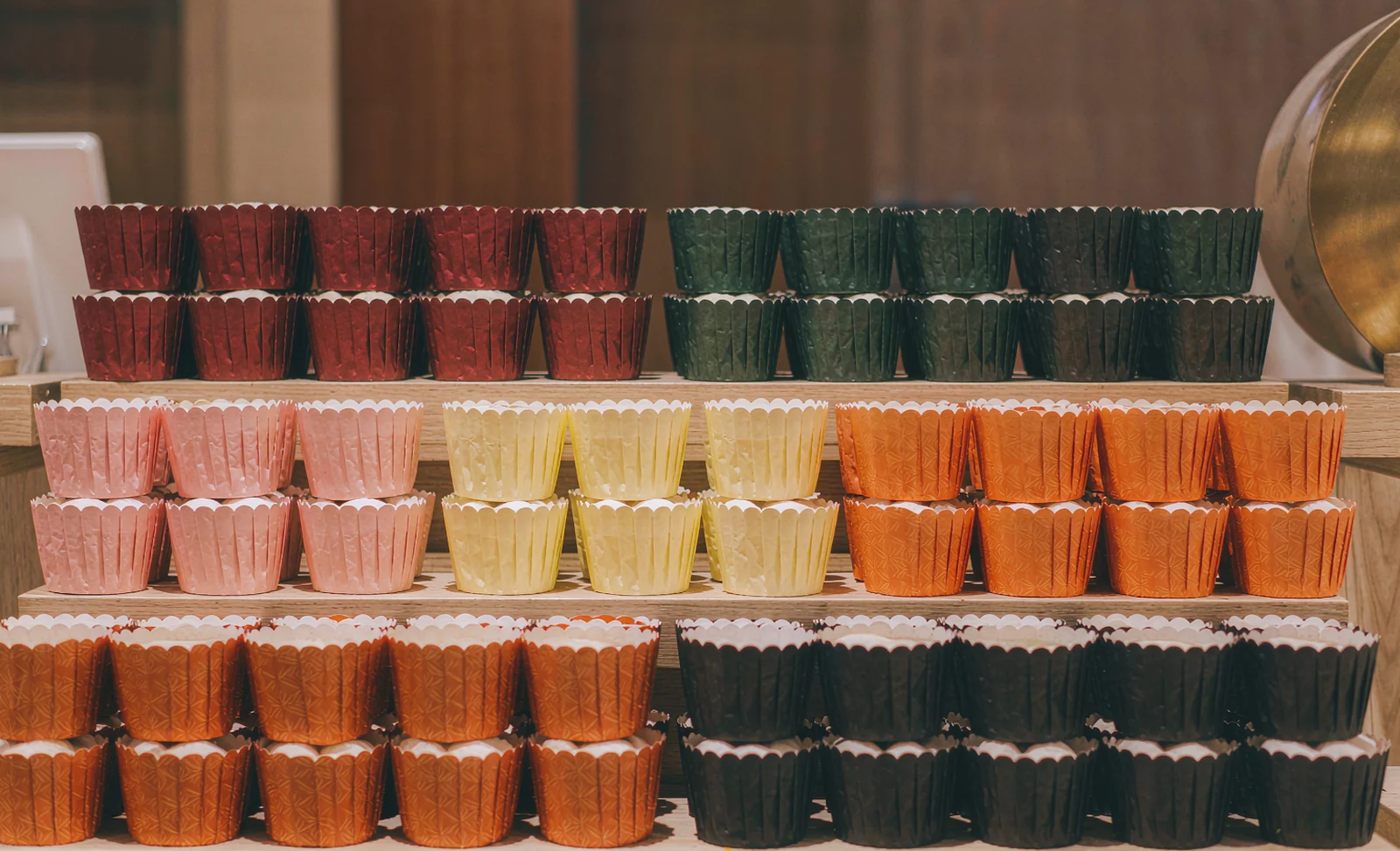
Fix these variables first. Cup type: pleated muffin liner, tulip or high-wall cup, mini or jumbo format, or a greaseproof alternative. Then base grammage, which drives rigidity and shelf shape retention. Then decoration route: solid stock, stock seasonal patterns, custom print, foil effects, embossed wall, or printed outer sleeve. The factory and certificate library lists the third-party audits and test reports behind these claims.
Then fix pack format. Retail cartons or hang-sell bags need printed retail packaging with its own artwork cycle and minimum print run. Foodservice bulk packs are simpler and cheaper but give a different shelf presentation. Finally set the destination market, because documentation, language and labelling rules add lead time.
Once those are set, an MOQ quote is meaningful. Plain stock usually carries much lower minimums than custom-printed work, because printing adds plate setup, colour matching and make-ready waste to amortise.
2. Understanding MOQ Structure and Unit Cost
Suppliers usually quote a minimum per design rather than per order. If a buyer wants four Christmas designs, the MOQ may apply to each unless the supplier combines them. Always ask whether minimums are per design, per SKU, per print run or per order.
Unit cost typically steps down at volume breaks, with the largest drop between the minimum run and the second break as setup cost spreads. There is often also a minimum order value across mixed SKUs — ask whether slow-moving sizes can combine with core items, which lets a buyer build a full seasonal range without a full minimum of every design.
For new seasonal lines, ask about split production: a smaller initial run at higher unit cost, followed by a reorder at standard pricing if demand justifies it. This must be negotiated before artwork approval, not after.
3. Sampling, Colour Approval and Production Timeline
A realistic imported seasonal program runs backwards from the in-warehouse date. Artwork and specification lock needs one to two weeks once final files are available, assuming the dieline is correct. Sample proofing and physical approval take around two weeks including shipping. Tooling follows, then production slot allocation, production, inspection, packing, inland transport, export clearance, freight, import clearance and delivery.
For ocean freight from Asia to Europe or North America, plan for several weeks of transit plus port handling, with buffer during peak autumn months when space is tight. Air freight compresses transit but changes landed economics, which matters for low-value, high-volume paper goods.
The practical recommendation is to lock artwork first and treat every subsequent stage as fixed-duration. Colour approval is the most common source of delay, because seasonal branding relies on exact Pantone or spot-colour matching. Buyers should approve against a physical production-representative proof rather than a screen image, and specify acceptable colour tolerance in writing before approval.
Ask two questions early: when does the supplier's holiday production calendar fill, and how much buffer does the quoted lead time contain. A very short lead time quoted for peak-season October work is often quoted against capacity that will not exist.
4. Building the Delivery Calendar
Work backwards and put dates in writing. Set the date goods must reach the distribution centre, then subtract inland delivery, customs clearance, ocean transit, port congestion buffer, production time, sample approval and artwork development. The gap tells you when to start.
Christmas usually means finalising specifications in early spring and locking artwork by early summer. Easter typically starts the preceding autumn. Halloween often gets squeezed because it shares production and shipping capacity with Christmas volumes, so build that calendar even earlier.
Build in three buffers: one week for artwork slip, one to two weeks for production delay, two weeks for autumn peak shipping. If the plan has no buffer, it will fail. Decide shipping method early; splitting volume — air for the first tranche, ocean for replenishment — suits programs with uncertain forecasts and tight launch windows.
5. Inventory Planning and Leftover Risk
Seasonal inventory risk is asymmetric. Stockouts lose margin during the strongest weeks of the year, while leftovers are discounted heavily or carried for twelve months, because seasonal artwork rarely sells again unchanged.
Three approaches work well. First, conservative first order plus pre-agreed reorder: buy enough to launch confidently, secure reorder price and lead time in writing, then reorder against real sales data. Second, evergreen core plus seasonal accent: build identity through a printed sleeve or wrap while the cup remains a standard year-round item. Third, range rationalisation: fewer designs at higher volume each rather than many at minimum quantities, which usually yields better unit costs and less dead stock.
Agree the leftover policy before ordering. Will the supplier accept returns? Can a repeat design be produced next season at agreed pricing? These are cheaper to resolve before the purchase order than after the holiday.
Plan storage with paper's sensitivity in mind: baking cups should be held dry, because humidity affects curl and separation on high-speed lines.
6. Compliance and Documentation for Seasonal Programs
Holiday programs often reach retail channels with their own audit requirements, so build the documentation file alongside production. Hold a declaration of compliance for the exact printed SKU covering base paper, inks and coatings against destination rules, evidence that the construction suits the intended contact conditions, lot traceability coding, and artwork checks including legibility and required language or disposal marks.
Ask how ink coverage interacts with food contact. Printed exteriors should not transfer to food or to adjacent cups during nesting, and heavy coverage near the rim should be avoided. A rub or transfer test is a reasonable incoming check for printed seasonal product.
Conclusion
Successful seasonal muffin cup programs are calendar projects before they are purchasing projects. Start early, fix construction and artwork before asking suppliers to quote, clarify whether MOQ applies per design or per order, approve against physical production samples with agreed colour tolerance, and build the delivery plan backwards from the fixed shelf date with real buffers at artwork, production and shipping stages. Manage demand risk deliberately through a conservative first order, pre-agreed reorder terms and a written leftover policy. Buyers standardising on one paper supplier can review our pre-cut parchment paper sheets and rounds next to their cup specifications.
What is the typical MOQ for custom printed seasonal muffin cups?
Minimums vary with cup type, grammage, print method and pack format. Unprinted solid-colour stock usually carries much lower minimums than custom-printed work, because printing involves plate setup, colour matching and make-ready waste to amortise. Ask whether the minimum applies per design, per SKU or per total order.
How far in advance should we start a Christmas program?
For imported custom-printed programs, start three to five months before goods must reach the distribution centre, and earlier if artwork is unfinished. Ocean freight, customs clearance and autumn peak congestion all consume weeks that cannot be recovered. Locking the specification and artwork early is the single most effective risk control.
Can we order multiple holiday designs under one minimum quantity?
Sometimes. Many suppliers quote minimums per design because each design needs its own plates and print setup. Others allow designs to be combined toward an order-level minimum or minimum order value. Confirm this in writing before artwork approval, because it directly affects volume commitment and unit cost.
How should we handle colour matching for seasonal branding?
Approve against a physical production-representative proof rather than a screen image, and agree colour tolerance in writing before sign-off. Where exact brand colours matter, specify spot-colour references and ask how the supplier verifies them during the run. Colour disputes after production starts are among the most expensive seasonal timing problems.
What happens to unsold holiday inventory?
Residual value is usually low because seasonal artwork rarely sells again unchanged. Reduce exposure with a conservative first order plus pre-agreed reorder pricing, favour seasonal outer packaging over seasonal printed cups so the base SKU stays sellable, and consolidate fewer designs at higher volumes. Discuss returns and repeat pricing before ordering.
How should seasonal baking cups be stored before use?
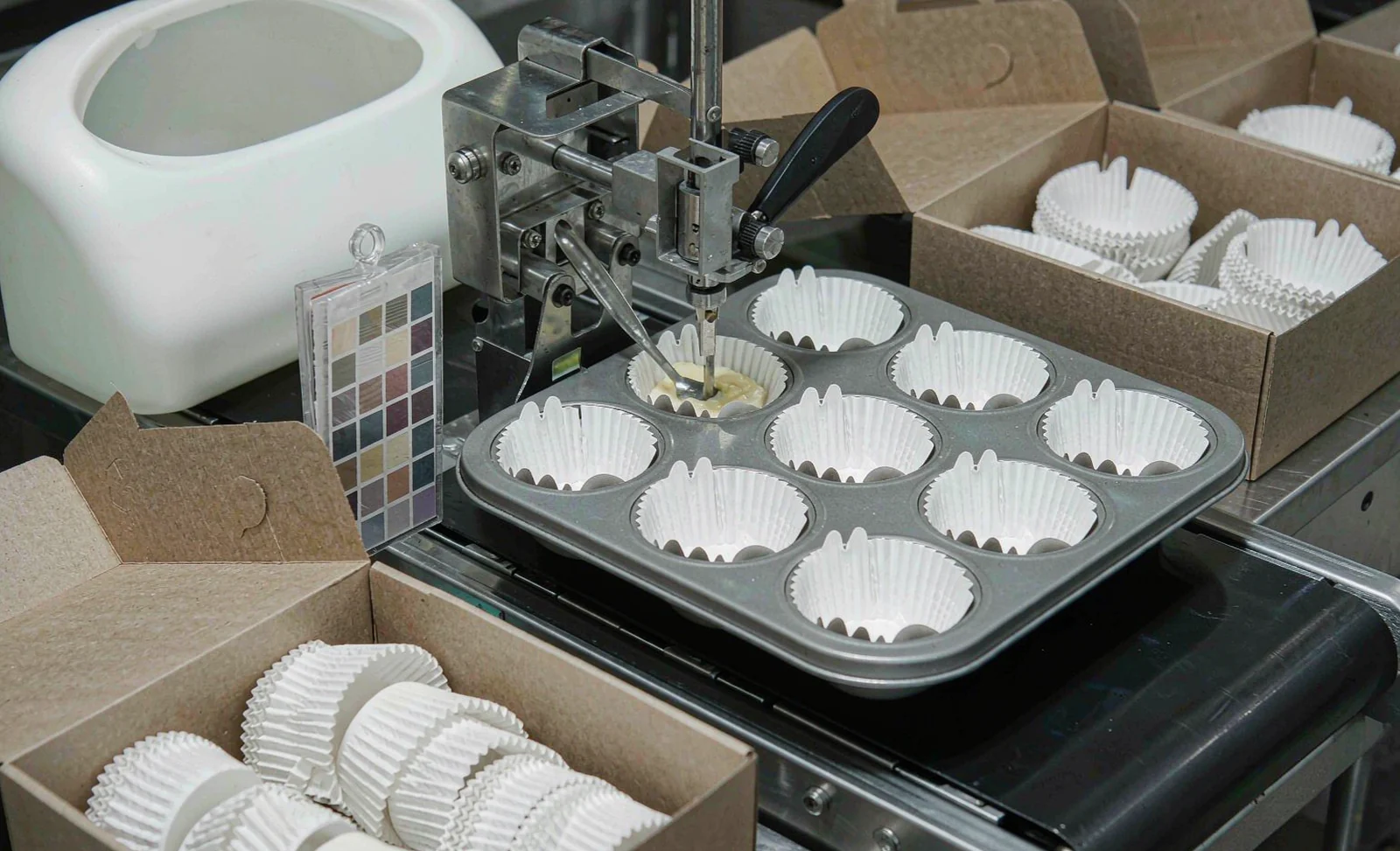
Store in dry, temperature-stable conditions away from direct sunlight. Humidity affects paper curl and can cause cups to stick together or separate poorly on high-speed depositing lines. Rotate stock by lot and keep cartons off the floor.
CTA
Send LANGMAI your seasonal program dates, target designs, pack formats, forecast volumes and destination market. The team can advise on MOQ structure, prepare custom printed samples and propose a production and delivery calendar built backwards from your shelf date.