Introduction
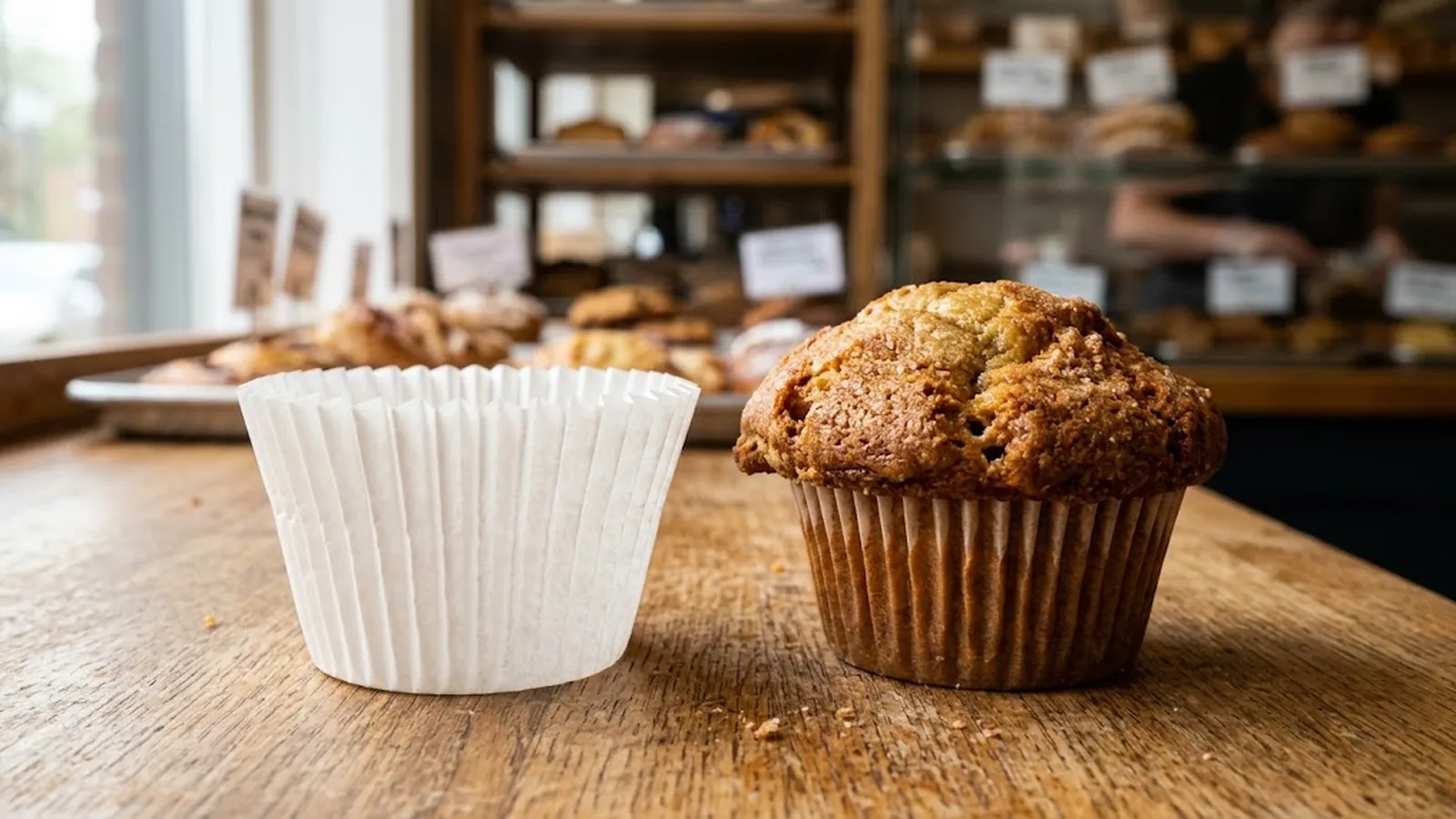
Reheating is now part of the product journey for a large share of baked goods and ready desserts: the muffin bought at noon is warmed in an office microwave at three, and the chilled lava cake is finished in a home microwave per the on-pack instruction. For wholesale buyers this changes what a paper cake cup must survive. A cup engineered only for conventional baking can fail in a microwave in ways that are invisible on the shelf: ink that blisters, a metallic decoration that sparks, a wall that scorches at a hot spot, or a food-contact surface that releases more of its constituents when heated dielectrically instead of conventionally. "Microwave-safe" printed on a carton is a claim, and unverified claims become the buyer's liability the first time an incident reaches a customer. Cup programmes usually ship alongside pan lining; our custom silicone-coated baking parchment paper specs cover the sheets and rolls that pair with them.
This guide explains what makes paper bakeware suitable for microwave use, which construction choices create risk, how microwave-safety claims are validated, what labeling rules apply in major export markets, and what to write into the specification so every lot matches the tested one. Buyers verifying these specifications can review the certificate library alongside supplier documentation requests.
LANGMAI manufactures paper cake cups, baking cups and food packaging paper for wholesale buyers, including constructions intended for combined conventional and microwave use.
What Microwave Use Does to Paper
A microwave oven heats by dielectric action: water molecules in the food absorb microwave energy and the food itself becomes the heat source, while the container is heated mainly by conduction from the hot food and by absorbing a small fraction of the field directly. For paper this creates a different stress profile from a conventional oven: Where a bakery lines trays and moulds product in the same run, our wholesale parchment paper rolls and sheets are quoted with the cup programme for a single documentation package.
- Localized hot spots. Energy absorption is uneven. Dry patches of paper in contact with hot, moist food can char where the food has dried out, especially after extended reheating of a low-moisture product.
- Steam pressure. Moisture leaves the food as vapor. In a sealed or tightly nested cup, trapped steam can deform walls, lift rims or burst decorative layers.
- Ink and coating behavior. Microwave heating can blister or set off inks and coatings unevenly, particularly metallic-effect or heavily pigmented decorations near the food-contact surfaces.
- Migration under a new regime. Food contact compliance for paper is typically demonstrated under conventional-use conditions. Microwave use is a foreseeable additional regime, and a declaration of compliance should cover it or the label should exclude it.
None of these failures show up in a product photo or a standard bake trial — they appear only under microwave exposure of the actual product. The factory and certificate library lists the third-party audits and test reports behind these claims.
The Construction Choices That Create Risk
Buyers reviewing samples should look specifically for:
- Metallic decorations and inks. Foil effects, metallic pigments and conductive overprints can cause arcing. This is the most dramatic failure mode and the easiest to screen at sample stage: confirm in writing that the entire decoration system, including overprint varnish, is non-metallic.
- Metal-glued or foil-lined components. Some retail cup formats include foil seals or metal-tied accessories. Any metal in the pack disqualifies microwave claims unless the label clearly instructs removal.
- Low-moisture product pairing. The paper itself rarely arcs; a cup marketed for reheating dry items — bread rolls, pastries with dried toppings — runs hotter and longer than one holding moist cake, and the validation protocol must reflect the driest foreseeable use.
- Adhesives and laminations. Laminated walls can delaminate under steam pressure; adhesives near the food-contact layer can migrate when heated by moist product. Ask which adhesive system is used and whether its food-contact clearance covers microwave conditions.
- Ink on or near food contact. Food-contact-side printing should be reviewed for both migration and microwave stability — blistered ink inside a food cup is a defect and a claim risk at once.
How Microwave-Safety Claims Are Validated
There is no single global "microwave-safe certificate" for paper bakeware, so buyers should require a defined validation protocol rather than a logo. A sound protocol includes:
- Real product, worst case. Test the cups with the driest, fattest and highest-sugar product variants, because those drive the hottest, longest reheats.
- Standardized microwave exposure. Full-power runs at defined durations beyond normal use — cycling to the point where the product or container shows any change — repeated across several ovens of different wattage.
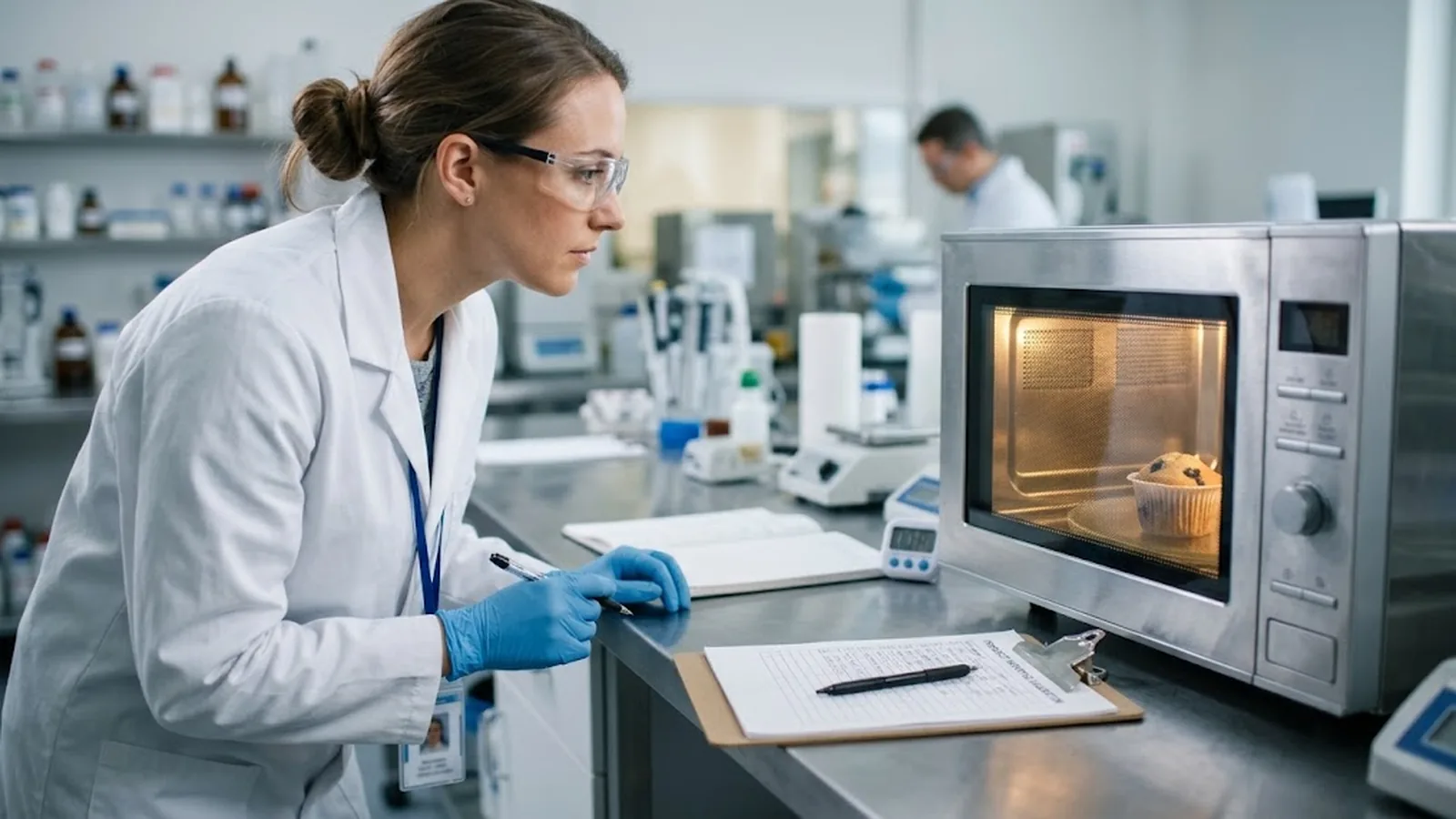
- Observation through the door and after opening. Watch for arcing, smoking, charring, blistering of inks, deformation and delamination; then inspect the food-contact surface for ink transfer, scorch marks and odor.
- Migration sampling. Where the market requires it, confirm that food-contact compliance is maintained under microwave-use conditions.
- Documentation. Record oven wattages, durations, product types and observations in a written report that the on-pack claim can reference.
For private-label retail programs, keep this validation report on file: it is the evidence behind the on-pack wording and the first document requested in any incident or retail audit.
Labeling the Claim in Export Markets
The claim itself carries regulatory weight:
- United States. FDA food contact regulations for paper apply as for any use; "microwave-safe" labeling should be supported by intended-use validation, and any metal-containing component requires clear removal instructions.
- European Union. Regulation (EC) No 1935/2004 requires materials to be suitable for their foreseeable use — and microwave reheating is foreseeable for retail bakery packaging. The declaration of compliance should state conditions of use, including microwave suitability or exclusion.
- Retailer codes. Large retail chains frequently impose their own microwave-use protocol for own-brand packaging, beyond regulation; obtain and follow the customer's protocol when it exists.
The practical rule: the claim on the pack must match the validated conditions of use — product type, duration, wattage range — and the declaration of compliance must name microwave use explicitly where the pack advertises it.
What to Put in the Specification
- Statement of intended use: conventional oven, microwave, or both, with the validated wattage and duration ranges.
- Written confirmation that inks, overprints, adhesives and decorative systems are non-metallic and non-conductive.
- Food-contact declaration covering microwave-use conditions, or an explicit on-pack exclusion of microwave use.
- Validation report reference: product types tested, ovens used, durations and observations.
- Steam-management requirements: rim construction, venting allowances and expected wall performance at end of reheat.
- Lot-level controls that affect microwave performance — ink coverage, lamination integrity, adhesive application — named as incoming-goods check items.
LANGMAI supports microwave-intended cup constructions with non-metallic decoration systems, declarations covering microwave conditions of use and validation reports for private-label retail programs.
FAQ
Can all paper baking cups go in the microwave?
No. Plain unprinted paper cups usually tolerate microwave reheating, but printed, laminated or metallic-decorated constructions need validation before a microwave claim is made. Even then, the claim should be limited to the tested conditions — product type, wattage range and duration.
What causes arcing in paper cake cups?
Arcing almost always traces back to conductive materials: metallic inks, foil decorations, foil-lined components or metal accessories. It is screened at sample stage by confirming in writing that the full decoration and construction system is non-metallic, and confirmed by observing full-power microwave runs of the real product.
How do I validate a microwave-safe claim for my private-label program?
Run a written protocol: test with your driest and fattest product variants, cycle full-power exposures beyond normal use in several ovens of different wattage, observe for arcing, blistering, deformation and ink transfer, then record everything in a report. LANGMAI supports private-label buyers with microwave validation reports and declarations covering microwave conditions of use.
Does the declaration of compliance need to mention microwave use?
Yes, where microwave use is intended or claimed. Under EU Regulation 1935/2004 the declaration should state conditions of use, and microwave reheating is a foreseeable use for retail bakery packaging. A declaration silent on microwave conditions does not support a "microwave-safe" claim on your carton.
Conclusion
Microwave use is now part of the foreseeable life of retail bakery products, and the "microwave-safe" line on a carton is only as strong as the validation behind it. Screen constructions for conductive materials at sample stage, validate with real product across varied ovens, align the on-pack claim with the declaration of compliance, and write the microwave-relevant parameters into the specification. That is how a reheating instruction becomes a selling point instead of a liability. Buyers standardising on one paper supplier can review our baking parchment paper manufacturing programme next to their cup specifications.
CTA
اتصل بنا Sales for LANGMAI paper cake cups and bakeware designed for conventional and microwave use, with non-metallic decoration systems, microwave-condition declarations and validation support for wholesale and private-label programs.