Introduction
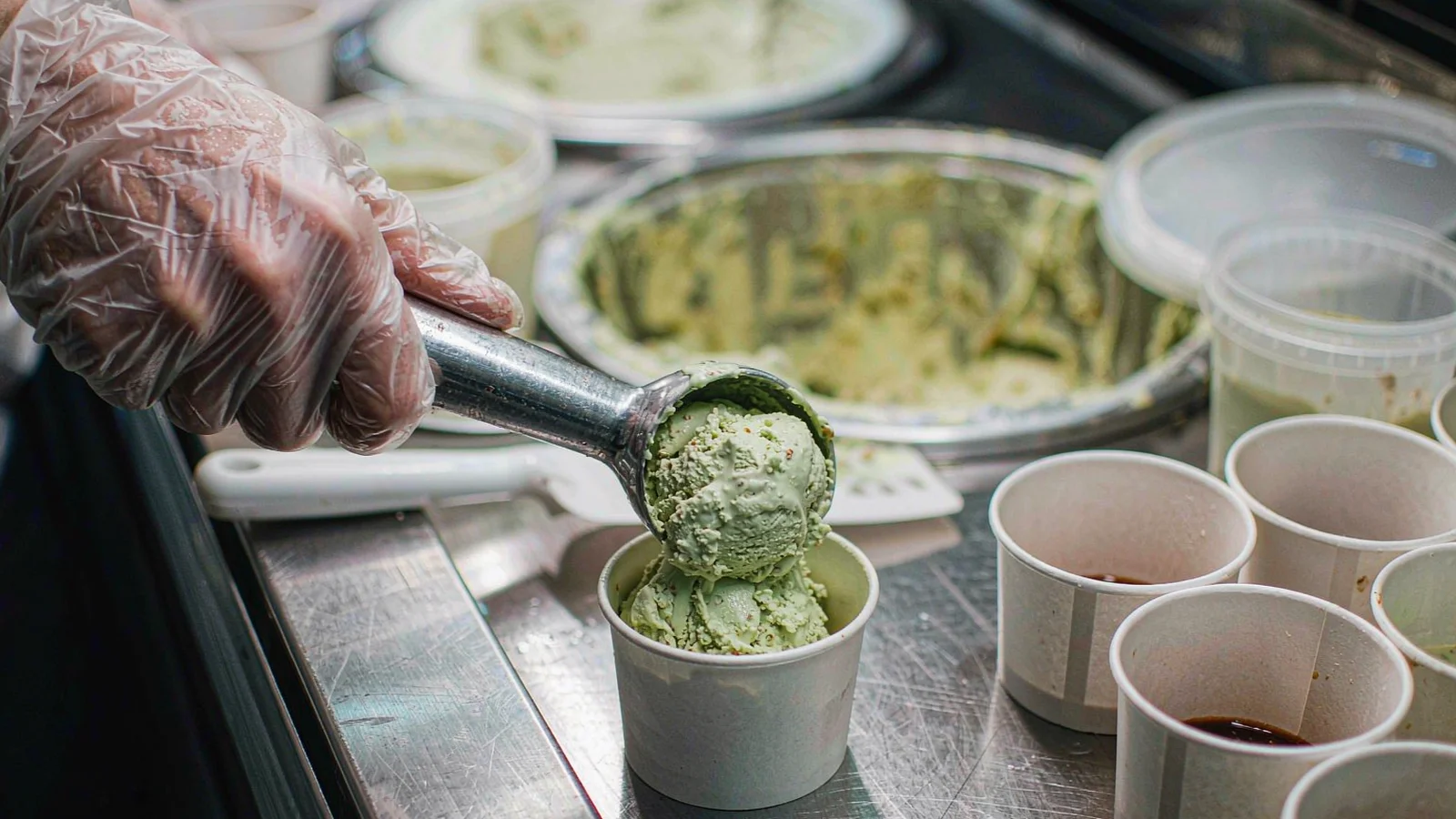
Gelato parlors, gelaterias and frozen dessert shops have a serving problem that most cafe buyers never think about: paper cups that perform perfectly for hot drinks fail within minutes under a double scoop of dense, moisture-heavy gelato. Condensation forms on the outside, the rim softens, seams weep, and the customer's first impression of the shop is a sagging cup. For distributors and wholesale buyers supplying this channel, cake cups designed for cold, wet, high-moisture dessert service are a distinct product category with its own specification logic. Cup programmes usually ship alongside pan lining; our custom printed baking parchment paper specs cover the sheets and rolls that pair with them.
This guide walks through how gelato and frozen dessert operators actually use cake cups, which material properties matter most in cold service, how to structure a size range around typical flavor profiles and portioning habits, and what to negotiate with a manufacturer when ordering at wholesale volumes. Buyers verifying these specifications can review the certificate library alongside supplier documentation requests.
Why Cold Dessert Service Is Harder Than It Looks
Frozen desserts stress paper packaging in three ways at once. First, condensation: as cold product meets warm humid air, water droplets form on the cup exterior and interior rim, saturating any untreated paper edge. Second, meltwater: gelato and sorbet release liquid as they soften, pooling at the cup bottom where seams are most vulnerable. Third, mechanical stress: scooping compresses the product against the cup wall, and customers dig spoons into the base repeatedly. Where a bakery lines trays and moulds product in the same run, our silicone-coated parchment sheets and rolls are quoted with the cup programme for a single documentation package.
A cake cup built for dry cakes or muffins rarely survives this combination. Buyers in the frozen dessert channel should treat moisture performance, not print quality or price, as the primary selection criterion, then evaluate aesthetics within products that pass the wet-performance bar. The factory and certificate library lists the third-party audits and test reports behind these claims.
Key Material Specifications for Frozen Dessert Cups
The first specification is water and grease barrier treatment on both the body and, critically, the rim and bottom seam. Many failures start at the bottom seam where meltwater sits, so ask suppliers specifically about seam sealing and bottom stock. Food-safe water-based barrier coatings are now standard among compliant manufacturers, and buyers should request migration test documentation showing the coating meets food-contact requirements in the destination market.
Second, board stiffness and weight. A heavier grammage board holds shape when a customer squeezes the cup mid-melt, and keeps the cup stable on narrow tasting surfaces. Third, dimensional stability under cold-humidity cycling: cups moved from freezer storage to a warm counter should not warp or delaminate.
Fourth, print durability. Condensation plus handling makes water-based ink systems the safe choice, and buyers should confirm inks are food-safe and do not transfer when the exterior is wet.
Building a Size Range Around Gelato Portioning
Gelato service typically uses a tasting size, a single-scoop size and a double or take-away size. Tasting cups in the smallest formats support the shop's flavour-sampling habit and drive conversion; single-serve cups around the common four-to-six-ounce range handle the standard one-scoop order; larger cups accommodate two scoops plus toppings without overflow during melt-down.
How Distributors Evaluate Gelato Channel Suppliers
Wholesale buyers serving gelato and frozen dessert accounts should assess manufacturers on criteria beyond price. Production capability for moisture-barrier coatings is the first filter: not every cake cup plant runs the water-based barrier systems this channel requires, so confirm the coating technology and ask for cold-service performance references. Food-contact certification for the destination market is the second filter, including GMP certification at the converting plant. Third comes customisation depth — the ability to match rim diameters, board colours and print systems across a coordinated size range rather than offering one generic cup.
Distributors should also evaluate supply reliability during peak season. Frozen dessert sales concentrate in warm months, so manufacturers who reserve production capacity for standing customers, support call-off scheduling from framework orders, and hold safety stock of repeat printed designs are materially more valuable than those quoting the lowest unit price. Request references from existing gelato or ice cream chain customers, and ask how the supplier handled a peak-season surge and a quality complaint. A short reference call at the qualification stage prevents most of the disputes that otherwise surface mid-season.
Buyers should also consider lid compatibility if take-away volume is significant, since a lid that seats loosely on a condensation-wet rim is a customer complaint generator. Nesting efficiency matters for back-of-house storage in small shops, so compare stack height and nesting stability when evaluating quotes. Finally, confirm cup rim geometry works with the shop's spoons and tasting tools; an overly flared or curled rim can catch scoops and slow service during peak hours.
Hygiene and Food Safety in Cold Service
Open-front display cases invite airborne contamination and repeated customer handling, so cup storage and dispensing deserve as much attention as the cup itself. Operators should store cups in closed cartons, refill dispensers with gloved or washed hands, and never pre-stack cups on the counter where they collect condensation and dust.
From a compliance standpoint, buyers should collect full food-contact documentation: coating migration results, heavy metals limits, and manufacturing GMP certification. Because frozen dessert service is a direct-contact, extended-contact use case, documentation should cover cold and wet applications explicitly, not just generic food contact. A manufacturer who hesitates to provide cold-service-specific migration data is a supplier to avoid.
Branding Opportunities Unique to the Frozen Dessert Channel
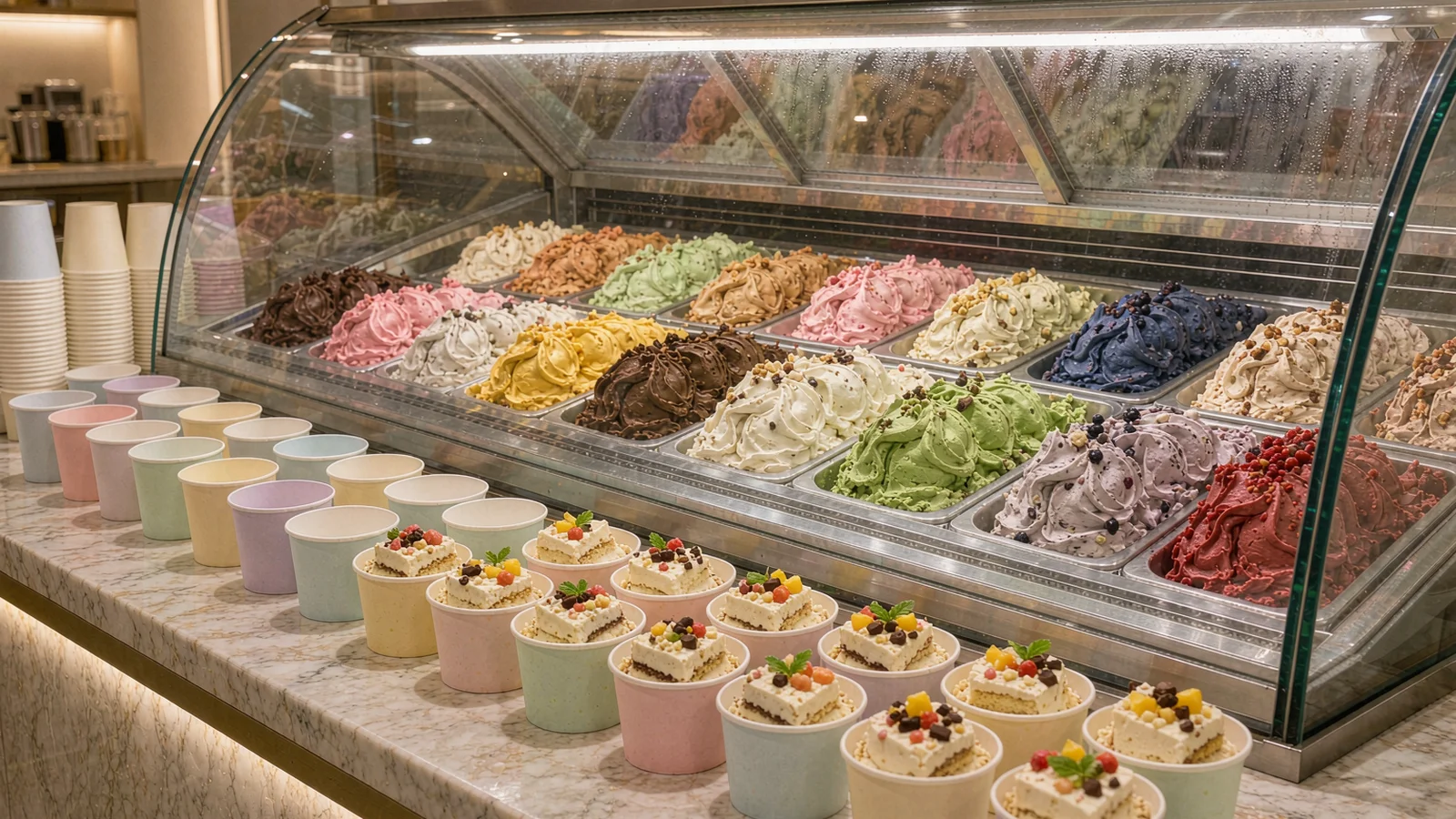
Cake cups are the highest-visibility packaging item in a gelateria: every cup sits in the customer's hand under bright display lighting for the full consumption period. This makes the channel unusually valuable for private label programs. Single-color printed cups at moderate volumes fit independent parlors, while multi-color or fully custom print runs suit franchise chains.
Buyers planning seasonal programs — summer flavor launches, holiday assortments, event collaborations — should order ahead of the warm season peak, since frozen dessert demand concentrates heavily in a few months and manufacturing slots tighten accordingly. Confirm artwork lead times, plate or cylinder costs, and whether the supplier holds inventory against call-off schedules for repeat designs.
Wholesale Buying Terms Worth Negotiating
Volume pricing in this category is driven by board grammage, coating system, print colours and order consolidation. Buyers can usually improve pricing by combining cup sizes into one production campaign, standardising rim diameters across sizes to simplify lid tooling, and accepting slightly longer lead times for scheduled deliveries rather than single large releases.
Also clarify Incoterms, pallet configuration, and whether inner carton counts are customisable to match the shop's storage footprint. Small parlors order in low case quantities; distributors should ask manufacturers about mixed-pallet and split-case options that let them serve independent accounts economically.
FAQ
What makes a cake cup suitable for gelato versus regular cake service?
Barrier performance at the rim and bottom seam, higher board stiffness, and food-safe water-resistant coatings. Regular cake cups are engineered for dry products and typically fail under sustained condensation and meltwater contact.
Can printed cake cups handle freezer and display-case conditions?
Yes, provided the supplier uses food-safe inks and coatings tested for cold, wet contact. Request migration and performance documentation specific to frozen dessert applications before approving artwork.
What sizes should a gelato shop stock?
A typical range covers a small tasting format, a single-scoop size, and a larger double-scoop or take-away size with compatible lids. Many operators add one seasonal or novelty size for limited-time programs.
What minimum order quantities apply for custom printed cups?
MOQs depend on print method and colour count. Standard printed stock may be available in small cases, while fully custom artwork usually requires larger volumes. Discuss call-off schedules to reduce upfront inventory for seasonal designs.
Conclusion
Gelato and frozen dessert shops are one of the most demanding environments for paper serving ware: constant condensation, meltwater at the seams, aggressive spoon contact and high brand visibility all in one product. Wholesale buyers who specify for moisture performance first, build a size range around real portioning habits, and demand cold-service compliance documentation will win both the operator's trust and the reorder. Treat the cake cup as functional engineering with a printed surface, not a plain paper vessel with a logo, and the channel will reward the difference at the counter. Buyers standardising on one paper supplier can review our food-grade die-cut parchment rounds next to their cup specifications.
CTA
LANGMAI manufactures food-grade cake cups and dessert cups for gelato parlors, gelaterias and frozen dessert chains at wholesale volumes, with moisture-resistant barrier systems, food-safe printing and custom private label programs. Tell us your cup sizes, display conditions and branding needs, and we will send a sampling kit for cold-service testing. Request a LANGMAI wholesale quotation today.
Sources
- European Commission, Commission Regulation (EU) 2023/2006 on good manufacturing practice for food contact materials
- U.S. FDA, 21 CFR 176.170, Paper and paperboard components in contact with aqueous and fatty foods
- Gelato industry trade guidance on cold display hygiene and portioning standards
- Manufacturer technical datasheets on moisture-barrier paper cups for frozen dessert applications