Introduction
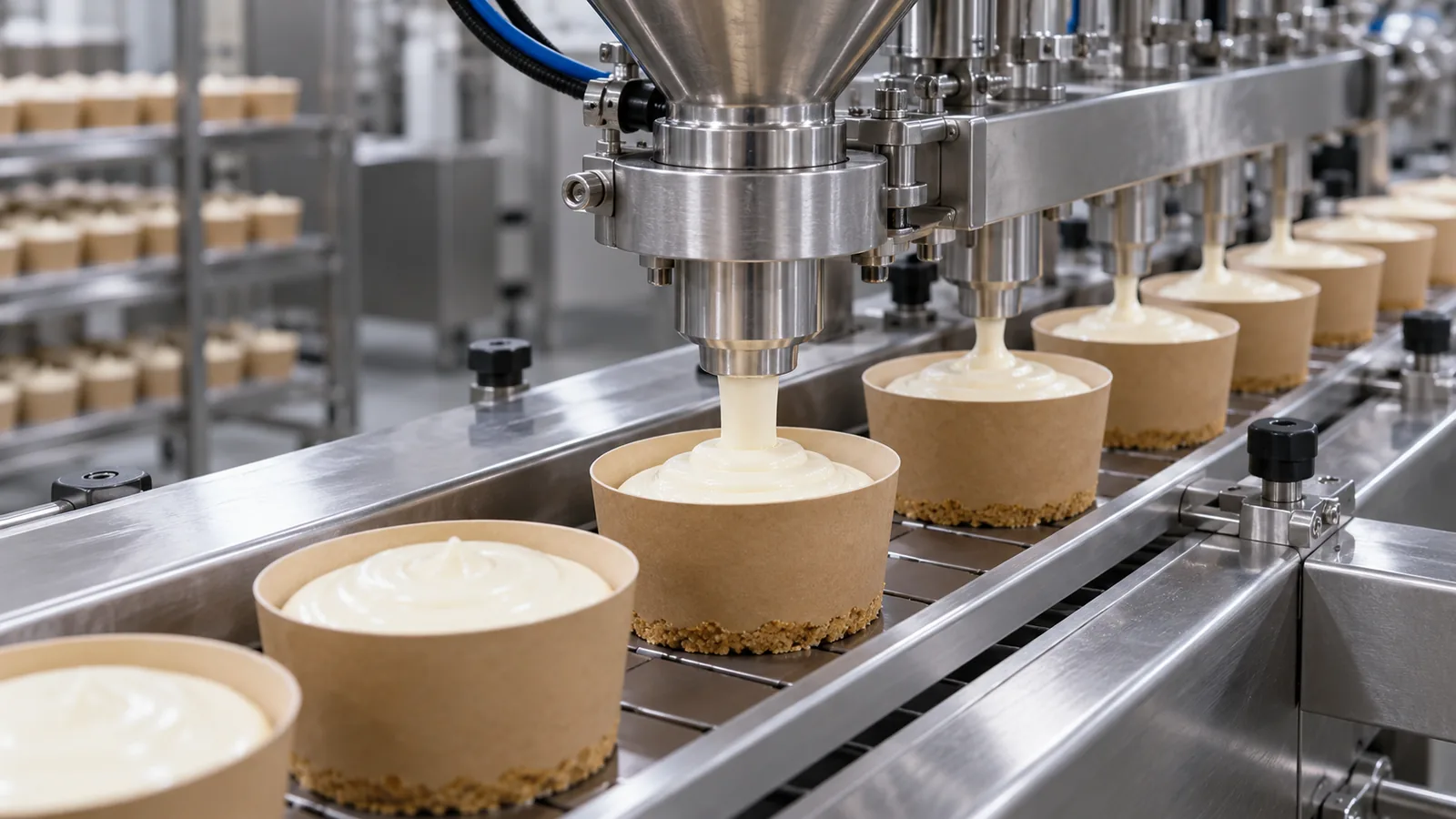
Chilled and no-bake desserts are a completely different paper specification from oven products. A baking cup spends forty minutes in a dry, hot environment; a dessert cup for mousse or no-bake cheesecake spends days — sometimes weeks — in a cold, wet one. Cream, cream cheese and gelatin hold free moisture, dairy fat migrates into any porous wall, refrigeration condenses water on every surface, and freezer-to-display transitions cycle the cup through dew point twice. Paper specified only for looks will soften, stain, leak or collapse long before the product's shelf life ends. This guide covers how cold-chain dessert service differs from baking service, which barrier and structural properties matter, how cups behave through freeze-thaw and display cycles, and an RFQ checklist that keeps supplier quotations comparable. Buyers comparing these specifications can review our custom silicone-coated baking parchment paper programme, where coating weight, base grammage and release values are documented per construction. Buyers verifying these specifications can review the certificate library alongside supplier documentation requests.
1. Why Chilled Desserts Are a Different Specification
Four stress factors dominate cold service:
- Free moisture over long time. Mousse, cheesecake filling and soaked sponge release water into the cup wall for days. Where an oven cup faces heat for minutes, a chilled cup faces moisture continuously — penetration is a slow, unstoppable process unless the paper or a barrier layer stops it.
- Dairy fat migration. Cream and cream cheese carry liquid fats that wick through uncoated fibers, creating translucent, greasy-looking walls that read as spoiled to shoppers even when the product is perfect.
- Condensation. Moving product from a chiller to a display case — or out of a freezer — drops water on the cup exterior and, in lidded packs, on the inside of the lid. A wall that absorbs that film becomes structurally weak and prints turn patchy.
- No oven structure-building. Baked cups set as the batter bakes; no-bake fillings stay soft from first spoon to last. The cup, not the dessert, provides the shape for its entire life.
2. التطبيقات and What Each One Demands
Match the cup to the dessert's water and fat profile:
- No-bake cheesecups and chilled cheesecakes: the highest-fat case. Require a grease-resistant barrier wall and a stable base; stained bottoms are the most common rejection in retail audits.
- Mousse and whipped desserts: airy, moist fillings that weep over time. Moisture barrier plus a wall stiff enough to stay round as the filling settles.
- Tiramisu and soaked-layer desserts: liquid migration is intentional in the product — the cup must contain coffee and liqueur without leaking at seams. A roll-mouth construction with sealed seams handles wet fillings far better than folded flat-bottom formats.
- Panna cotta and gelatin desserts: served unmolded or in-cup; in-cup service needs clean sidewall release for visible layers.
- Icebox and freezer desserts: require verified freeze-thaw behavior, not just a "freezer safe" stamp — see the freezer-safe paper cups guide for test criteria.
3. Barrier and Material Choices
Three construction routes, in rising cost and performance:
- Highly refined or glassine-type paper: dense fiber structure resists moisture and grease without added layers; suitable for shorter chilled shelf lives and drier fillings. The glassine cupcake liners guide explains the material.
- Barrier-coated paper: a food-contact coating tuned for cold, wet service. Confirm the coating is specified for chilled and frozen temperatures, not only baking — some coatings perform well hot and poorly through condensation cycles.
- Wet-strength treated papers: keep structure when saturated; valuable for soaked desserts and long retail display.
Require the barrier claim to be tested in the real condition: refrigerated at your actual shelf life, not at room temperature for an afternoon. For production volumes, the same construction logic applies to our silicone-coated parchment sheets and rolls line, quoted per roll, sheet or die-cut format.
4. Structure: Staying Round Through the Cold Chain
Structure failures in chilled service are slow and expensive to spot late:
- Self-supporting walls. For soft, unstable fillings, choose self-supporting cup constructions that hold their shape empty, so filling does not become the only thing keeping the cup upright.
- Seam integrity under moisture. Seams are the leak path. Ask how seams perform when wet for days — request a wet-hold test, not a dry inspection.
- Rim behavior in lidded packs. The rim must meet lids cleanly at chilled temperatures; rims that relax in the cold break the seal and let condensation into the dessert.
- Freeze-thaw cycling. Run cups through realistic cycles — freeze, thaw, display — and check for softening, delamination and print damage before approving.
5. Presentation and Compliance in Chilled Retail
Chilled desserts sell through clear lids, so the cup is the visible package for the product's whole shelf life. Practical points:
- Print under condensation. Inks and print processes must survive moisture film and handling; confirm odor and migration statements for direct food contact. The custom printing artwork guide covers the approval workflow.
- Color stability in the cold chain. Colored cups must hold shade through moisture exposure — the color fastness testing guide describes the verification method.
- Compliance package. Food-contact declarations for destination markets (FDA and EU 1935/2004 frameworks as applicable), covering both the paper and any barrier coating or wet-strength additive.
6. Cost per Serving and the RFQ Checklist
Compare quotations on cost per dessert over the full service life, including rejected or leaked units. Score suppliers on:
- Barrier evidence: wet-hold and fat-migration test results at your chilled shelf life and temperature.
- Structural evidence: empty-cup stiffness, seam wet integrity and freeze-thaw cycling results.
- Presentation: print durability under condensation and color stability.
- Compliance and reliability: food-contact documentation, per-lot certificates, lead times and change-notification terms.
A cup that costs half a cent less and leaks on day four of a ten-day shelf life is the expensive cup. Our food-grade die-cut parchment rounds programme publishes the test data behind each grade so specifications can be verified before ordering.
FAQ
Are paper cake cups suitable for mousse and no-bake cheesecakes?
Yes, when the cup is specified for cold wet service: a moisture- and grease-resistant barrier wall, wet-integrity seams and enough structural stiffness to hold shape under soft fillings. Standard baking cups without barrier treatment will soften, stain and potentially leak over chilled shelf life.
Can paper dessert cups go from freezer to display case?
Only cups verified for freeze-thaw cycling. Request test evidence covering freezing, thawing and chilled display, checking for wall softening, delamination and condensation damage. For freezer programs, pair the cup with vented lids so condensation does not pool on the dessert surface.
What stops dairy fat from staining the cup wall?
A grease-resistant barrier — either a highly refined dense paper or a barrier coating specified for cold service. Confirm with a fat-migration test at your real shelf life; visual translucency at the fill line is the classic sign that the barrier is insufficient.
Do chilled dessert cups need lids?
For retail chilled display, yes in most programs — lids protect surface decoration and control condensation direction. Specify cup rim and lid as a matched system from the same supplier so tolerances and sealing behavior are guaranteed together.
Conclusion
Chilled and no-bake desserts hold paper in its hardest steady state: wet, fatty and cold for the product's entire life. Specify moisture and grease barriers tested at your real shelf life, demand wet-integrity seams and freeze-thaw evidence, treat cup and lid as one system, and compare quotations on cost per served dessert — the presentation that survives the cold chain is what shoppers actually buy.
CTA
Send LANGMAI your dessert range — fillings, chilled shelf life, display and freezer conditions — and your cup dimensions. The team will recommend barrier papers and structures with wet-hold test data, food-contact documentation and matched lids, plus samples for a full cold-chain trial.
Get a Chilled Dessert Cup Quote
Sources
- U.S. eCFR, 21 CFR 176.170: Components of paper and paperboard in contact with aqueous and fatty foods
- EUR-Lex, Regulation (EC) No 1935/2004 on materials and articles intended to come into contact with food
- U.S. FDA, Food اتصل بنا Substances program
- EFSA, Scientific opinions on food contact materials
- FAO/WHO, Codex Alimentarius: food hygiene and cold-chain guidance