Introduction
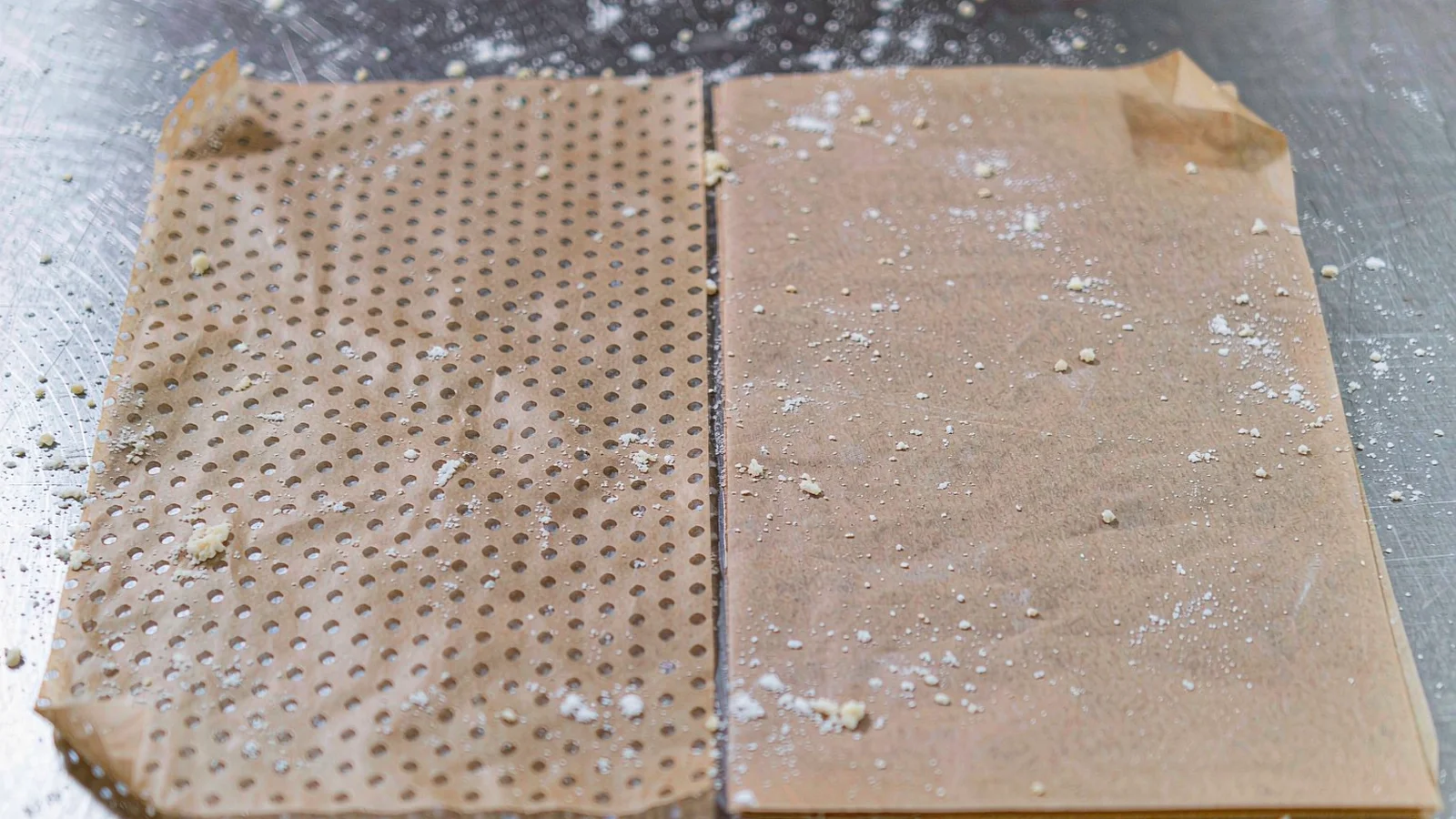
Every wholesale baking paper catalogue offers two basic formats: solid sheets and perforated sheets. On a quotation they differ by only a few percentage points in price, yet on the production floor they behave very differently. A perforated liner can rescue a soggy pastry base in a convection oven, while the same perforations will leak butter onto a tray in a shortbread line. Choosing the wrong format is one of the most common avoidable costs in bakery sourcing, because a mis-specified liner usually surfaces only after the first full production run. Buyers comparing these specifications can review our custom silicone-coated baking parchment paper programme, where coating weight, base grammage and release values are documented per construction.
This guide is written for procurement teams, production managers and foodservice distributors who need to specify baking paper by application rather than by habit. It explains how perforations change airflow and moisture behaviour, where solid parchment remains the safer default, how to compare the two formats on cost and yield, and what to confirm with a supplier before committing to a bulk order. Buyers verifying these specifications can review the certificate library alongside supplier documentation requests.
Why Perforations Matter: Airflow, Steam and Release
Baking paper's primary job is non-stick release and tray protection. Perforations add a second function: they let air and steam pass through the liner instead of pooling between the paper and the dough. For production volumes, the same construction logic applies to our wholesale parchment paper rolls and sheets line, quoted per roll, sheet or die-cut format.
In convection and rack ovens, hot air circulating under a perforated sheet reaches the product base directly. This shortens bake time slightly, promotes even bottom browning, and reduces the pale, steamed underside that occurs when trapped moisture accumulates under a solid liner. For par-baked crusts, frozen ready-to-bake pastries and anything marketed as crispy base, perforated paper typically performs better. The factory and certificate library lists the third-party audits and test reports behind these claims.
The trade-off is that perforations are holes. Melted butter, egg wash, high-fat doughs and thin batters will pass through or seep around them, staining trays and creating cleaning labour. Perforations also interrupt the fibre structure and reduce mechanical strength, which matters where operators lift products on the paper itself.
Where Solid Baking Paper Remains the Default
Solid sheets are the right choice whenever fat, moisture or fine dough particles are present in volume. Typical applications include shortbread and biscuit lines where butter content is high, laminated dough production such as croissant and Danish lines where butter leaches during proofing, cake and sponge tins where batter contact is continuous, and reheat operations where sauces or glazes would drip through holes.
Solid parchment also offers better grease holdout for oily bakery snacks, better protection for coated trays, and a slightly higher effective yield per sheet because no material is removed by perforation. When a buyer's application list mixes dry and wet products, solid sheets are usually the safer single-stock item, with perforated sheets added only where airflow demonstrably improves the finished product.
Comparing the Two Formats on Cost and Yield
Wholesale buyers should compare formats on cost per baked unit, not price per pallet. Perforated paper is often priced slightly above solid, but the difference is usually small; the larger economic factors are sheet yield and failure rate.
Perforated sheets used on wet applications drive up tray-washing costs, product loss and rework, which dwarfs any price difference. Conversely, solid sheets used where airflow matters can lengthen bake cycles and reduce oven throughput, an invisible cost that rarely appears in a purchase-order comparison.
A practical method: run one shift of each product family on each format, measure bake time, defect rate, tray-cleaning time and liner usage per unit, then divide total liner spend by units shipped.
Matching the Format to Product Categories
Buyers managing a broad bakery catalogue can simplify decision-making with a category map. For perforated liners, the strongest fits are par-baked pizza and flatbread bases, frozen puff pastry and ready-to-bake items sold on crispiness claims, French bread and rolls baked directly on trays, and reheated finger foods in foodservice ovens where steam would otherwise soften the base.
For solid liners, the strongest fits are high-fat cookies and shortbread, croissant and Danish production where butter migrates during proofing, sponge and layer cakes with liquid batter, sticky glaze and syrup applications, and any product where the liner doubles as a serving or presentation base. المنتجات in the middle ground — moderate-fat muffins and pound cakes — usually perform acceptably on either format, which makes them the natural candidates for consolidating inventory on a single stock-keeping format. Distributors should also weigh end-customer expectations: retail private label buyers increasingly specify the format by application on pack, so confirming the format with the brand owner before production avoids costly relabeling.
Specifying Perforation Patterns With a Supplier
"Perforated" is not a single specification. Hole diameter, hole density and layout all vary between suppliers, and each affects performance differently. Denser patterns maximise airflow but reduce strength and grease holdout; larger holes drain faster but let more fat through. For most bakery applications, a medium density pattern with holes in the low single-digit millimetre range balances airflow against strength. Buyers should ask suppliers for hole diameter tolerance, hole count per square unit, the layout pattern, and whether perforations are cut before or after silicone coating, since coating after perforation can seal hole edges and affect drainage.
Request sample sheets of the exact pattern before approving artwork, and test them on the heaviest-fat and longest-bake products in your range, where a weak pattern shows up first.
Quality Checks Before a Bulk Order
Whether the format is solid or perforated, the same fundamentals apply. Confirm the base paper weight in grams per square metre, the silicone coating type and whether the product is double-sided coated, the grease resistance level appropriate to your fattest application, and food-contact compliance documentation covering the destination market.
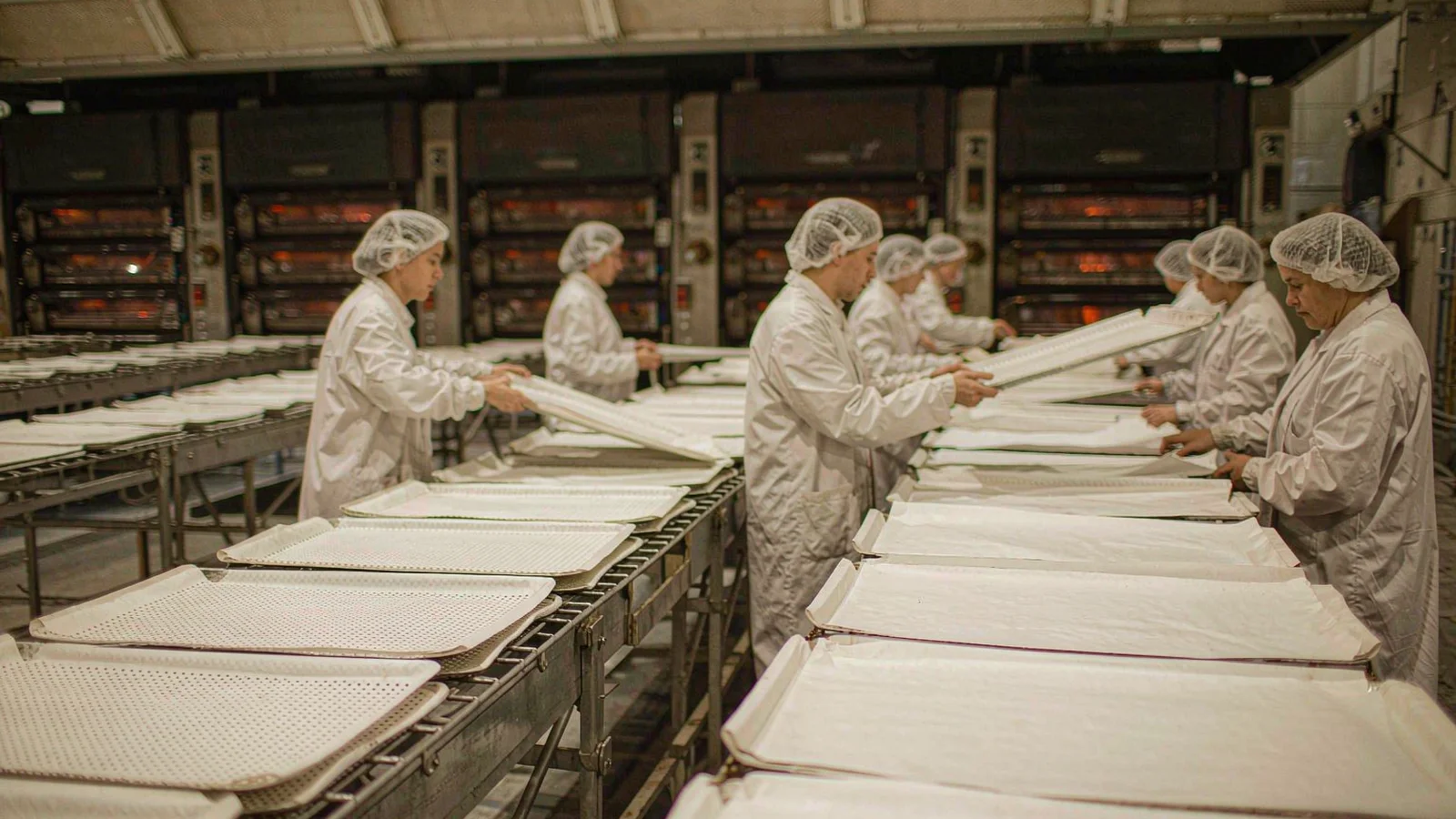
For perforated stock specifically, check that perforations are clean and not torn, that hole edges have not accumulated coating residue, and that sheets release cleanly from the stack during denesting. Run sheets on your fastest automation to confirm they do not snag or double-feed, because perforation can subtly change sheet stiffness and feed behaviour.
Logistics and Storage Considerations
Both formats need dry storage away from humidity, protection from compression that can cause blocking, and temperature-stable warehousing to avoid condensation when pallets move between climates. Perforated stock is marginally more sensitive to rough handling because the hole pattern reduces tear resistance, so carton-edge protection and pallet overwrap deserve attention in long ocean-freight shipments. Buyers consolidating both formats in one container should keep them on clearly labelled separate pallets to avoid mix-ups at the receiving dock.
FAQ
Does perforated baking paper cost much more than solid?
Typically only a few percentage points more, because perforation is a fast in-line process. The real cost difference comes from application fit: the wrong format generates far higher costs through defects, cleaning and rework than the price delta ever will.
Can I use perforated paper for high-fat pastry?
Generally no. Butter and egg wash will pass through the holes onto the tray. Use solid sheets for laminated doughs, shortbread and other high-fat products, and reserve perforated stock for airflow-sensitive items.
Are both formats available with custom sizes and printing?
Most established manufacturers offer die-cut sizes for both formats, and perforated sheets can usually be supplied in the same dimensions as solid stock. Confirm minimum order quantities per size, since combining formats in one order may affect MOQ terms.
Which format is better for automated bakery lines?
Both work in automation, but sheet stiffness and feed behaviour differ slightly. Perforation can reduce stiffness, so always trial the perforated pattern on your actual denesting or pick-and-place equipment before ordering volume.
Conclusion
The perforated-versus-solid decision is not about which paper is better; it is about which paper fits each product. Perforated liners win where airflow and moisture escape improve the bake: par-baked crusts, frozen pastries and convection-crisped items. Solid parchment wins wherever fat, batter or sauce is present, and remains the more forgiving single-stock choice for mixed product ranges. Buyers who test both formats on real production runs, specify perforation patterns explicitly, and document cost-per-unit results will end up with a leaner liner inventory and fewer surprises after scale-up. Our baking parchment paper manufacturing programme programme publishes the test data behind each grade so specifications can be verified before ordering.
CTA
LANGMAI supplies both solid and perforated food-grade baking paper in wholesale volumes, with custom die-cut sizes, controlled perforation patterns and full food-contact documentation for export markets. Send us your product list and oven types, and our team will recommend the right format per application and provide sample sheets for line trials. اتصل بنا LANGMAI today to request a quotation and sampling kit.
Sources
- European Commission, Commission Regulation (EU) 2023/2006 on good manufacturing practice for food contact materials
- U.S. FDA, 21 CFR 176.170, Paper and paperboard components in contact with aqueous and fatty foods
- EFSA scientific opinions on food contact materials and process hygiene in baking
- Industry bake-test methodology based on commercial bakery line trials and supplier specification sheets