Introduction
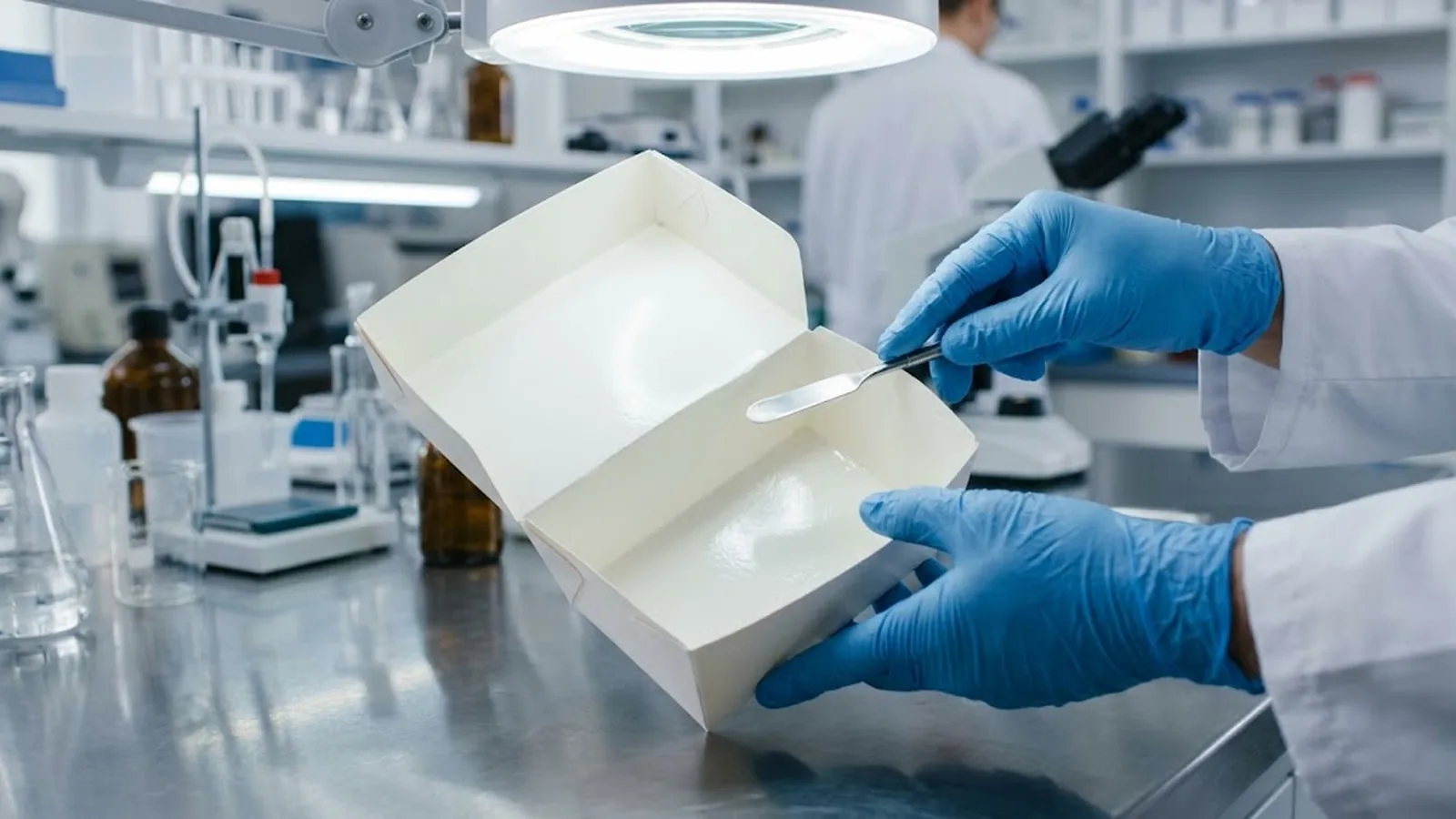
Most bakery complaints that arrive after the first week of shelf life are not about grease — they are about water. A pastry that leaves the plant crisp can arrive at the retail shelf leathery, and a chilled dessert cup can show condensation droplets the morning after packing. The failure is not the recipe or the refrigeration; it is a mismatch between the moisture behavior of the product and the water vapor transmission rate (WVTR) of the paper packaging around it. Moisture barrier is one of the least-discussed specification gaps in bakery packaging, because its failures appear days after packing, far downstream of the incoming-goods check. For the paper side of these programmes, buyers can review our baking parchment paper manufacturing programme specifications and sample terms.
This guide explains what WVTR means for bakery paper packaging, which barrier construction options exist on paper, how barrier performance is tested, and what to write into the specification so the packaging you approve in a trial is the packaging that arrives in every lot. Buyers verifying these specifications can review the certificate library alongside supplier documentation requests.
LANGMAI manufactures baking paper, cake cups and food packaging paper for wholesale buyers, including moisture-barrier constructions for chilled and ambient bakery applications.
Why Moisture Is the Bakery Packaging Problem
Water moves in three ways in a bakery pack, and each needs a different defense: Commercial terms on our private-label parchment paper supplier page mirror the MOQ, lead-time and documentation structure described here.
- Vapor transmission. Water vapor migrates from the moist product through the packaging wall to the drier ambient air, or in the opposite direction in humid climates. The wall's resistance is measured as WVTR, typically in g/m²/24h. High WVTR paper lets a crisp product lose its texture; very low WVTR paper traps moisture against the product.
- Condensation. When warm baked goods are sealed and then chilled, or chilled products pass through a warm loading dock, vapor inside the pack condenses on the coolest surface — usually the inner wall. Droplets cause soggy patches, label damage and a wet, unappealing presentation.
- اتصل بنا migration. Direct product-to-paper contact moves moisture into the paper itself, softening the sheet and, in cake cups and liners, weakening the wall and promoting sticking.
The right packaging is not simply "the highest barrier available." A fully sealed, near-zero-WVTR pack around a hot, high-moisture bread roll will steam it soft within hours. The correct specification starts from the product's moisture activity and the intended shelf environment — ambient, chilled, frozen or mixed-route delivery — and works backward to a target WVTR range. The factory and certificate library lists the third-party audits and test reports behind these claims.
Understanding WVTR as a Buyer
WVTR values are always quoted with test conditions, and the conditions matter as much as the number:
- Standard conditions. Common references are 23°C/85% RH (per ISO 15106 or ASTM E96) and 38°C/90% RH (tropical). A paper rated 50 g/m²/24h at 23°C conditions may transmit far more at tropical conditions. Always require the test method, temperature and humidity to appear next to the value.
- Direction of the claim. A coating applied to the outside of the paper behaves differently from one laminated inside, and single-sided claims can be misread when the coating faces the wrong way in the finished pack.
- Sheet versus converted format. WVTR describes the flat sheet. Folds, seams and gussets reduce real-world performance; a high-barrier sheet converted into a leaky-corner box does not deliver a high-barrier pack.
Buyers should treat WVTR as a declared specification parameter with a test method attached, the same way grammage and grease resistance are declared.
Barrier Construction Options on Paper
Paper alone is hygroscopic and offers modest vapor resistance. The typical paper-based options are:
- Barrier-coated papers. Aqueous dispersion coatings, often bio-based or recyclable-friendly, add meaningful vapor resistance while keeping the pack recyclable in paper streams. Ask for WVTR per coating weight and food-contact clearances for the coating system.
- Extrusion or lamination barriers. A thin PE or PP layer delivers strong WVTR performance and heat sealability at the cost of recyclability in paper streams. These remain the workhorse for frozen and long-shelf-life applications.
- Wax and hybrid treatments. Traditional wax treatment adds moisture resistance and remains common in foodservice wrap, with lower barrier performance than polymer films.
- Uncoated greaseproof. For short-shelf-life ambient products, dense greaseproof paper without added barrier can be the correct answer — the pack's job is protection and presentation, not sealing.
The selection driver is shelf-life target: a two-day patisserie product, a two-week chilled dessert and a six-month frozen bake-off have entirely different barrier requirements.
Condensation: The Chilled Dessert Problem
Chilled cake cups, dessert pots and ready-to-eat pastry packs face a specific cycle: product is filled warm or leaves a chilled line, the pack closes, and temperature swings during distribution drive vapor to condense. Specification choices reduce the risk:
- Match pack closure to product temperature at filling — sealing warm product into a high-barrier pack guarantees condensation later.
- Specify breathable or partially ventilated constructions where the product tolerates them, so vapor has an exit path during temperature swings.
- Require a condensation protocol in the trial: pack at line conditions, hold through a realistic cold-chain cycle including a warm loading-dock transfer, then inspect the inner wall for droplets and wetting.
- Confirm the paper's wet strength and appearance after contact with condensed water — a wall that stains, delaminates or transfers ink under droplets fails at retail even when the barrier itself performed.
Testing and Validating Barrier Performance
A practical validation sequence for buyers:
- Declare the target. Agree a WVTR range with test conditions tied to the distribution climate — not a single number without context.
- Pilot with real product. Run the actual recipe at actual fill temperature through the actual packing line; synthetic simulants do not reproduce a croissant.
- Cycle the cold chain. Include at least one warm-to-cold and cold-to-warm transition, then inspect for condensation, pack deformation and print legibility.
- Measure shelf life. Score texture, appearance and microbiological stability at defined intervals against the current pack as a control.
- Verify incoming lots. Require WVTR certification per lot or per coating batch, and retain reference samples — barrier coatings drift more visibly than grammage.
Suppliers should present ISO 15106 or ASTM E96 test reports on the coated material and, ideally, on the converted format used in your pack.
What to Put in the Specification
- Declared WVTR with test method, temperature and humidity conditions.
- Barrier construction type (coating chemistry family, lamination or uncoated) and coating weight where applicable.
- Food-contact clearance for the barrier system in destination markets, named in the declaration of compliance.
- Condensation protocol results: fill temperature, cycle conditions and inspection outcome from the approved trial.
- Wet-strength and appearance requirements for the pack wall after moisture contact, plus a recyclability statement where the target market requires it.
FAQ
What WVTR should I specify for bakery paper packaging?
There is no universal number — it depends on the product's moisture activity and shelf life. Short-life ambient pastries often perform well in uncoated or lightly treated paper, while chilled desserts and frozen bake-off need substantially lower WVTR. Specify a target range with test conditions, then validate with real product through a realistic cold-chain cycle.
Does a higher moisture barrier always improve shelf life?
No. Sealing a hot or high-moisture product into a near-zero-WVTR pack traps vapor and can soften the product faster through condensation and steaming. Barrier level must match the product and the distribution cycle.
How is WVTR tested on paper packaging?
The most common methods are the ISO 15106 series (instrument-based) and ASTM E96 (gravimetric cup method). The reported value is only meaningful with its conditions — typically 23°C/85% RH or 38°C/90% RH — so require the method and conditions alongside every quoted number and in every lot certificate.
Why does my chilled dessert packaging fog up in the morning?
Fog and droplets are condensation: warm vapor inside the pack meets a chilled wall during cold-chain transitions. The fixes are specification-level — adjust fill temperature versus pack closure, choose a construction with an appropriate vapor path, and verify the pack through a warm-to-cold cycle before approval. LANGMAI supports buyers with condensation-cycle trials and barrier constructions matched to chilled dessert programs.
Conclusion
Moisture failures in bakery packaging are specification failures that surface late: sogginess, condensation and softened cake cup walls trace back to a WVTR and barrier construction that were never defined against the real product and distribution cycle. Declare WVTR with test conditions, choose the construction from shelf-life targets, and validate through cold-chain cycling with real product. Requests that combine categories can be quoted together; see the pre-cut parchment paper sheets and rounds programme for the paper component.
CTA
اتصل بنا Sales for LANGMAI moisture-barrier paper packaging, cake cups and baking paper with declared WVTR values, food-contact documentation and trial support for chilled, frozen and ambient bakery programs.